Explained
The wall
of sharks.
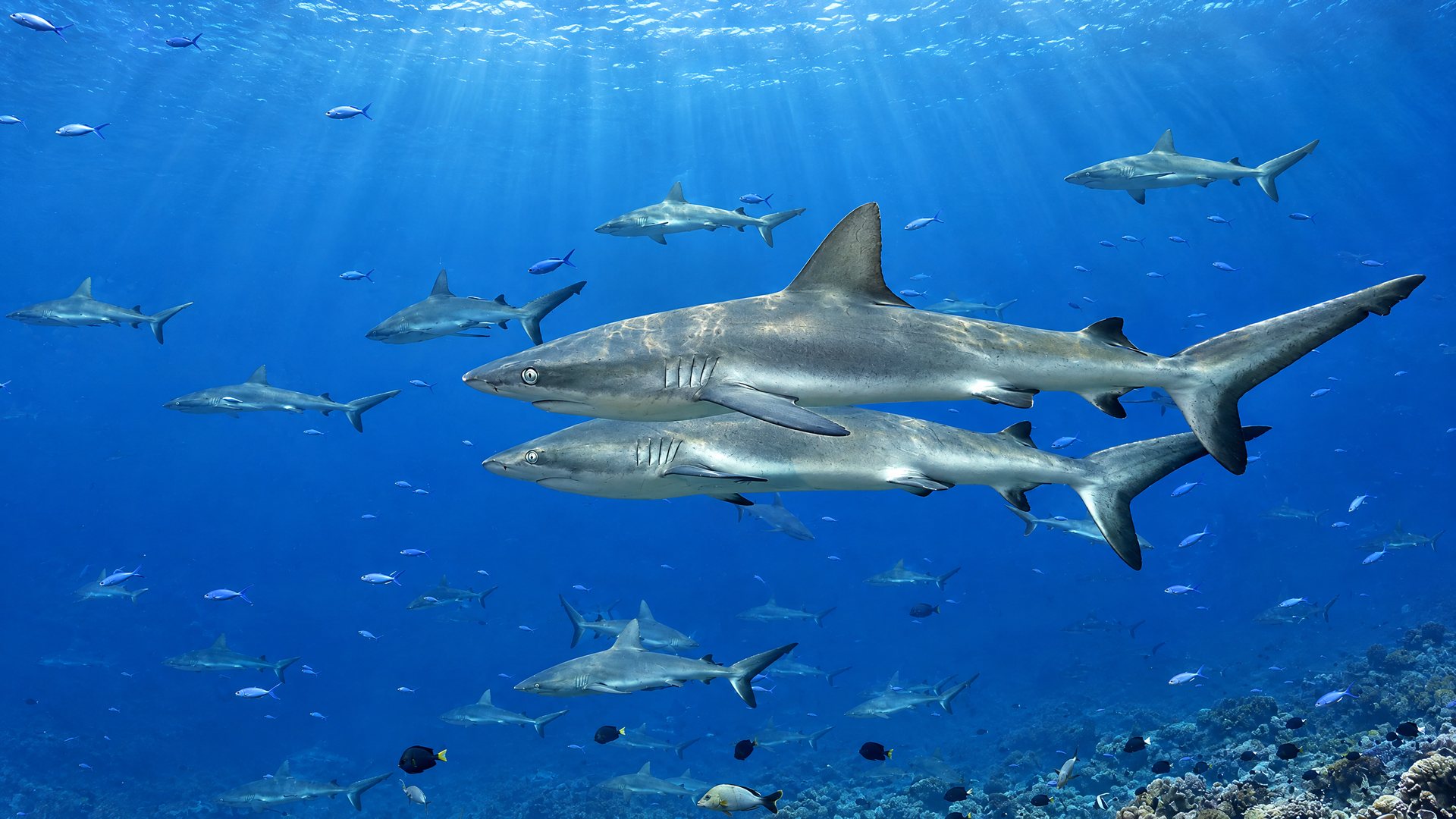
In the south pass of Fakarava, several hundred grey reef sharks hold station in the current. Around the June and July full moons, thousands of groupers arrive to spawn, and the sharks feed at night.
Tumakohua pass, Fakarava
Tumakohua, the south pass, is 200 metres wide and about 12 metres deep. Researchers counted about 700 grey reef sharks in it in 2014. A 2016 study found the population peaked at up to 900 when some 17,000 camouflage groupers gathered to spawn, and showed how a shark population that large can be sustained in one place: by a seasonal food supply that arrives from the whole lagoon.
01 · How it works
The groupers
and the current.
By day the sharks rest in the incoming current, facing the ocean, in a loose wall across the pass that divers and snorkelers drift along. They are not hunting then. At night they hunt in packs, and the grouper spawning in June and July is the main event: the groupers gather in the pass by the thousand, the sharks take a share, and the rest of the eggs are carried out to sea on the tide. Outside the season the sharks live on the pass's ordinary traffic of fish.
The population exists because nobody fishes it. Fakarava and six neighbouring atolls have been a UNESCO biosphere reserve since 2006, shark fishing has been banned in French Polynesia since 2006, and the whole exclusive economic zone has been a shark sanctuary since 2012. The 2016 paper described the pass as an inverted trophic pyramid: more predators than the local prey could support, fed by the lagoon beyond.
02 · The numbers
What was
counted.
- Sharks
- About 700 grey reef sharks in 2014; up to 900 at the spawning peak.
- Groupers
- Some 17,000 to 18,000 camouflage groupers at the June and July full moons.
- The pass
- 200 m wide, 12 m deep, with a sill at 4 m.
- The reserve
- Almost two million hectares, of which 8,204 are land.UNESCO biosphere reserve
- Prices, 2026
- O2 Fakarava: single dive 10,900 XPF; a south-pass day adds 15,000 for the boat and lunch.
Related
Related pages.
Tuamotu
Fakarava
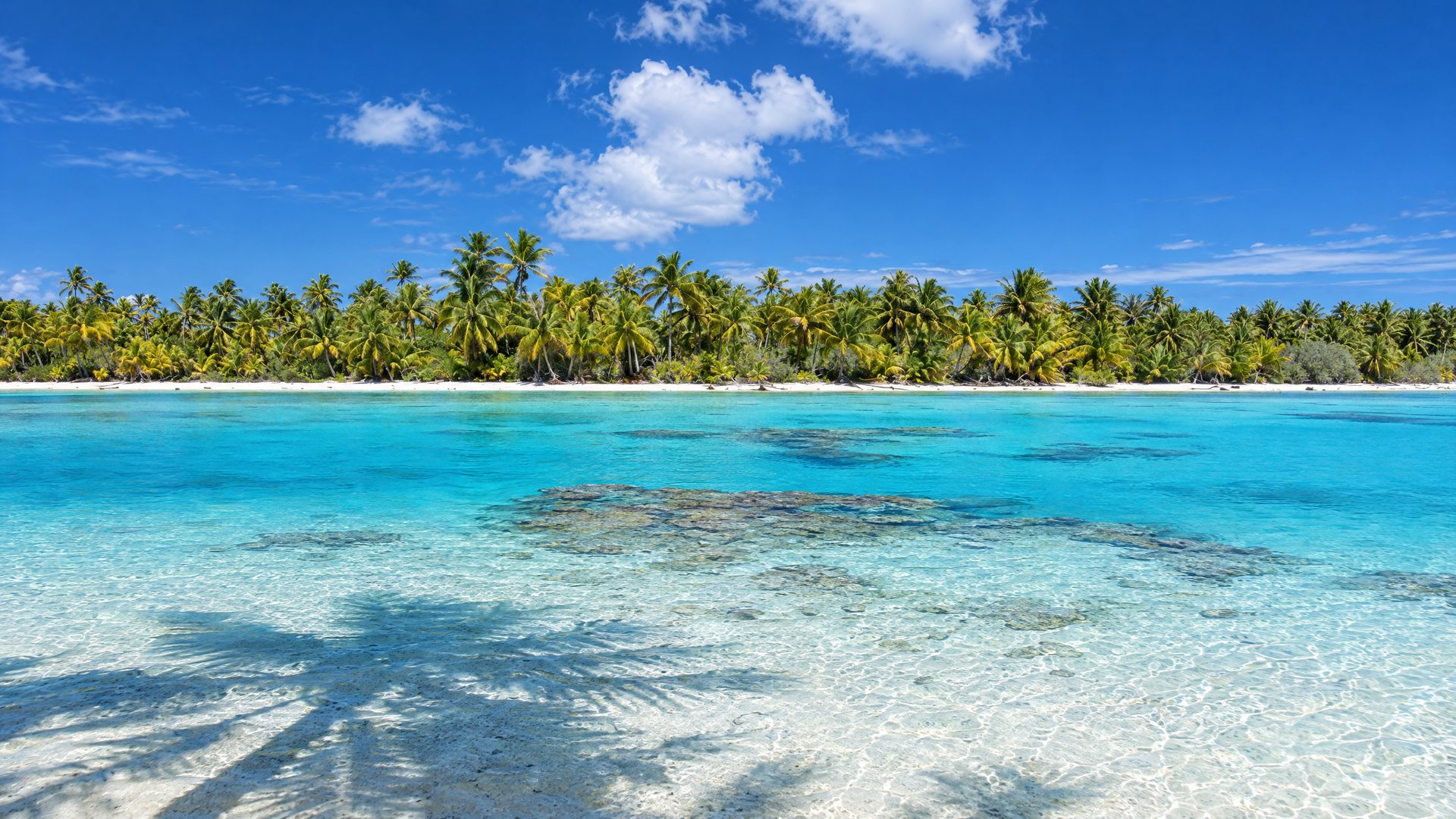
A UNESCO biosphere reserve with several hundred grey reef sharks in its south pass.
Open the island guide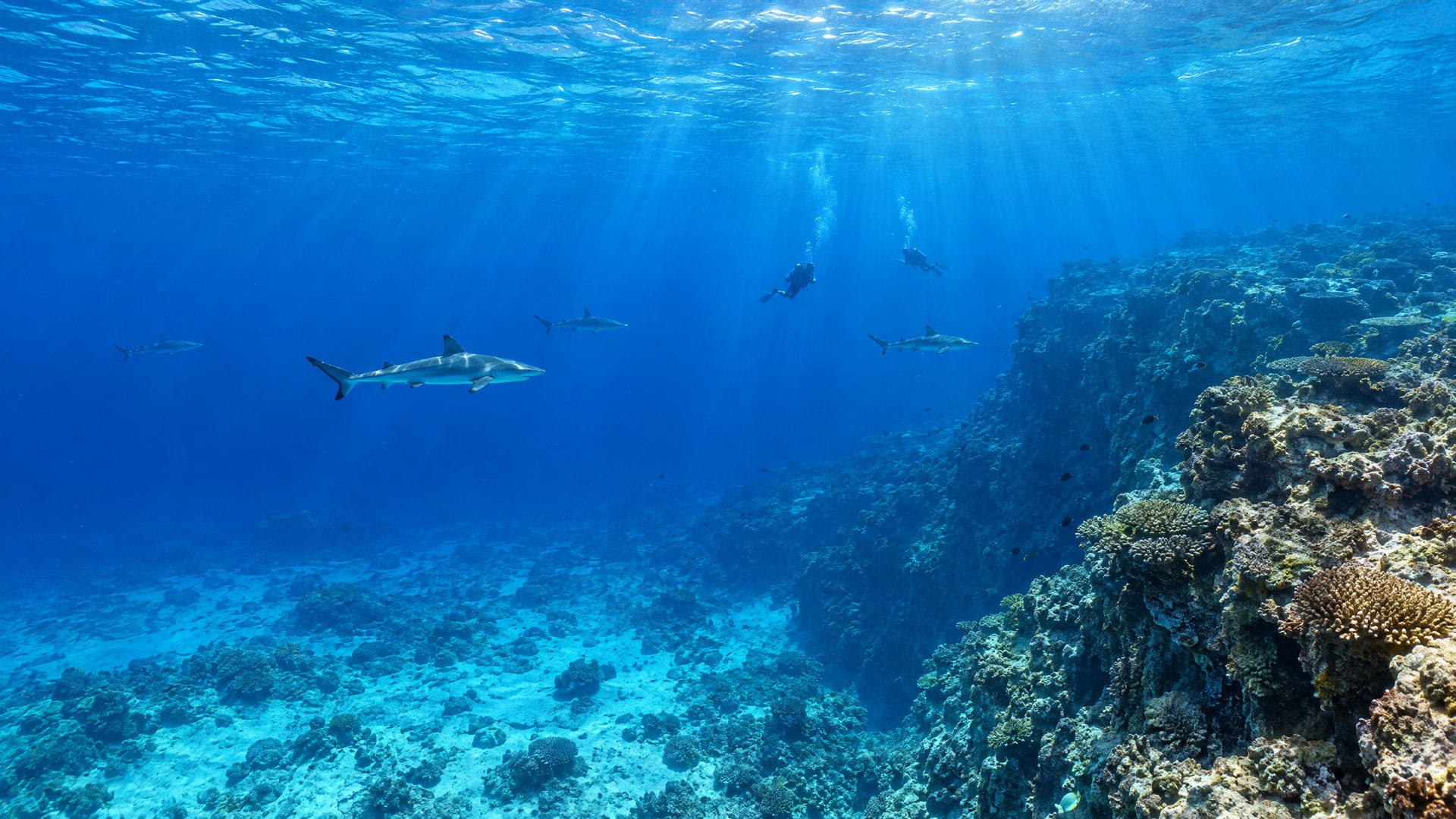
Experiences
Diving
How pass diving works.
Read more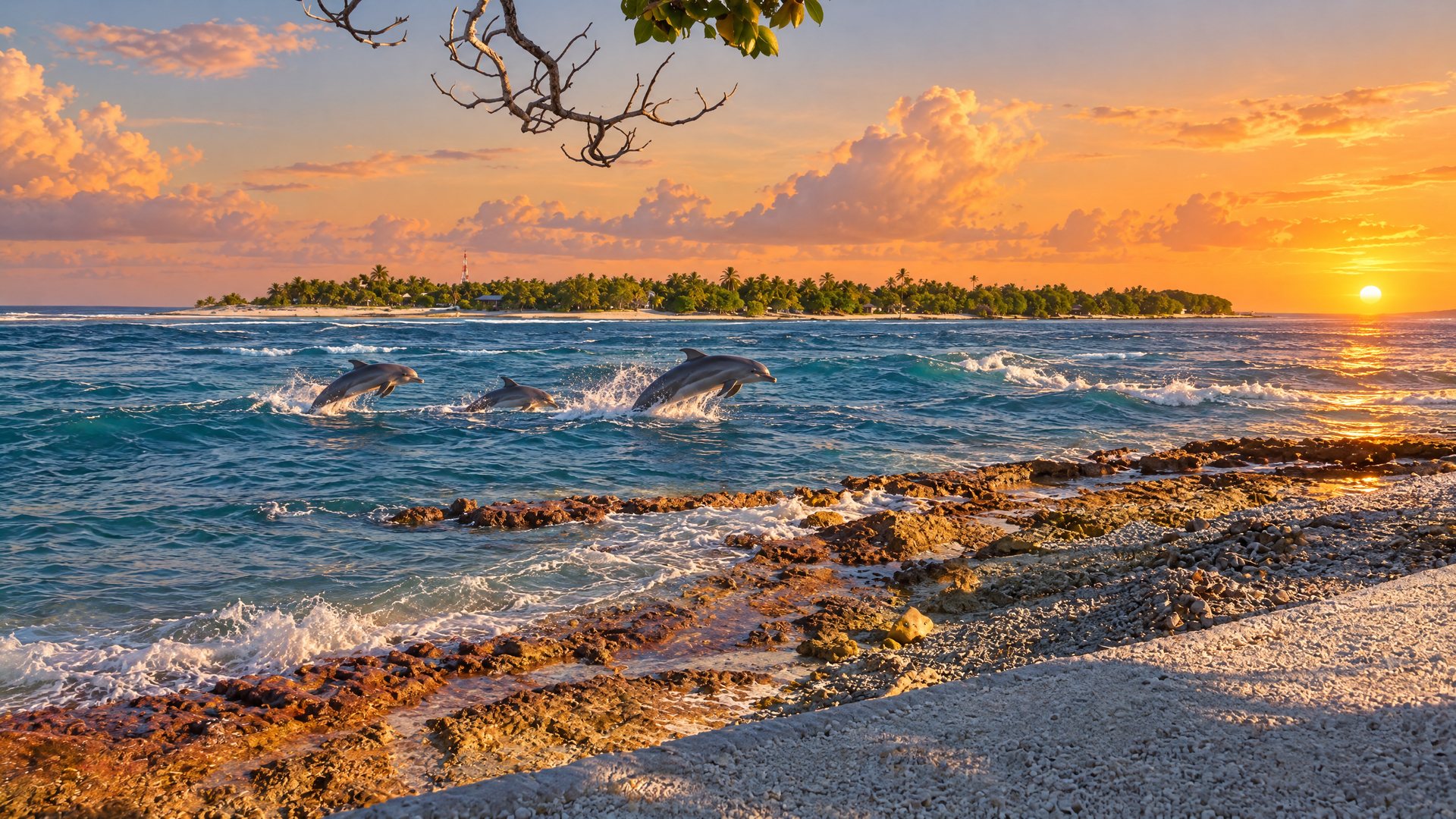
Explained
The dolphins of Tiputa pass
A resident pod of bottlenose dolphins on Rangiroa surfs the standing waves of the outgoing tide.
Read the article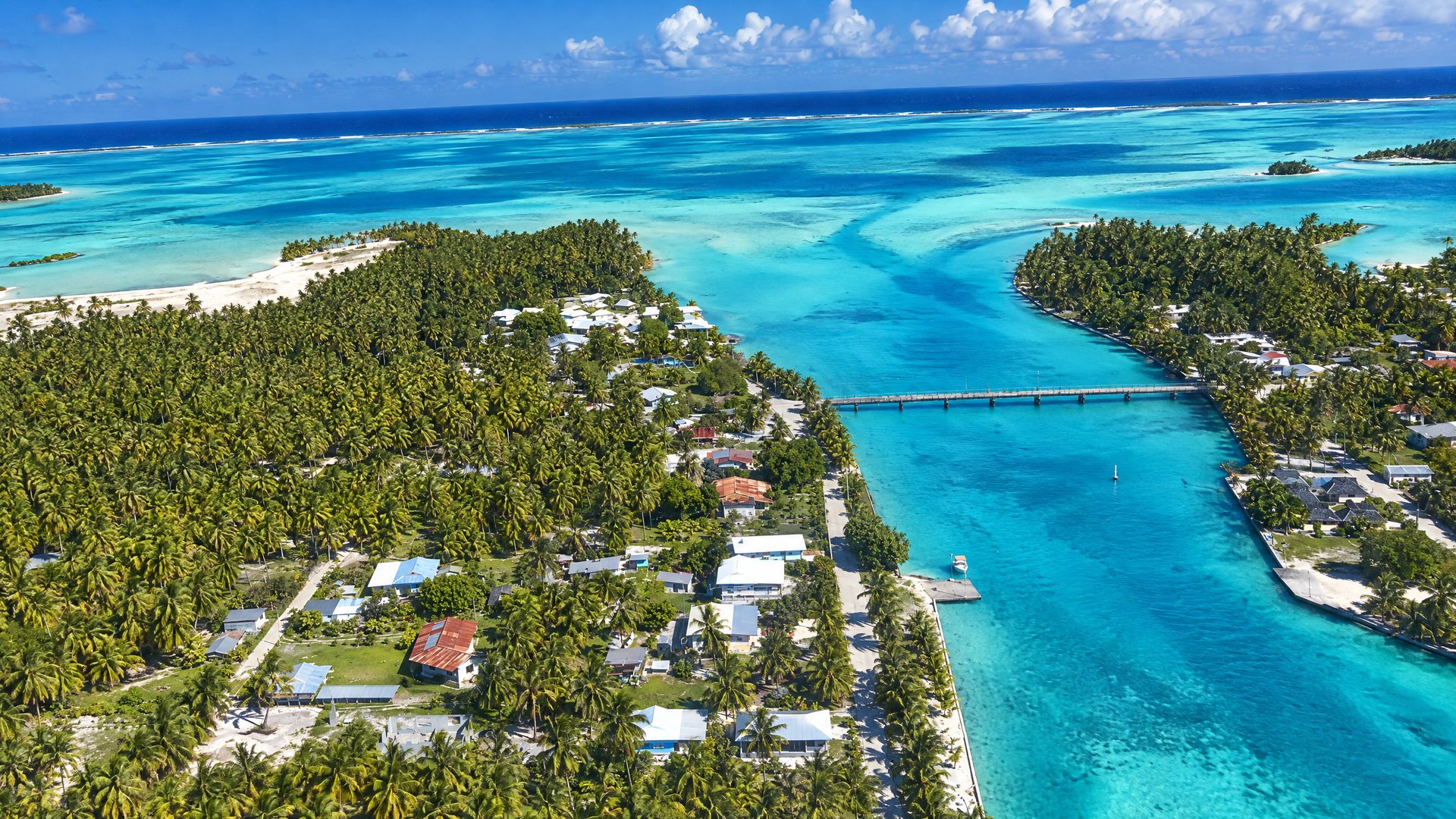
Explained
How an atoll forms
A volcano, a reef, and millions of years of subsidence. Darwin described it in 1842.
Read the article