Explained
The dolphins
of Tiputa pass.
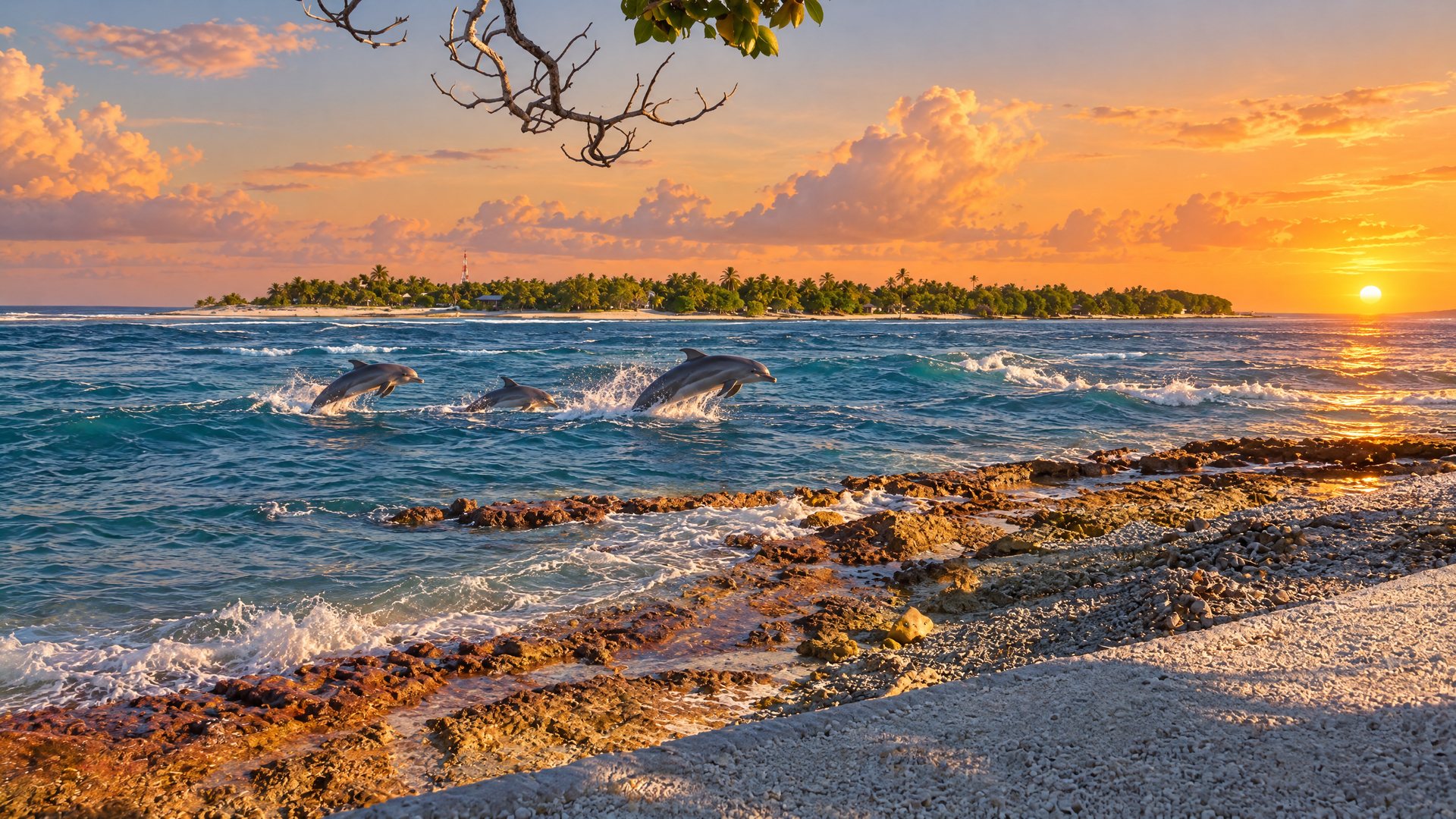
On Rangiroa, when the tide turns and the lagoon empties through Tiputa pass against the ocean swell, a resident pod of bottlenose dolphins comes to play in the standing waves.
Tiputa pass, Rangiroa
A community of 25 to 30 bottlenose dolphins lives around Tiputa pass all year. They are not migrants. The pass is their territory, and the outgoing tide, when lagoon water pours into the ocean swell and stands up in waves, is their playground.
01 · How to see them
The end of
the road, at dusk.
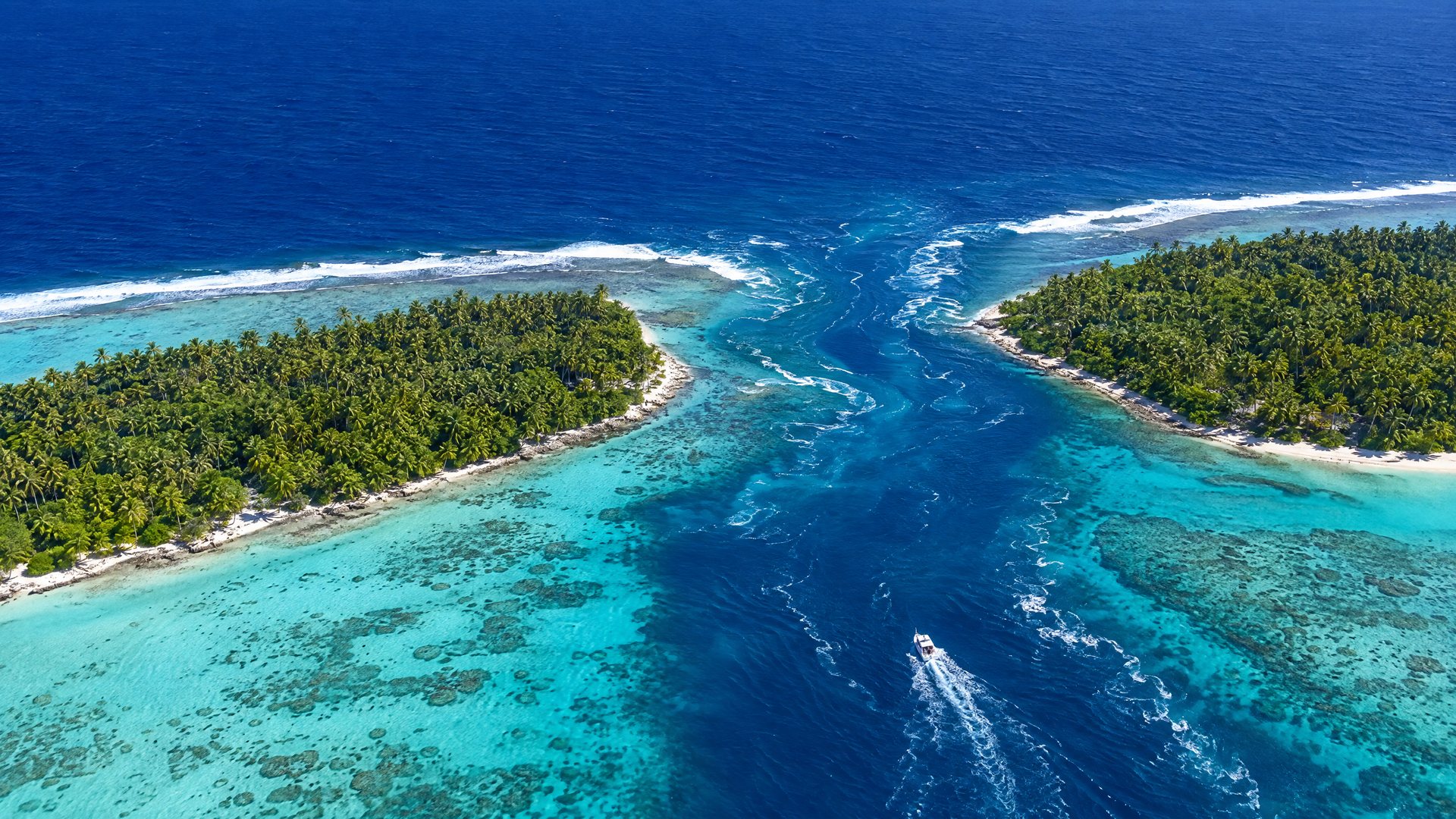
The main motu's one road runs about ten kilometres from Avatoru to the Ohotu wharf at the pass. At the point, around sunset, the outgoing current meets the swell and the dolphins surf and leap in the standing waves. No boat is needed and nothing is charged. Divers meet them underwater on the pass drifts, and a few individuals have learned to approach divers closely; the local research group asks that nobody touches them.
The pod has been studied for years by the Groupe d'Étude des Mammifères Marins de Polynésie, which photo-identifies individuals by their dorsal fins. Rangiroa's dolphins are one of the best-documented resident bottlenose populations in the Pacific, and their habituation to divers is the subject of ongoing research into whether it does them harm.
02 · Watching well
The rules.
- From the shore
- Ohotu point, end of the road, around sunset. Free.
- Underwater
- On the Tiputa drift with a dive centre; let the animals approach, never the reverse.
- Touching
- No. The research group asks it, and the dolphins' habituation is already a concern.
- Season
- All year. The pod is resident.
Related
Related pages.
Tuamotu
Rangiroa
One of the largest atolls in the world. Pass diving, resident dolphins, a pearl farm and a vineyard.
Open the island guide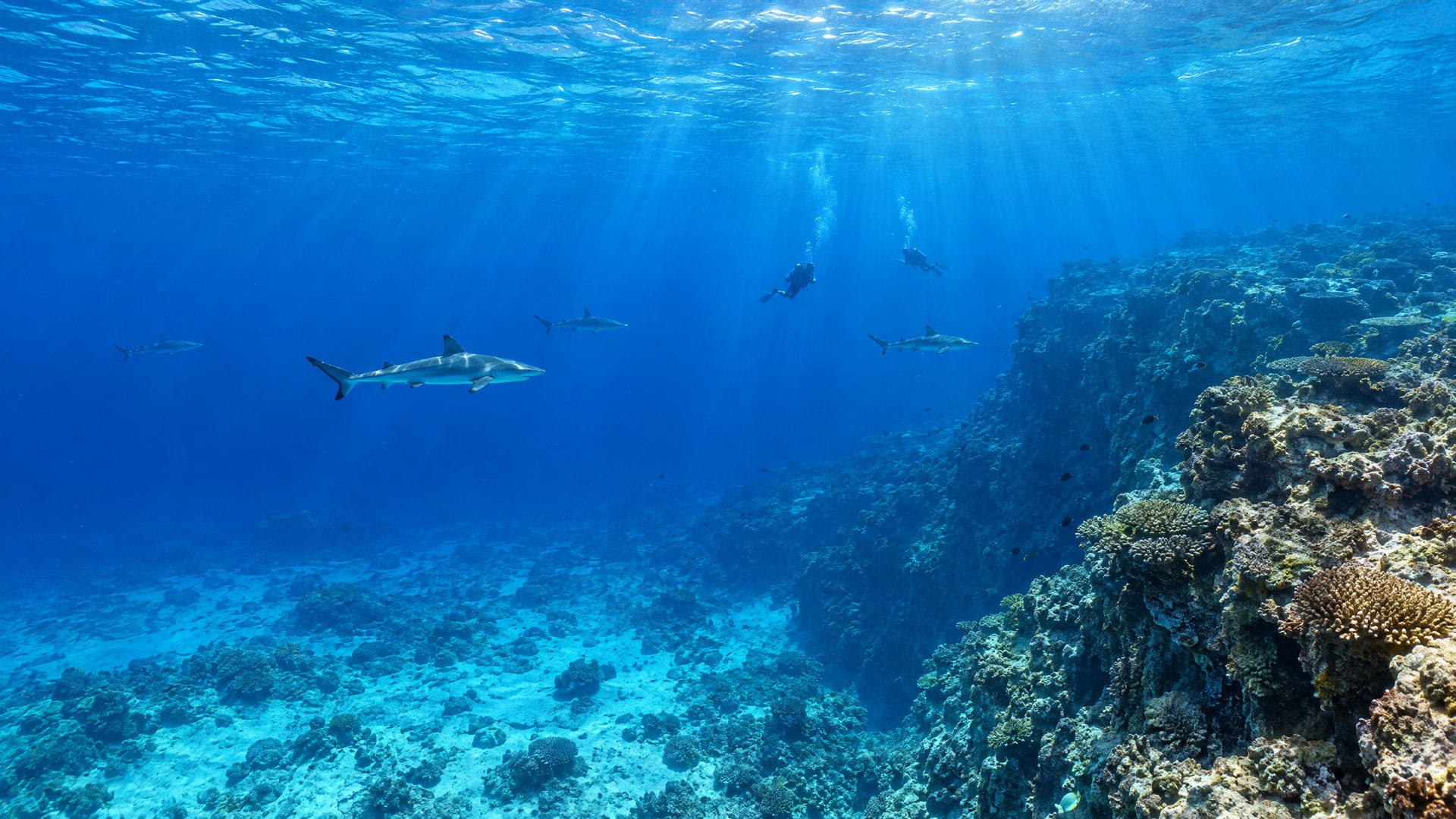
Experiences
Diving
The Tiputa drift, explained.
Read more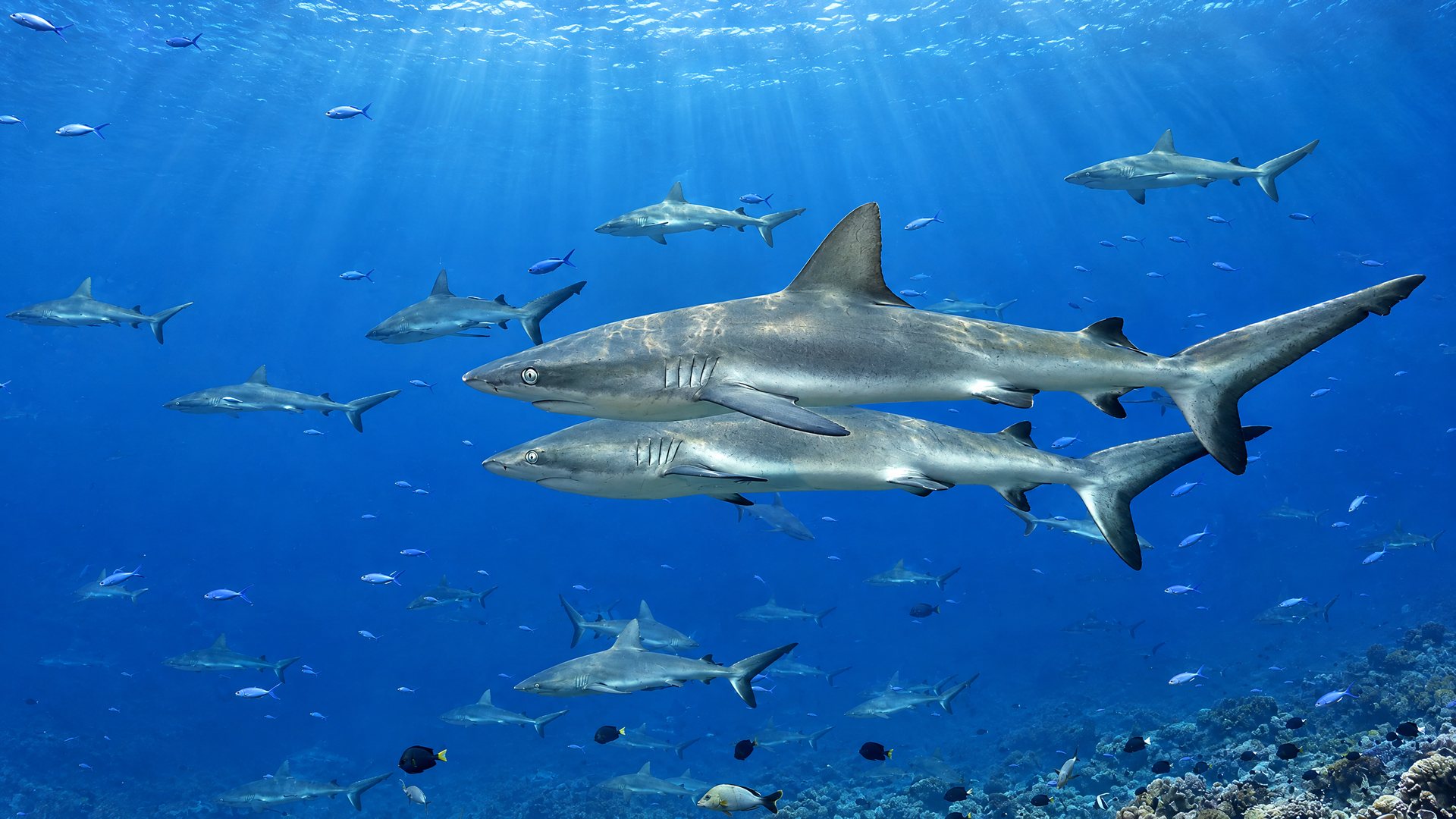
Explained
The wall of sharks
Several hundred grey reef sharks in Fakarava's south pass, and the grouper spawning that feeds them.
Read the article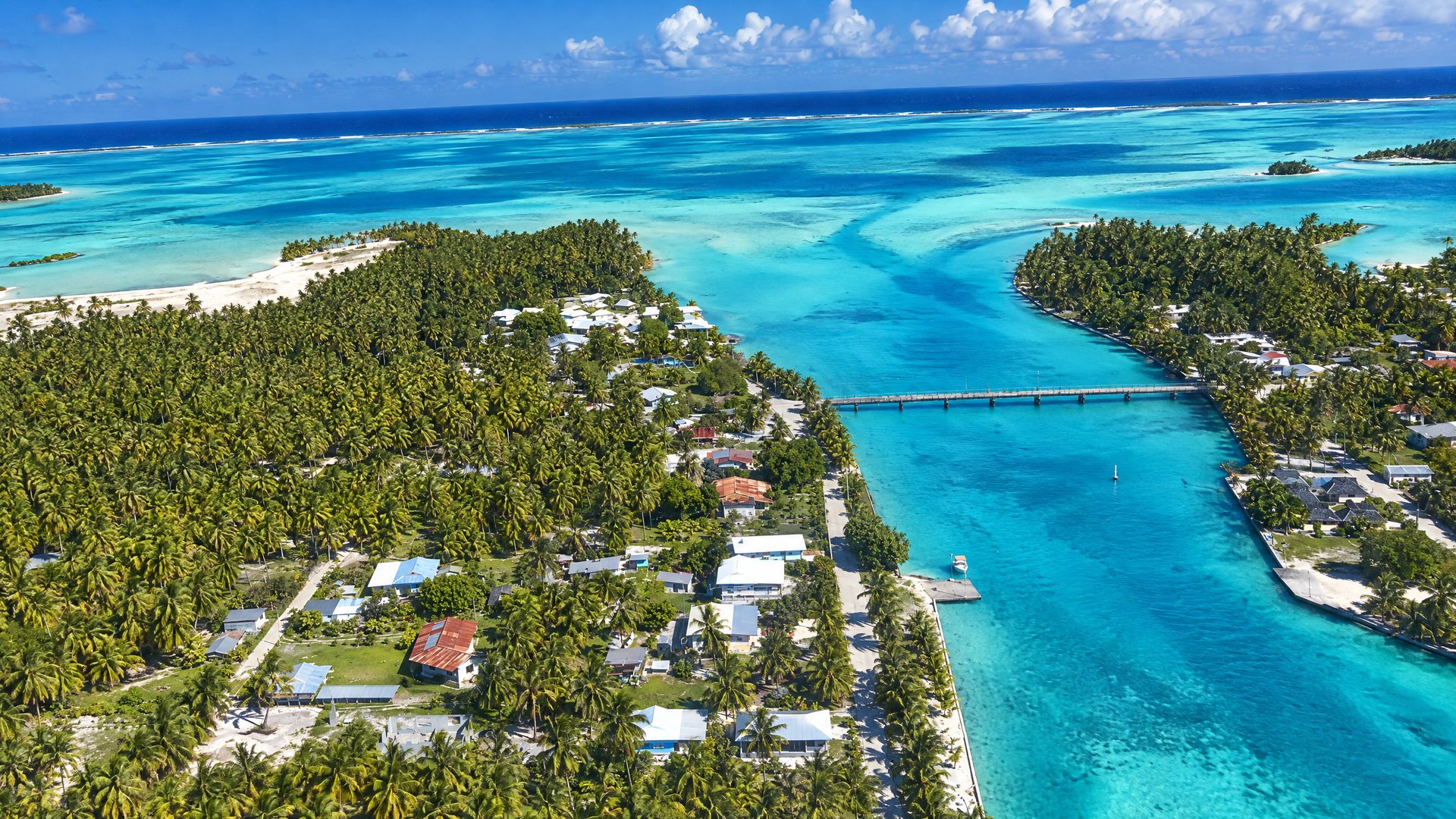
Explained
How an atoll forms
A volcano, a reef, and millions of years of subsidence. Darwin described it in 1842.
Read the article