Explained
Why some sand
is pink.
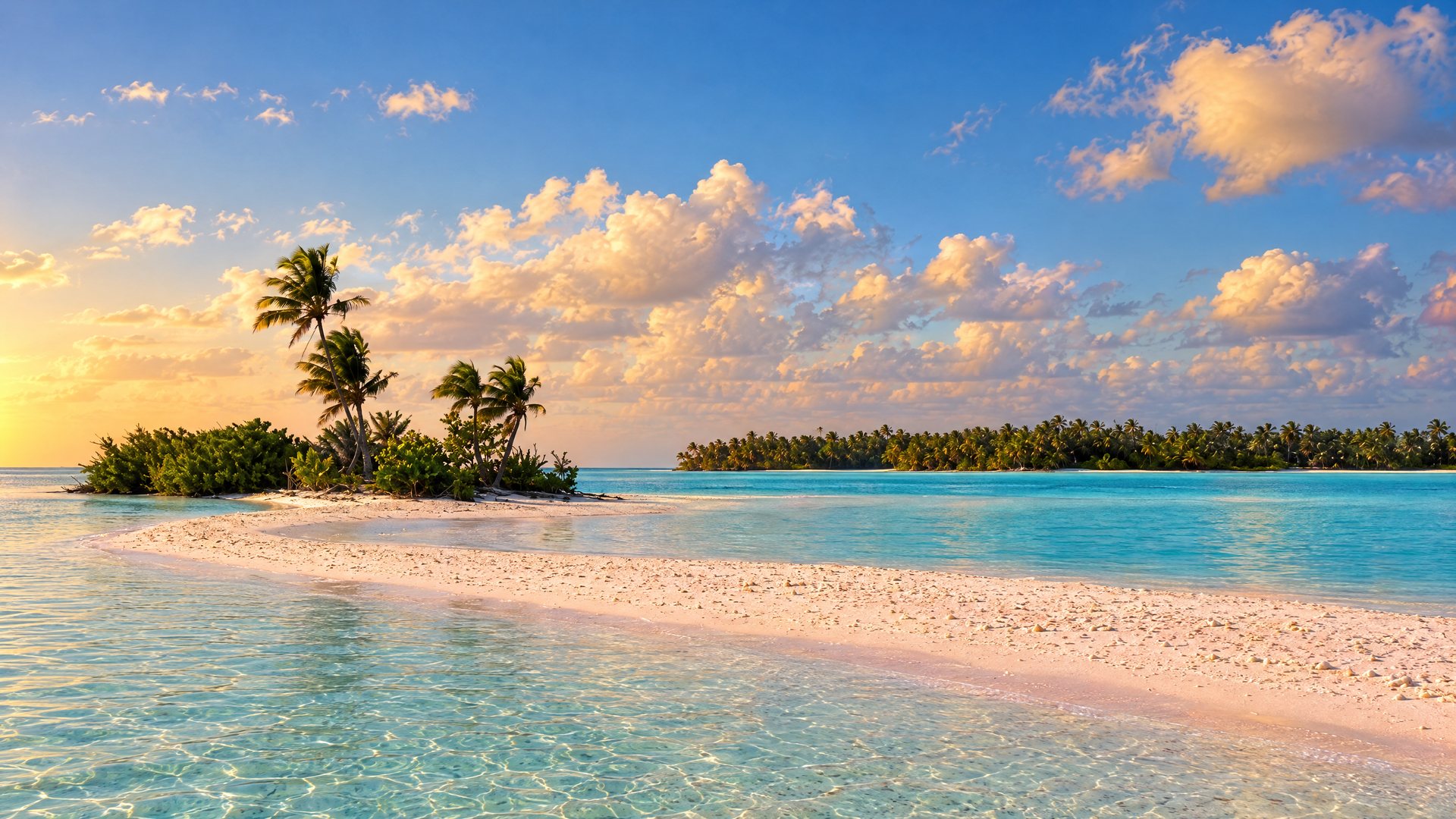
On Fakarava, Tikehau and Rangiroa, some beaches are pale pink. The colour comes from the shells of single-celled organisms, ground into the coral sand by the surf.
Les Sables Roses, Fakarava
Coral sand is white: it is ground calcium carbonate from coral skeletons and shells. Where the sand turns pink, something reddish has been mixed in. On these atolls it is foraminifera, single-celled organisms that build tiny calcium-carbonate shells, some of them red or rose-coloured, and live in their millions on the reef.
01 · The organism
A shell the size
of a sand grain.
Foraminifera are among the most abundant organisms in the sea. Each builds a chambered shell, usually less than a millimetre across, and lives on the reef, in the sand or attached to coral. One of the common reef species, Homotrema rubrum, is a deep red and encrusts the undersides of coral. When it dies, the surf breaks the shell into fragments and washes them ashore with the white coral sand. Enough red fragments in enough white sand make pink.
The colour is strongest where the surf delivers the fragments and nothing washes them away: on the lagoon-side beaches near the south end of Fakarava, on motu around Tikehau's lagoon, on the pink sands reached by boat on Rangiroa. It fades where the sand is reworked by stronger waves, and it is brightest when the sand is wet and the light is low.
02 · Where to see it
Three atolls.
- Fakarava
- Les Sables Roses near the south end: a boat excursion, within the reserve rules.
- Tikehau
- Several motu round the lagoon have pink sand, and the village beaches at Tuherahera are pinkish. The full-day lagoon tour lunches on one.
- Rangiroa
- The pink sands are a boat day across the lagoon, often combined with Reef Island.
Related
Related pages.
Explained
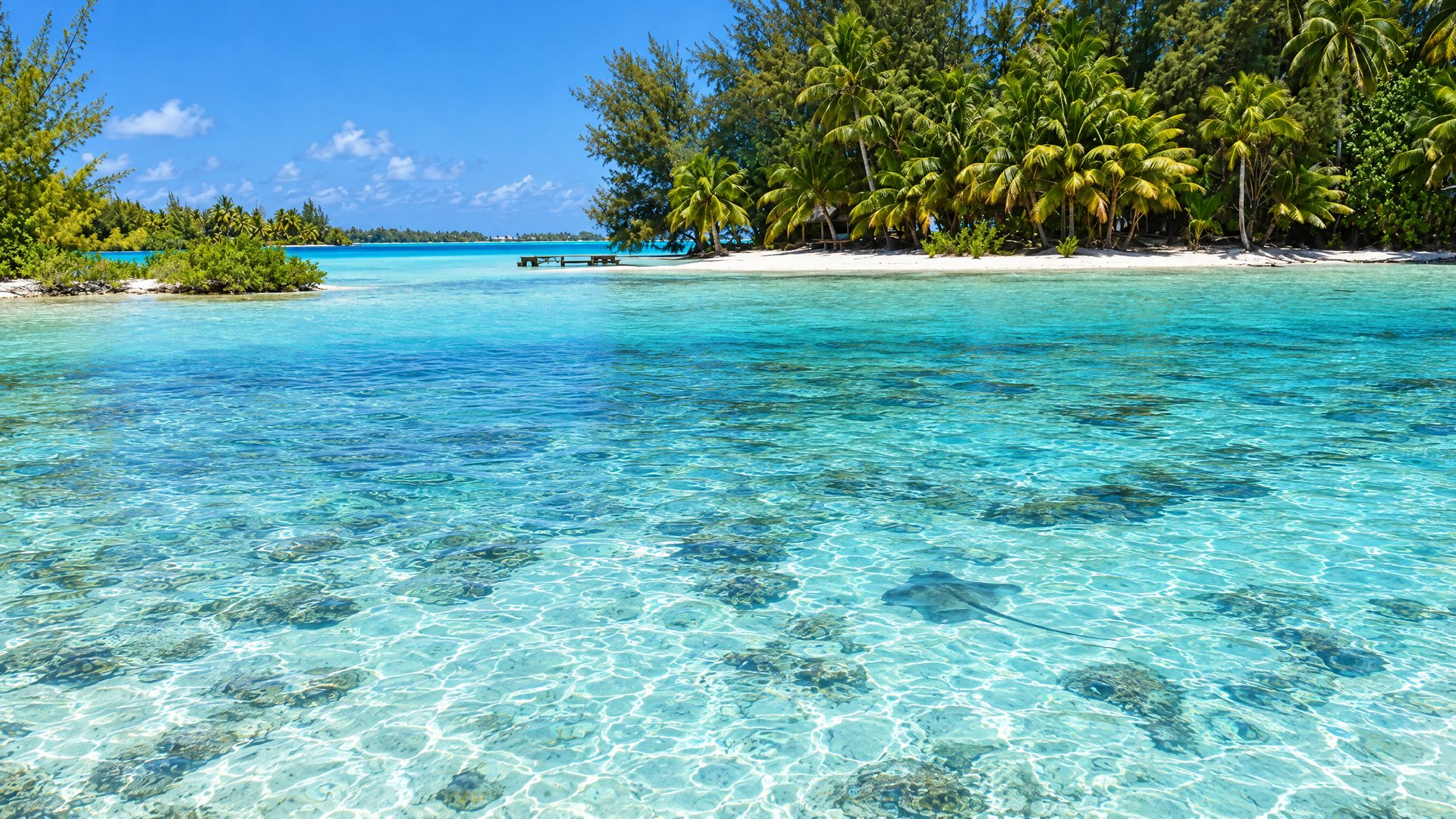
Why the lagoon is blue
White coral sand, shallow water and the way seawater absorbs red light.
Read the article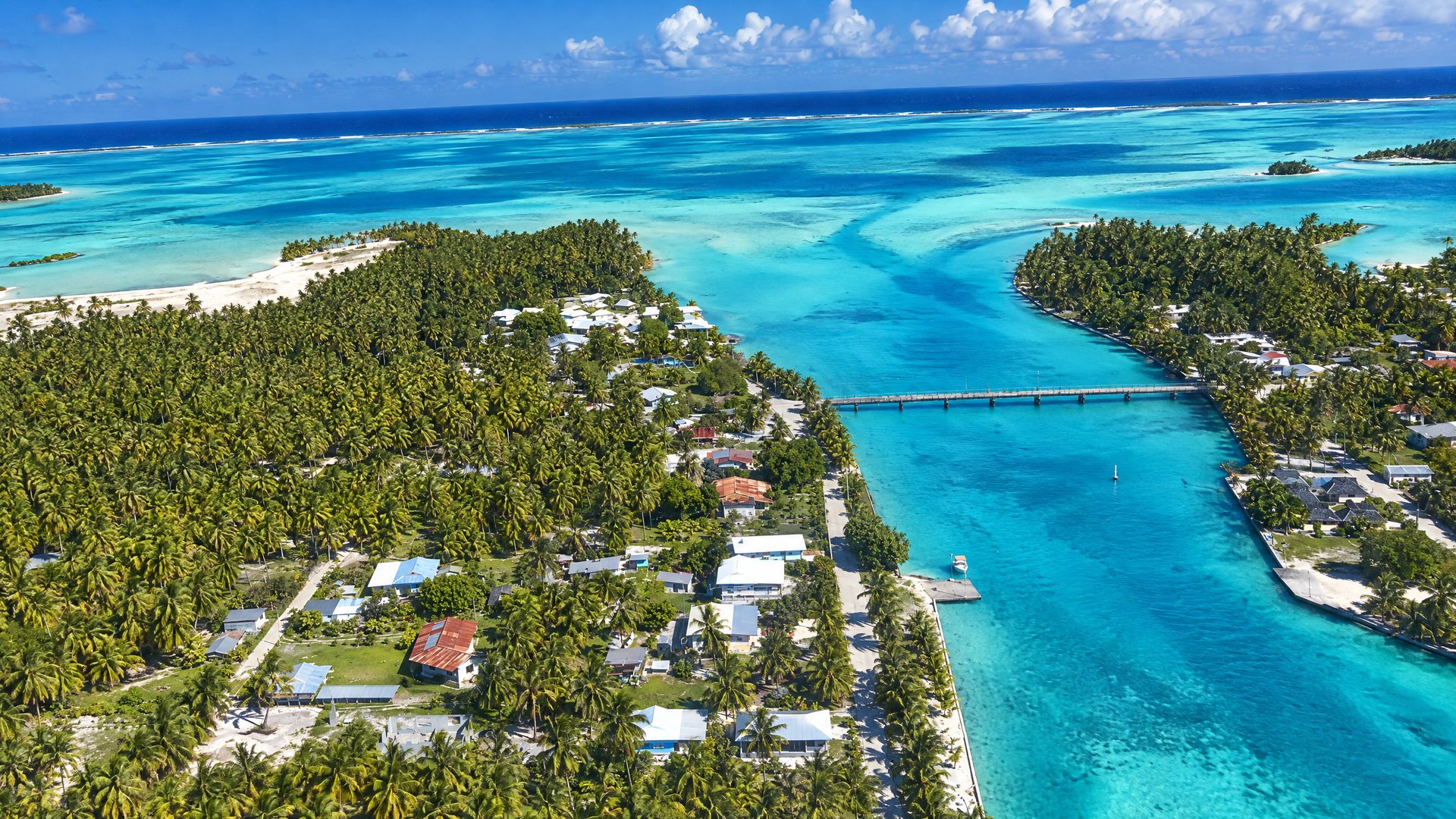
Explained
How an atoll forms
A volcano, a reef, and millions of years of subsidence. Darwin described it in 1842.
Read the articleTuamotu
Tikehau
A small atoll with pink sand, one village, one pass and a manta cleaning station inside the lagoon.
Open the island guide
Tuamotu
Fakarava
A UNESCO biosphere reserve with several hundred grey reef sharks in its south pass.
Open the island guide