Explained
Why the lagoon
is blue.
It is not the water. It is the sand underneath, the depth, and what seawater does to sunlight on the way down and back up.
Bora Bora lagoon
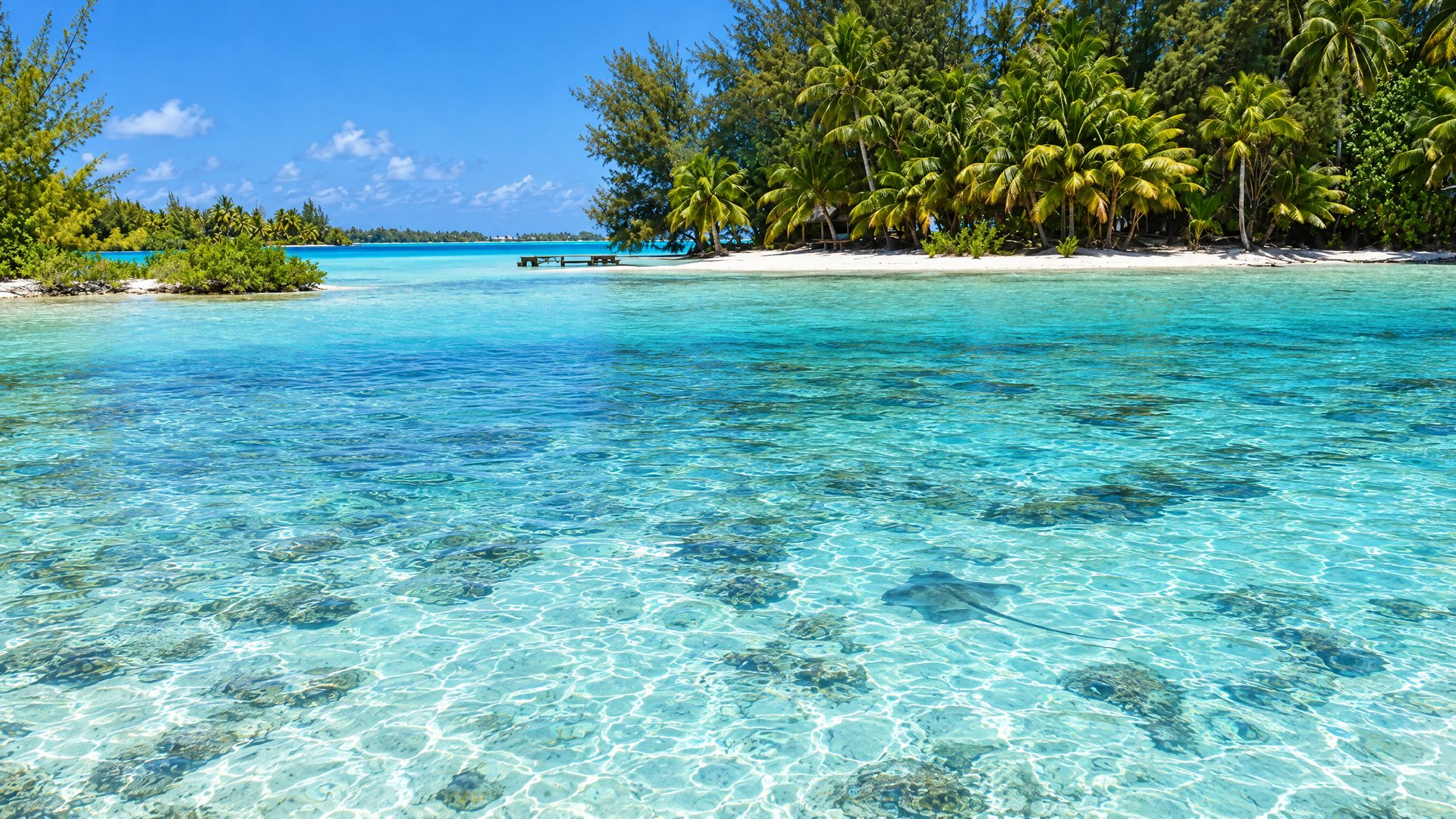
Pure water absorbs red light first, then orange and yellow. Blue and green travel furthest. In the open ocean, with nothing beneath the surface to reflect light back, the sea looks deep blue. In a lagoon, sunlight reaches the bottom, bounces off white sand and comes back up through a few metres of water that have filtered out the warm colours. What is left is turquoise.
01 · The three ingredients
Sand, depth,
clarity.
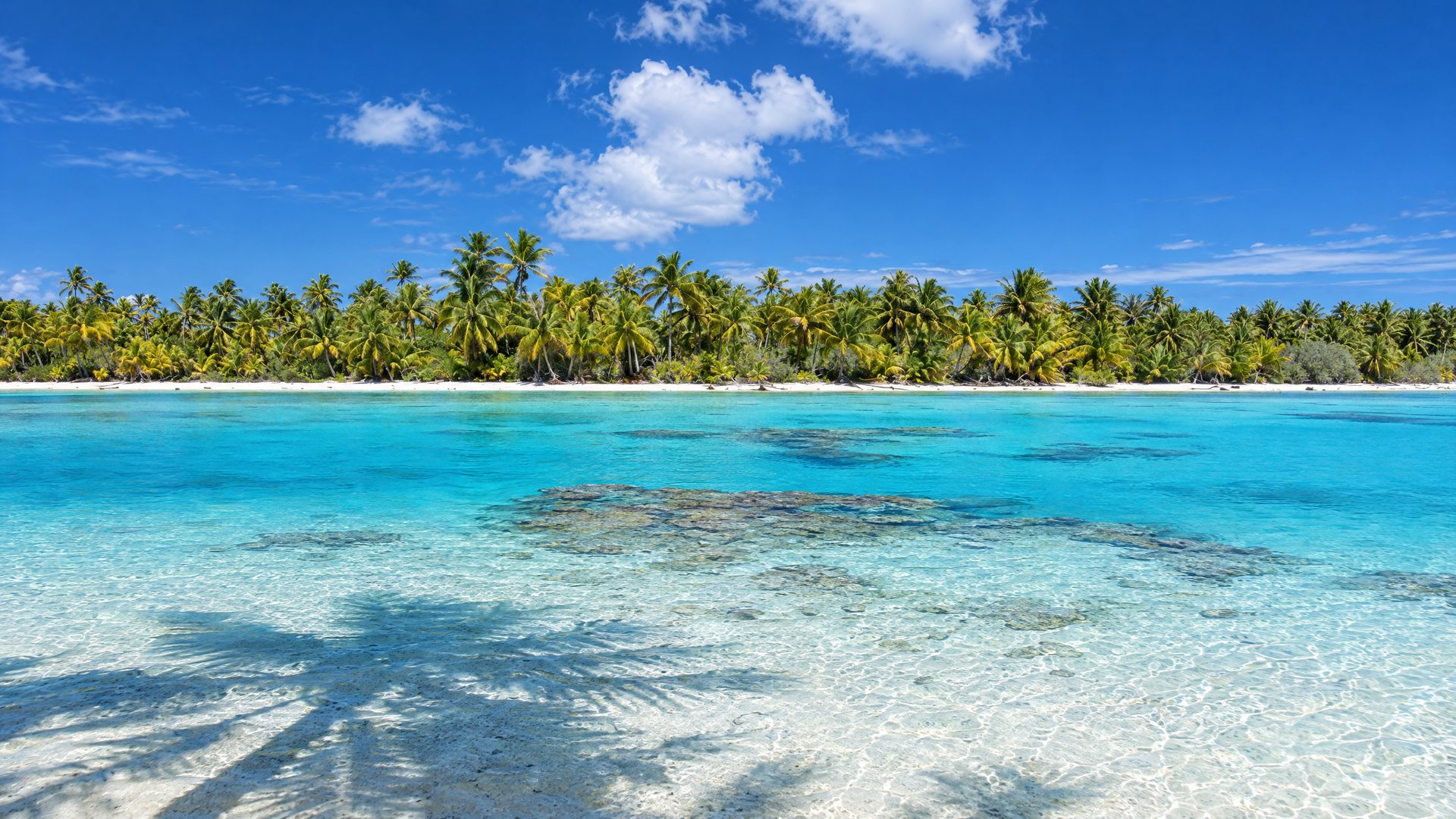
The sand is the first ingredient. Lagoon floors in these islands are ground coral and the shells of marine organisms, calcium carbonate, which is white. A white floor reflects almost all the light that reaches it. Over a dark volcanic floor, the same water looks navy; off Tahiti's black-sand beaches the lagoon is a deeper blue for exactly that reason.
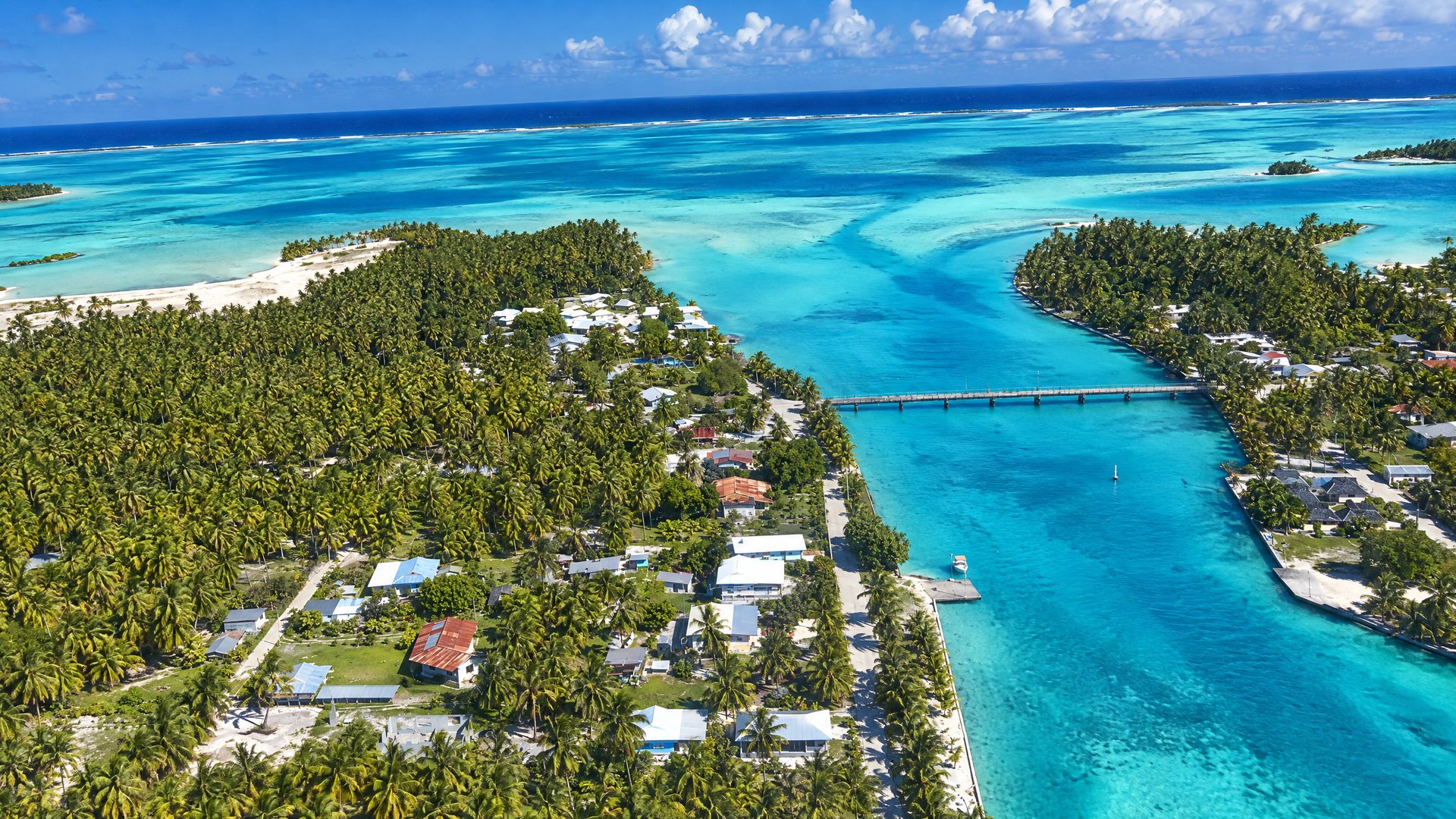
Depth is the second. Over ankle-deep sand the water is nearly colourless. At a metre it is pale aquamarine; at five, turquoise; at twenty, the blue deepens; past the reef, where the floor drops away to hundreds of metres, it goes to cobalt. The bands you see from a boat or a plane are a depth chart.
Clarity is the third. Atoll lagoons have no rivers running into them and little soil to wash in, so there is almost nothing suspended in the water to scatter the light. The water in a Tuamotu lagoon can be clear to forty metres. The high islands are a little less so after rain, when the rivers run brown for a day.
02 · Where to see it
The strongest
colours.
- Bora Bora
- The widest sand shelf in the Society Islands, so the biggest expanse of pale turquoise, with Otemanu behind it.See from the lagoon tour or from the air
- Fakarava's green lagoon
- The shallow inner lagoon at motu Farakau is green rather than blue: shallower water, more light reaching a sandy floor.
- Rangiroa's Blue Lagoon
- A lagoon within the lagoon, enclosed by motu, a metre or two deep over white sand.
- Tikehau and Maupiti
- Small, shallow lagoons with pale floors. The water goes from clear to turquoise within a few metres of the beach.
- From the air
- Every Air Tahiti approach is a depth chart. Sit on the lagoon side.
Related
Related pages.
Explained
How an atoll forms
A volcano, a reef, and millions of years of subsidence. Darwin described it in 1842.
Read the article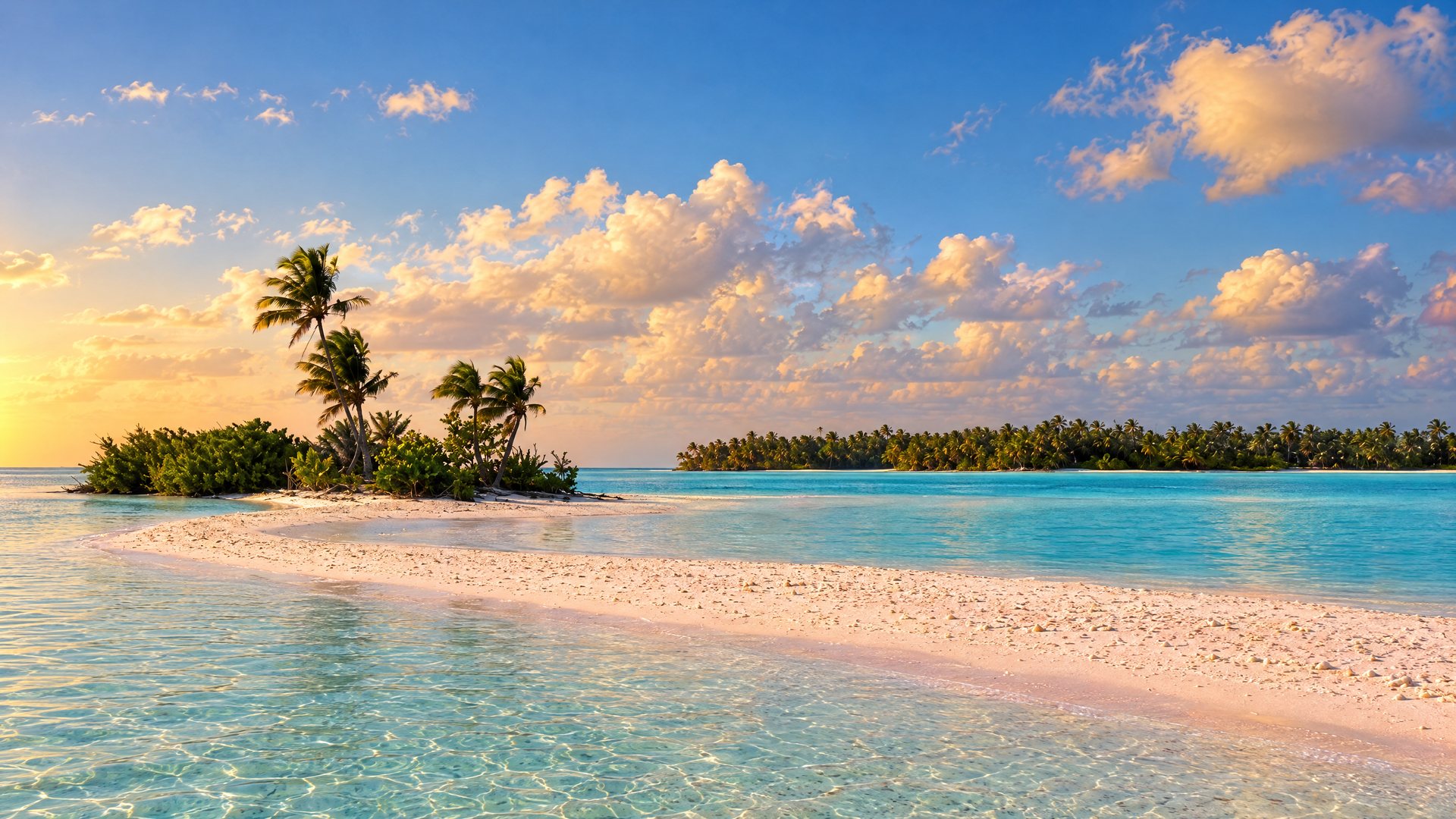
Explained
Why some sand is pink
The shells of foraminifera, single-celled organisms, ground into coral sand by the surf.
Read the article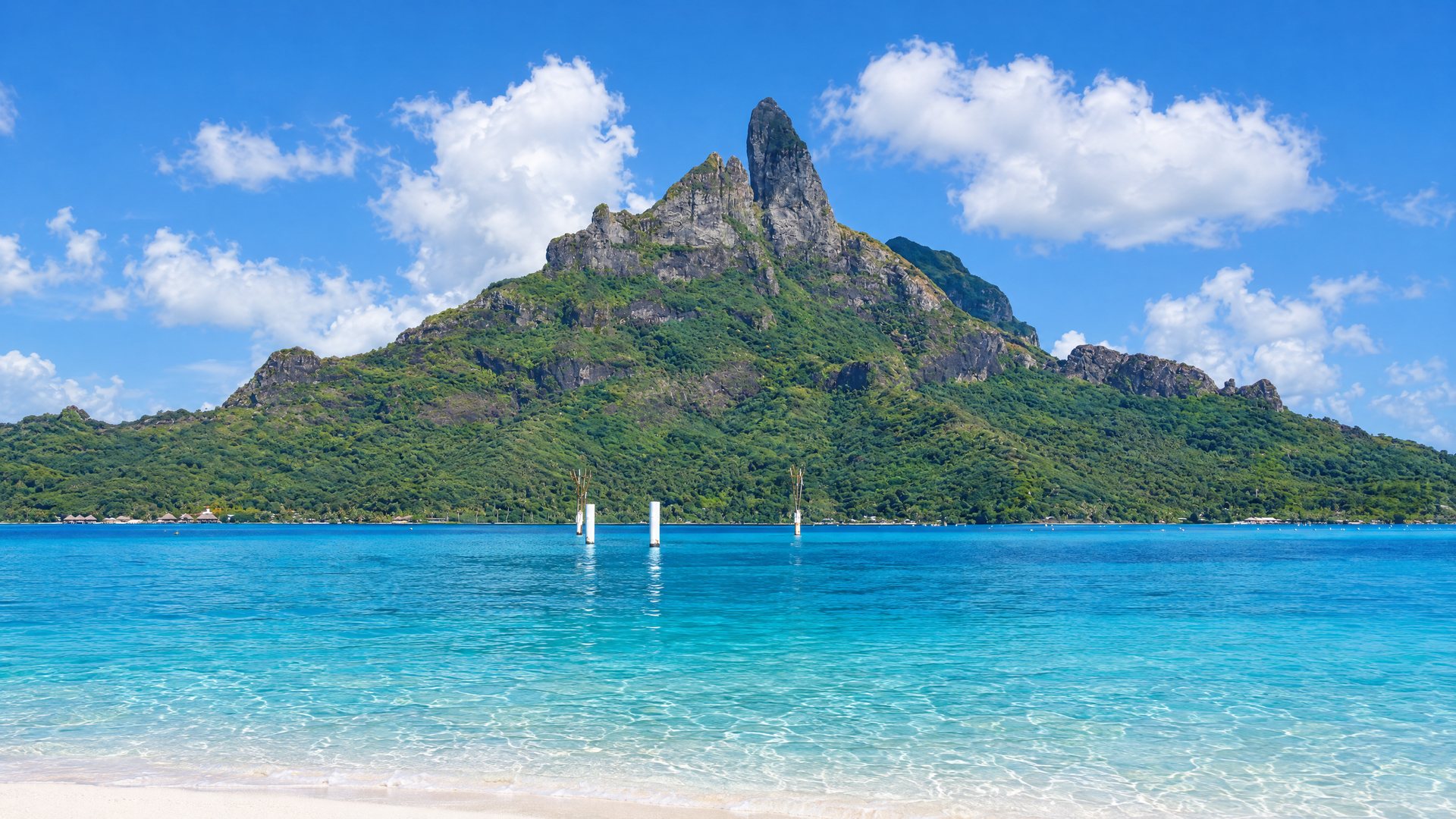
Society Islands
Bora Bora
The widest lagoon in the Society Islands, the overwater resorts, and the highest hotel prices in the country.
Open the island guideTuamotu
Fakarava
A UNESCO biosphere reserve with several hundred grey reef sharks in its south pass.
Open the island guide