Culture · Navigation
Reading the ocean
without instruments.
How Polynesian navigators found and settled the islands of the eastern Pacific, and how a 1976 voyage proved the method still works.
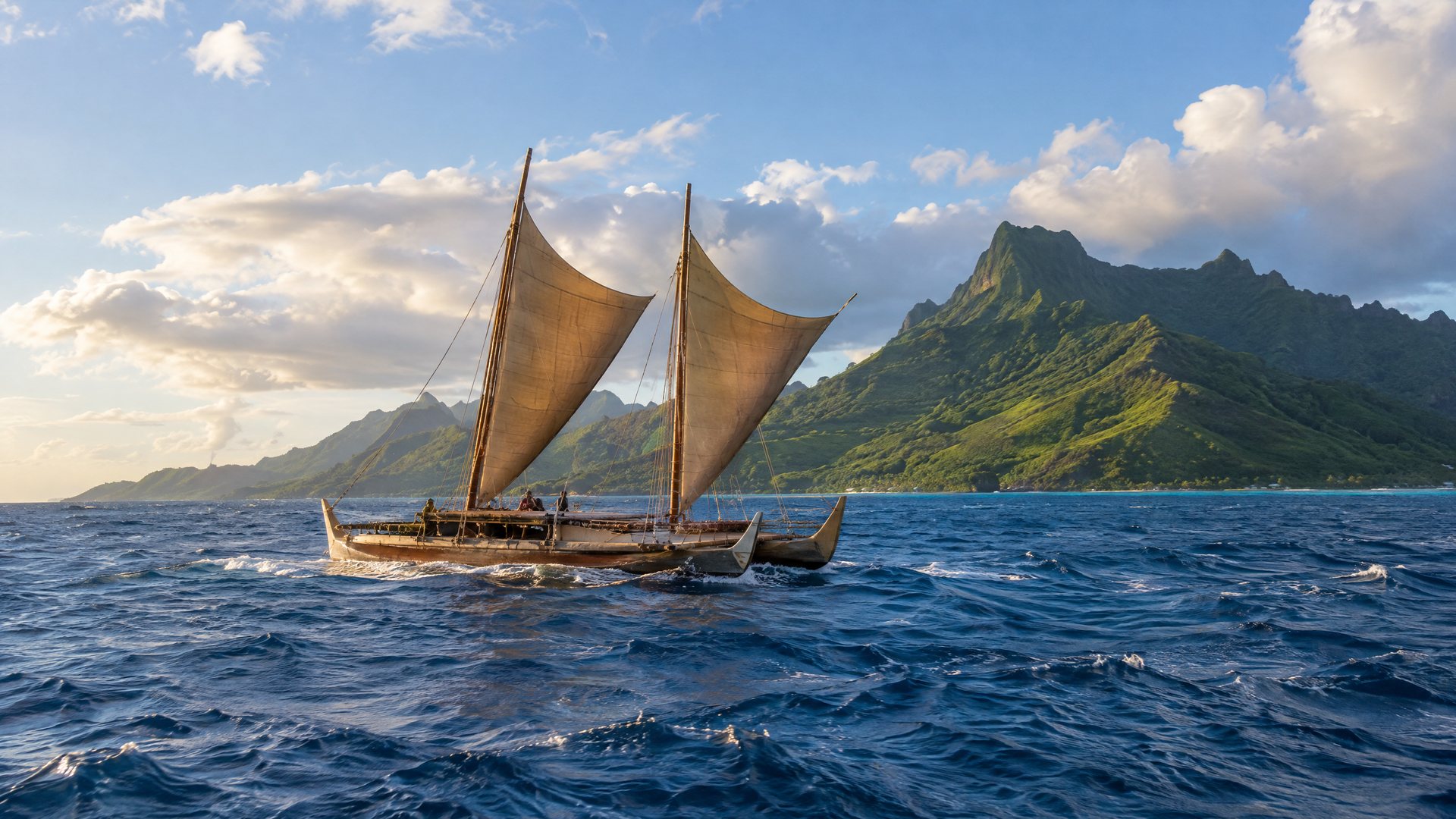
A voyaging canoe under sail
Current archaeology places the settlement of eastern Polynesia, the Society Islands, the Tuamotu and the Marquesas, at roughly 1000 to 1200 AD. The settlers came in double-hulled canoes carrying families, crops and animals, and they navigated by memory of the sky and the sea.
01 · The method
Stars, swells,
birds, clouds.
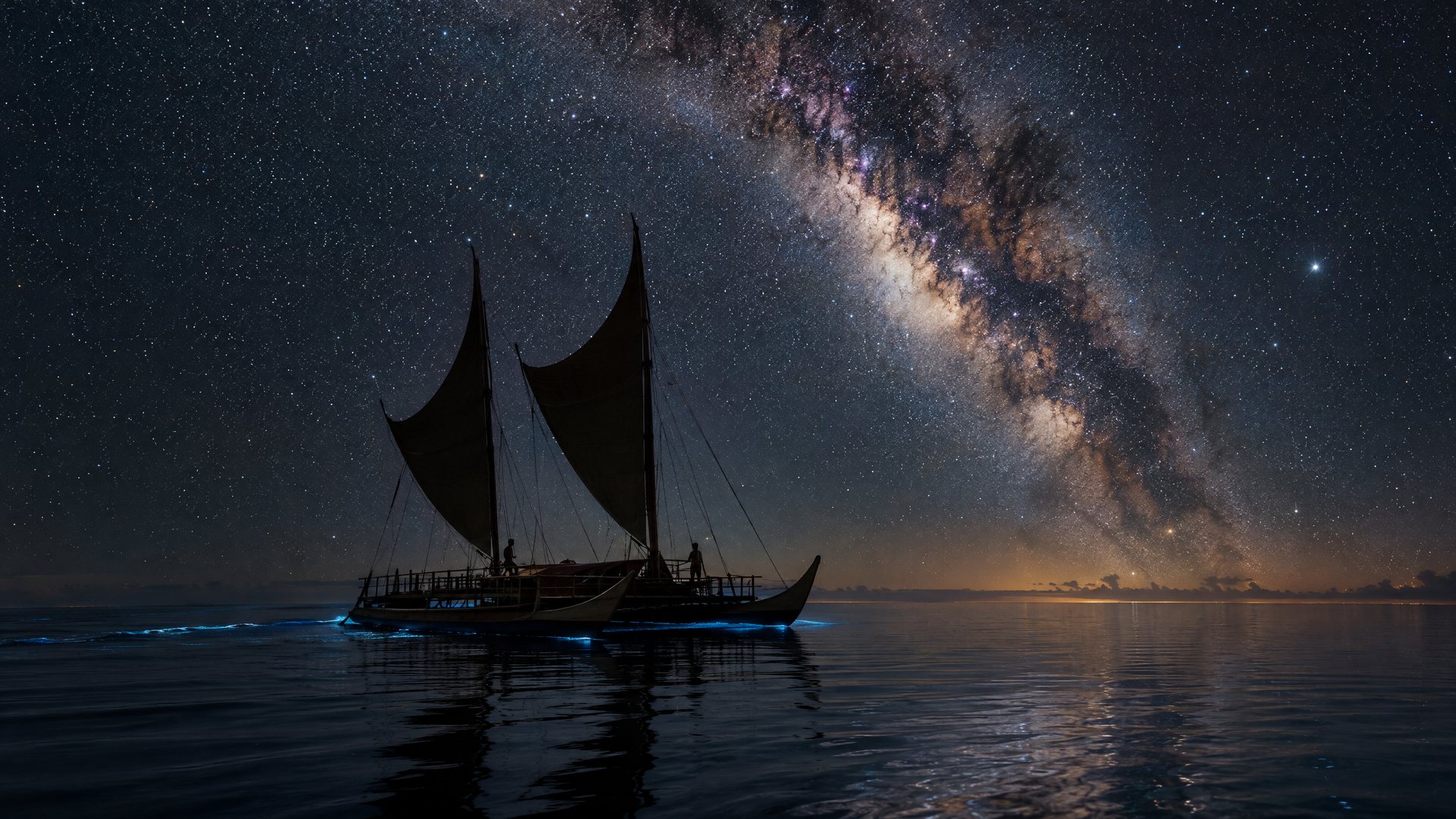
A navigator held in memory a star compass: the points on the horizon where particular stars rise and set, learned as a wheel of directions and taught by chant. Stars passing directly overhead marked the latitude of known islands. By day the long ocean swells, which keep their direction under changing winds, gave a heading; where an island lay upwind, the swells bent and crossed around it, and a navigator could feel that through the hull before anything was visible.
Near land the signs multiplied. Terns and noddies feed at sea but sleep ashore, so their flight at dusk points at an island. A lagoon throws a green light onto the underside of the cloud above it. Cloud stacks over high islands and stays there. None of this needed an instrument, and all of it needed years of training in a lineage of navigators.
When Tupaia, a priest-navigator from Raiatea, joined Cook's Endeavour in 1769, he named islands across thousands of kilometres and drew a chart of more than seventy of them from memory. He also navigated the ship to Rurutu, 570 km south of Tahiti, which no European aboard could have done.
02 · The toolkit
What steered
the canoe.
- Star compass
- Horizon points where key stars rise and set, memorised as a wheel of directions.Taught by chant
- Swell reading
- Long ocean swells hold their direction under changing wind; land bends and crosses them.Felt through the hull
- Birds and clouds
- Terns and noddies sleep ashore; lagoon light greens the underside of clouds.Signs of land
- Zenith stars
- Stars passing overhead mark the latitude of known islands.Position by sky
- The canoe
- Double hulls or an outrigger: a stable platform that could carry people, crops and animals for weeks.Built for distance
- The school
- Knowledge held by navigator lineages and marae schools; today by voyaging societies.Still taught
03 · The proof
Hokule'a,
1976.
For a century, European writers argued that Polynesia had been settled by accident, by canoes blown off course. In 1976 the Polynesian Voyaging Society sailed Hokule'a, a reconstructed double-hulled canoe, from Hawai'i to Papeete without instruments, navigated by Mau Piailug, a master navigator from Satawal in Micronesia. The crossing took about a month. A crowd estimated in the tens of thousands met the canoe on the Papeete waterfront.
The voyage showed that the traditional method was deliberate and repeatable. Hokule'a has since sailed across the Pacific and around the world. French Polynesia's own voyaging society, Fa'afaite, has sailed its canoe since 2009, and Taputapuātea on Raiatea, the marae the voyaging traditions point back to, hosts gatherings of canoes from across Polynesia.
04 · Where to see it
Navigation today.
- Taputapuātea, Raiatea
- The marae of the voyaging alliance, a World Heritage site since 2017, with the sacred pass in front of it.See the Raiatea guide
- Museum of Tahiti and the Islands
- Collections on voyaging, fishing and canoe building, at Punaauia on Tahiti.1,000 XPF; closed Monday and Tuesday
- Hawaiki Nui Va'a
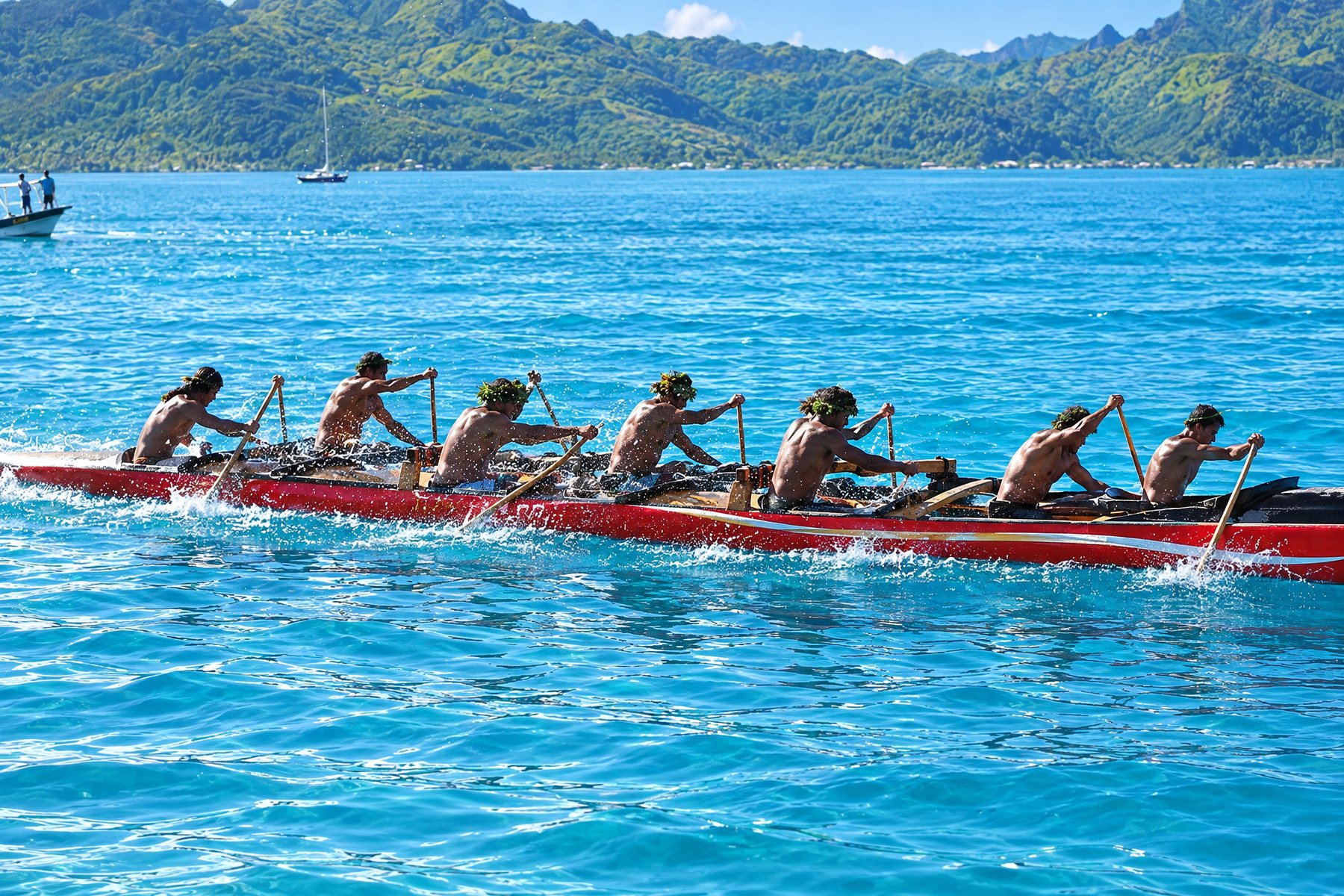
- The three-day outrigger race through the Leeward Islands in early November. Crews train on every lagoon all year.Rooms in the Leewards fill that week
- Hokule'a and Fa'afaite
- The voyaging societies publish crew logs and wayfinding explainers; canoes visit French Polynesia on their voyages.hokulea.com
Related
Related pages.
Explained
Tupaia's chart
A navigator from Raiatea drew a chart of more than seventy islands for Captain Cook in 1769.
Read the article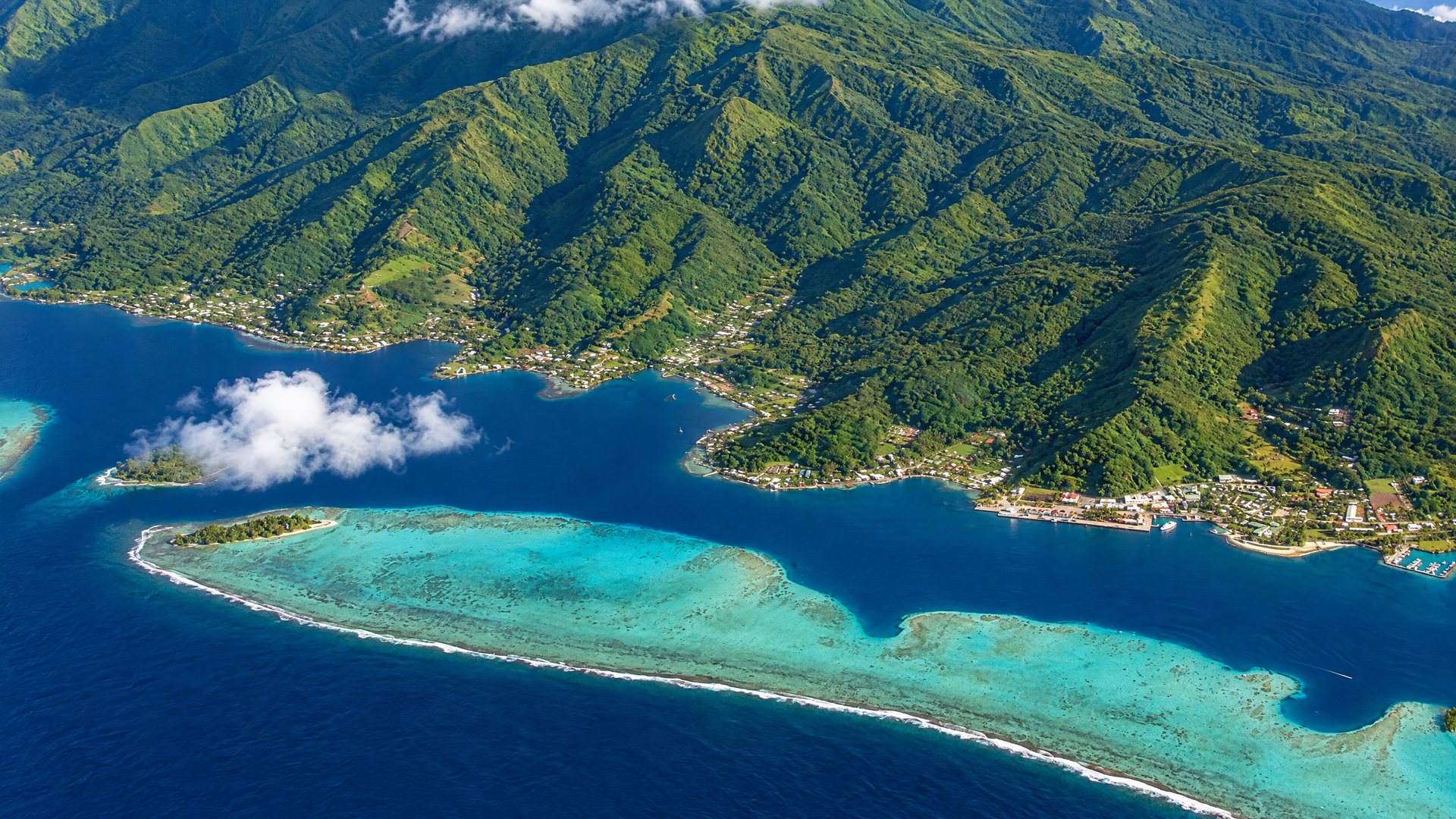
Society Islands
Raiatea
Taputapuātea, the World Heritage marae, and the base for most sailing charters.
Open the island guide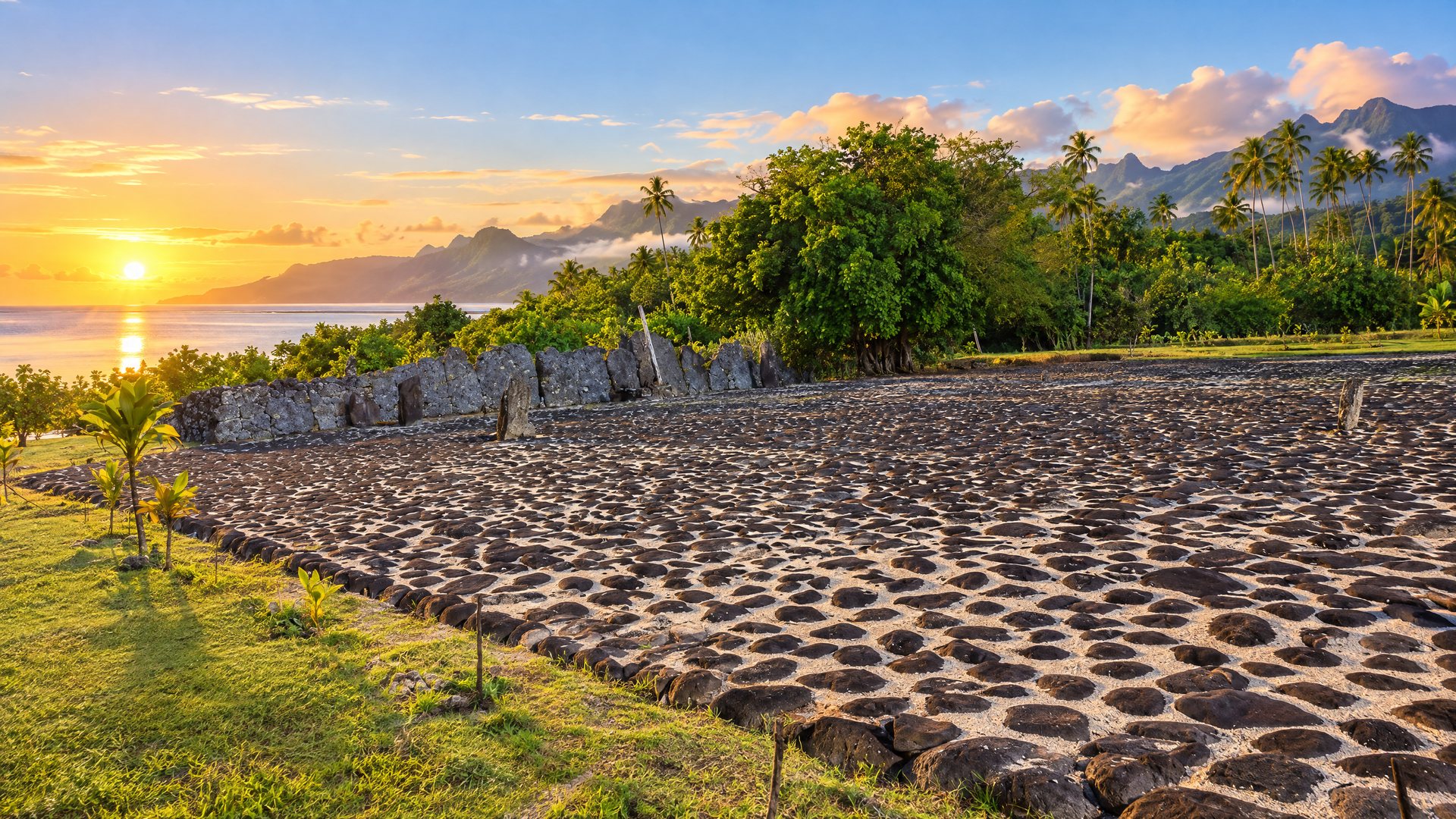
Culture
Marae
The stone courts of the ancestors, and how to visit one.
Read more
Culture
History
Settlement to self-rule in six moves.
Read more