Culture · History
From first sails
to self-rule.
Three thousand years of Pacific settlement, a century of upheaval after European contact, thirty years of nuclear tests, and an autonomy still being negotiated.
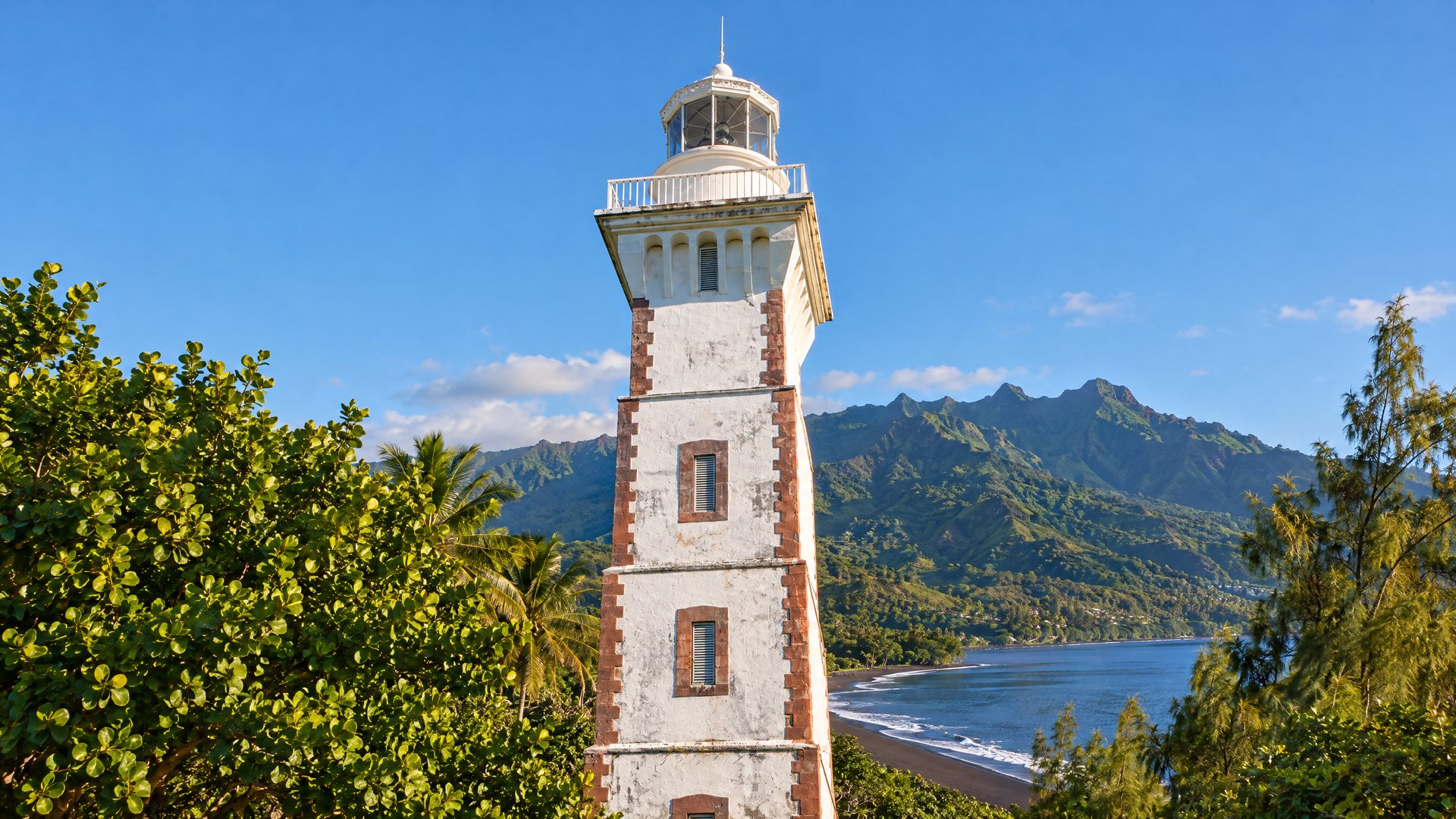
Point Venus, Tahiti
People reached western Polynesia around three thousand years ago. Their descendants settled the Society Islands, the Tuamotu and the Marquesas roughly between 1000 and 1200 AD, and went on to Hawai'i, Rapa Nui and Aotearoa. Chiefdoms grew around marae, tribute and the voyaging networks centred on Raiatea. Where dates and numbers are debated, this page says so.
01 · Contact
Thirty years that
changed everything.
Samuel Wallis anchored in Matavai Bay in 1767, Bougainville followed in 1768, and in 1769 Cook observed the transit of Venus from the point that now carries the planet's name, with Tupaia's help. Within a generation came muskets, the missionaries of the London Missionary Society, who landed from the Duff in 1797, epidemics that emptied valleys, and the rise of the Pomare dynasty with European backing. Pomare II won the battle of Fe'i Pi in 1815 and converted; the kingdom became a French protectorate in 1842.
Queen Pomare IV reigned for fifty years, from 1827 to 1877, through missionary factions, French and British rivalry, the forced protectorate and the Franco-Tahitian war of the 1840s. Her son Pomare V ceded the kingdom to France in 1880. The Marquesas had been annexed in 1842, the Gambier run as a theocracy by Father Laval from 1834 to 1871, and the Tuamotu and Australs brought in piece by piece. Papeete was shelled by German cruisers in 1914; the Americans built a base on Bora Bora in 1942.
02 · A timeline
Six moves.
- ~1000–1200 AD
- Eastern Polynesia settled by voyaging societies; marae culture develops.Dates refined by ongoing research
- 1767–1797
- Wallis, Bougainville and Cook; the Bounty in 1788–89; the missionaries land.
- 1815–1842
- Pomare II wins at Fe'i Pi and converts; the kingdom becomes a French protectorate.Pomare IV resists, then adapts
- 1880–1946
- Pomare V cedes the kingdom; the colony of Oceania; the 1914 shelling; the 1942 US base on Bora Bora; overseas territory from 1946.
- 1966–1996
- France's nuclear test centre at Moruroa and Fangataufa: 193 tests, atmospheric until 1974, underground after. The last was in January 1996.A reckoning still underway
- 1984–today
- Autonomy statutes in 1984 and 2004; relisted by the UN for decolonisation in 2013; the question of independence is argued at the ballot box.
03 · The nuclear chapter
Moruroa.
From 1966 to 1996 France conducted 193 nuclear tests at Moruroa and Fangataufa in the Tuamotu, atmospheric until 1974 and underground after. The consequences for health, environment and politics are documented, litigated and remembered. A 2006 government report acknowledged that fallout from the first test, Aldébaran in July 1966, reached Mangareva. In 2021 the French president acknowledged that the nation owed a debt to French Polynesia. The compensation process continues.
The tests also built modern Papeete: the test centre brought money, jobs, an airport and a wage economy, and their end in 1996 removed it. Tourism and the pearl industry were meant to replace it, and in part have.
04 · Where to see it
History in
place.
- Museum of Tahiti and the Islands
- The permanent collection at Punaauia is the best single overview. Wednesday to Sunday, 1,000 XPF.Go before the outer islands
- Point Venus
- Cook's observatory site, the 1867 lighthouse, and a black-sand beach.Mahina, Tahiti
- Fort George, Tubuai
- The Bounty mutineers' refuge of 1789, on private land opened in school holidays.See the Tubuai guide
- Rikitea, Mangareva
- More than a hundred mission-era stone buildings and the coral cathedral.See the Mangareva guide
- Atuona, Hiva Oa
- Gauguin's and Brel's graves, the Gauguin cultural centre, the Brel hangar.
- Bora Bora
- The 1942 airstrip still in use; the restored naval guns at Fitiu'u Point.
Related
Related pages.
Explained
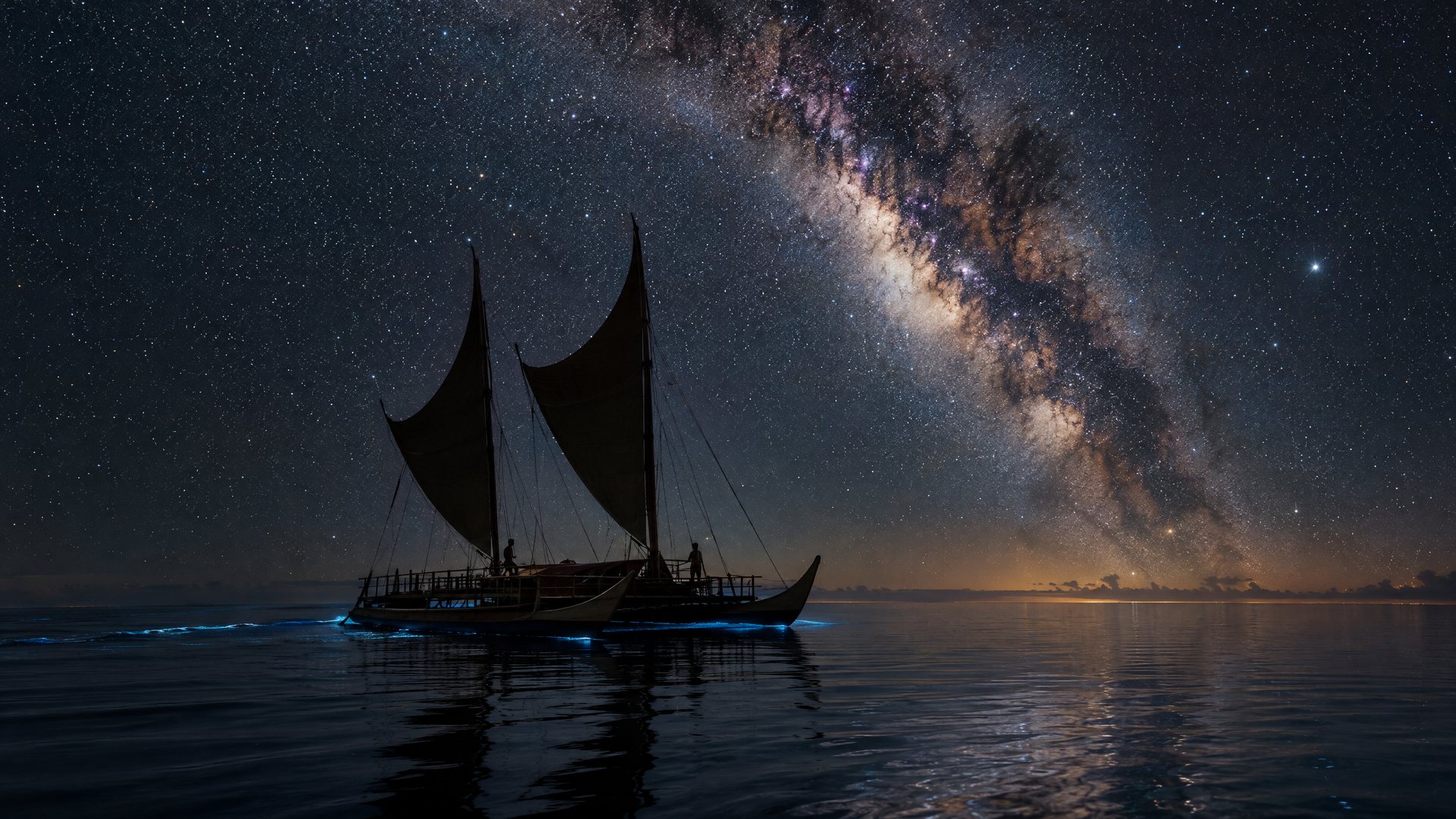
Tupaia's chart
A navigator from Raiatea drew a chart of more than seventy islands for Captain Cook in 1769.
Read the article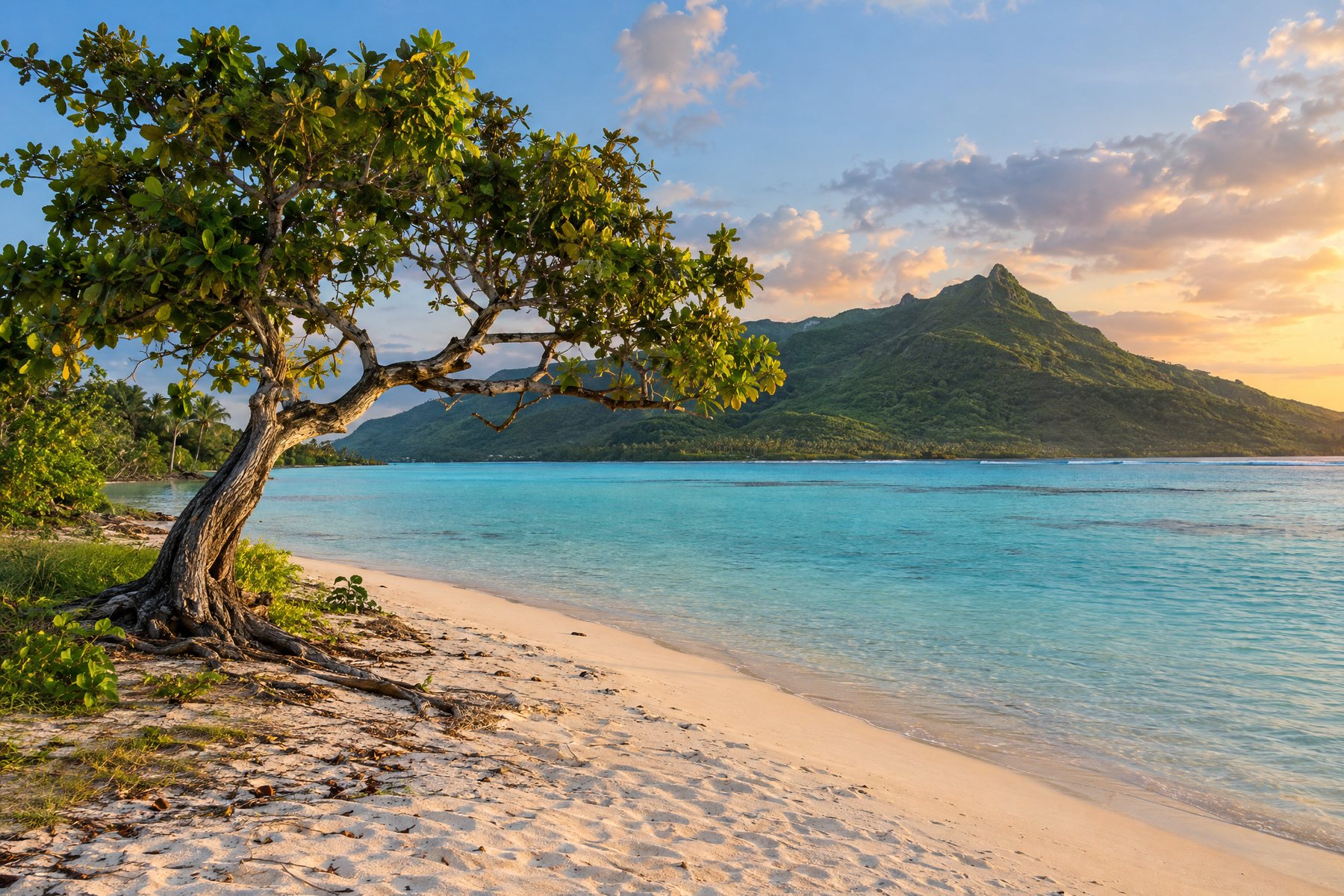
Explained
The mutineers' fort
In 1789 Fletcher Christian and the Bounty mutineers built a fort on Tubuai. They left within months.
Read the article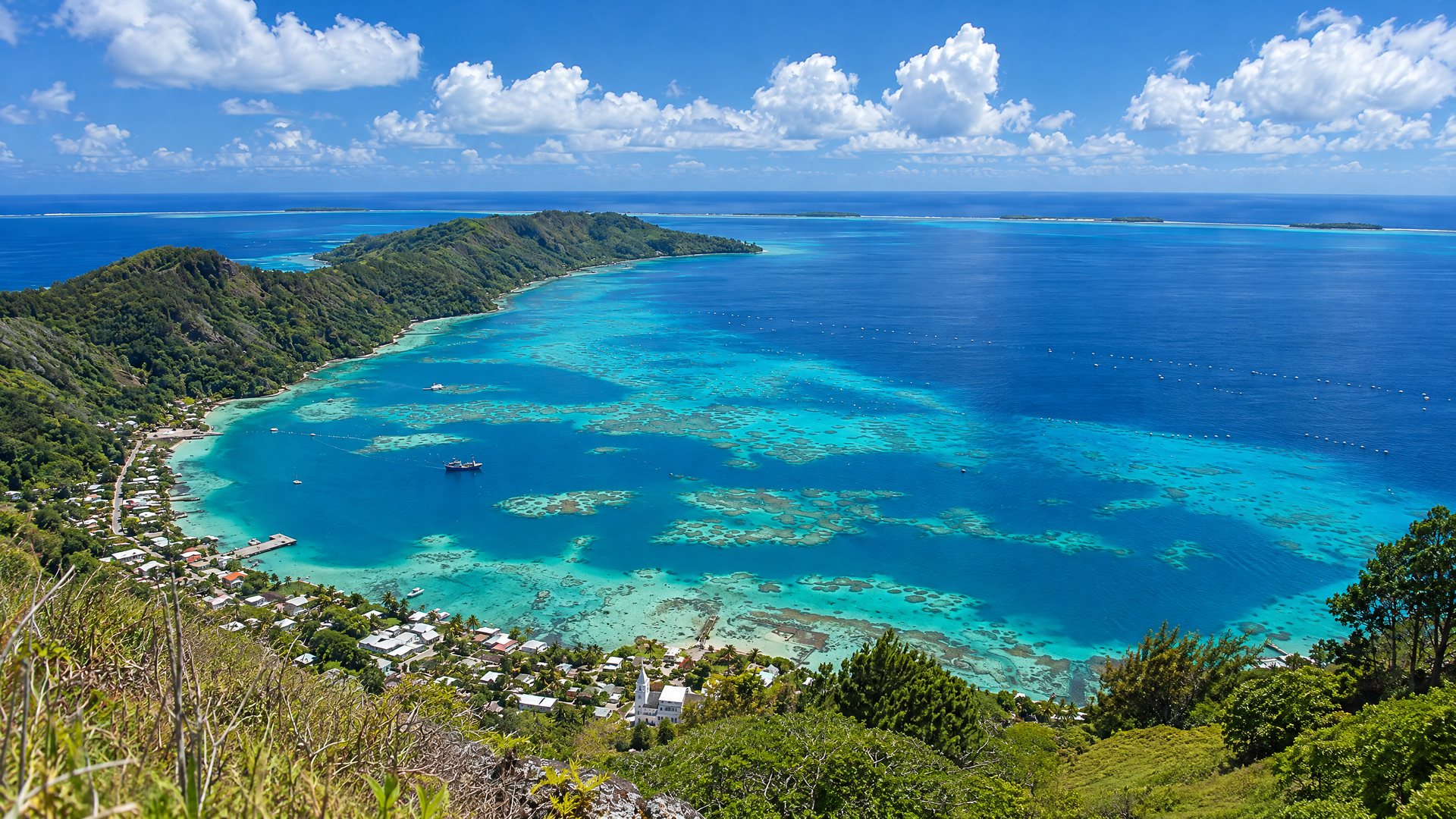
Gambier
Mangareva
Two flights a week, a coral-stone cathedral, and the lagoon that grows a quarter of the country's pearls.
Open the island guide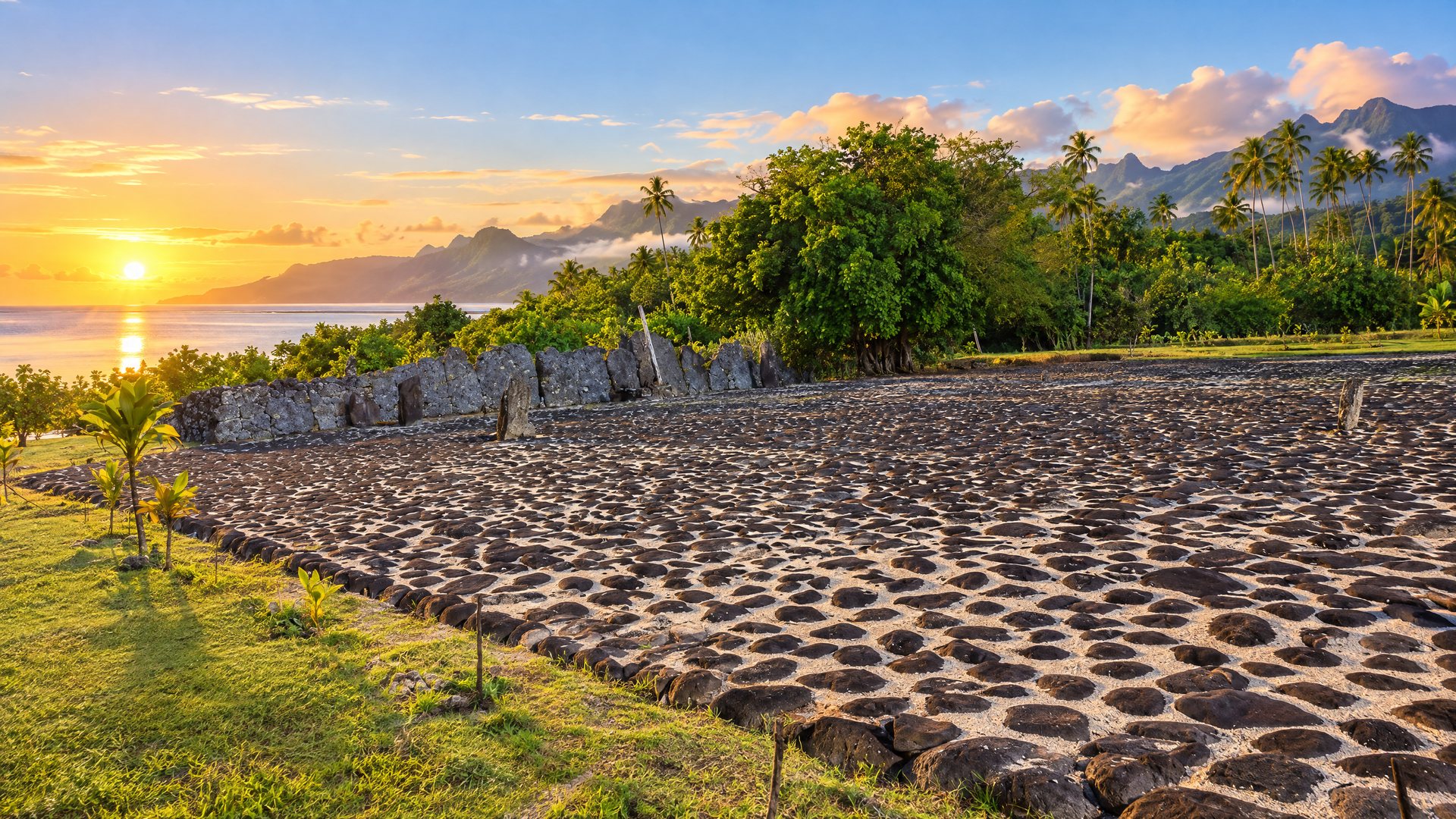
Culture
Marae
The pre-contact world, in stone.
Read more