Culture · Marae
Stone courts
of the ancestors.
What marae are, why Taputapuātea mattered across an ocean, and how to visit ceremonial sites with the care they are owed.
Taputapuātea, Raiatea
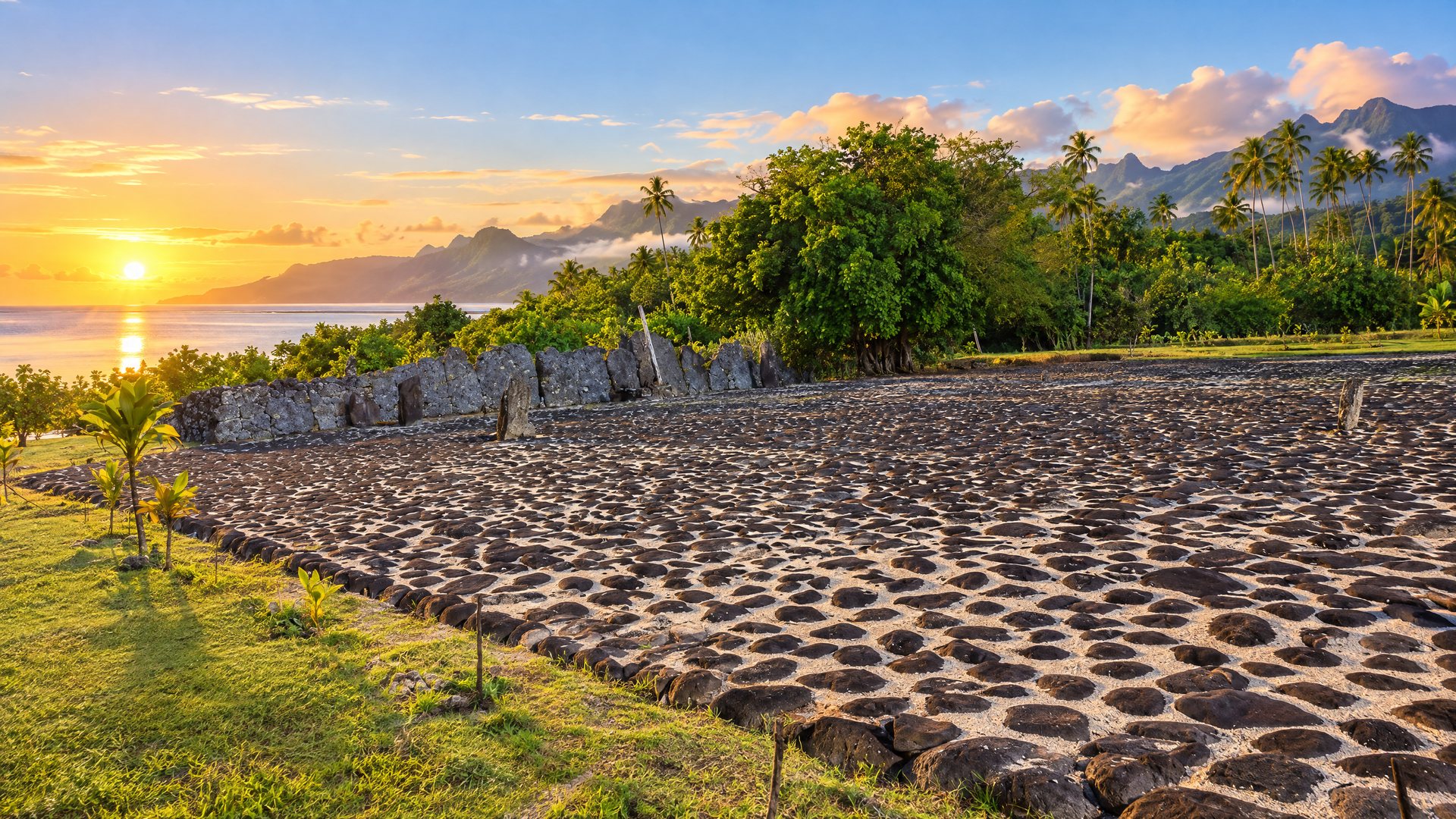
A marae is a ceremonial court: usually a paved rectangle with a raised stone platform, the ahu, at one end, and upright stones marking the seats of chiefs and priests. Births, successions, alliances, harvests and tapu were declared here. Families kept household marae; districts and kingdoms kept great ones. Many are still tended, some are tapu, and several are used again for ceremony.
01 · The greatest of them
Taputapuātea,
at Opoa.
The marae at Opoa on Raiatea, ancient Havai'i, was the religious centre of eastern Polynesia. As the cult of the god 'Oro spread from it, new marae were founded elsewhere with stones carried from this court, so that temples thousands of kilometres apart were bound into one ceremonial family. UNESCO inscribed the Taputapuātea landscape in 2017: the marae complex, the Te Ava Mo'a pass in front of it, and the Opoa and Hotopu'u valleys behind, with older marae and terraces.
There is an information desk, toilets, audio guides and panels. Do not walk on the paved platforms or move stones. A guide is worth hiring for the stories, and the site is best in the early morning before the tour vans.
02 · Reading a marae
What you are
looking at.
- Ahu
- The raised platform at the end of the court. The most sacred architecture.Never climb it
- Court and paepae
- Paving and terraces where people assembled by rank.Walk the edges
- Standing stones
- Backrests and markers for chiefs, priests and lineages. Each stone stands for somebody.
- Unu and offerings
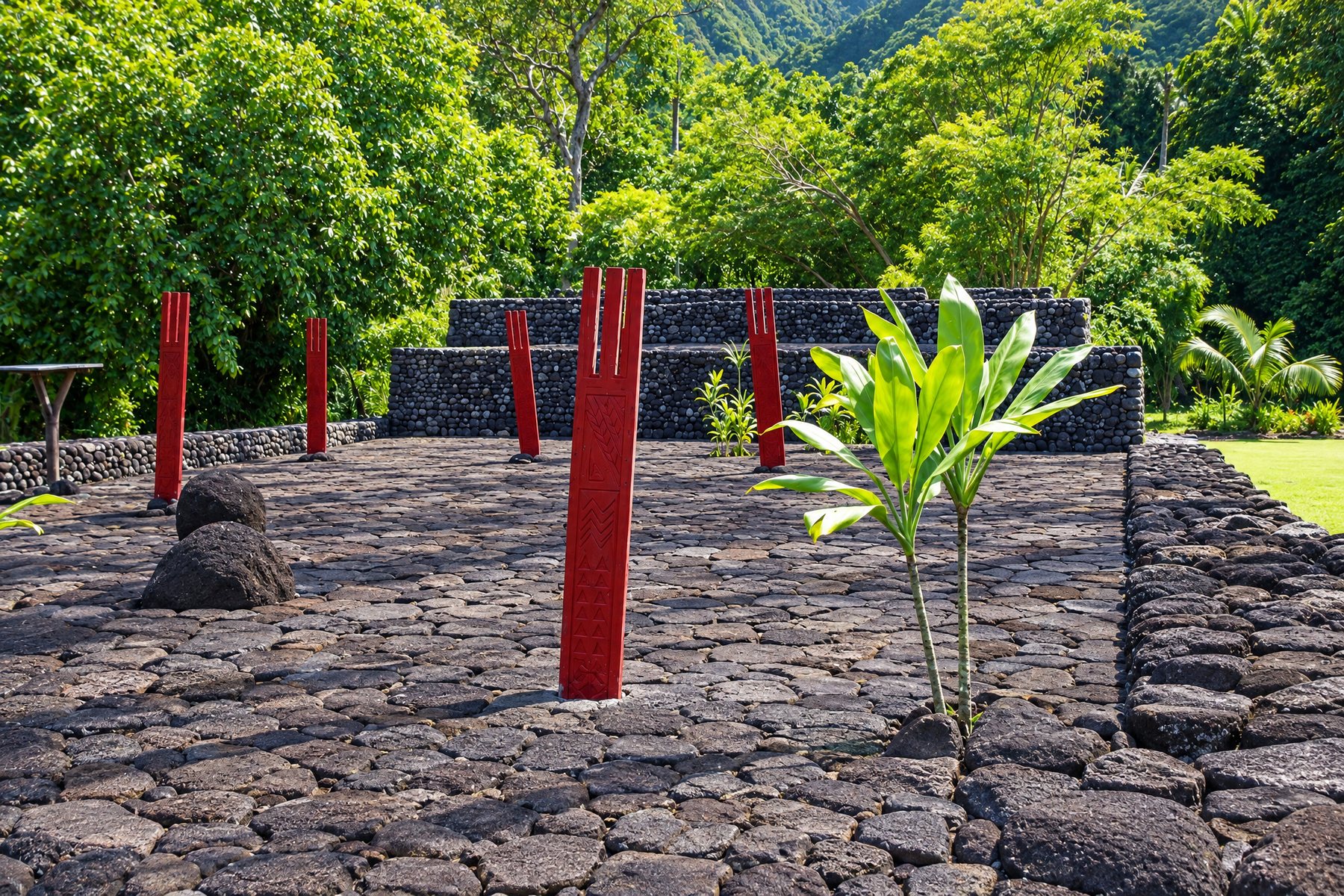
- Carved posts and offering platforms. The perishable parts, cloth, feathers, wood, are gone.Restorations add replicas
- In the Marquesas
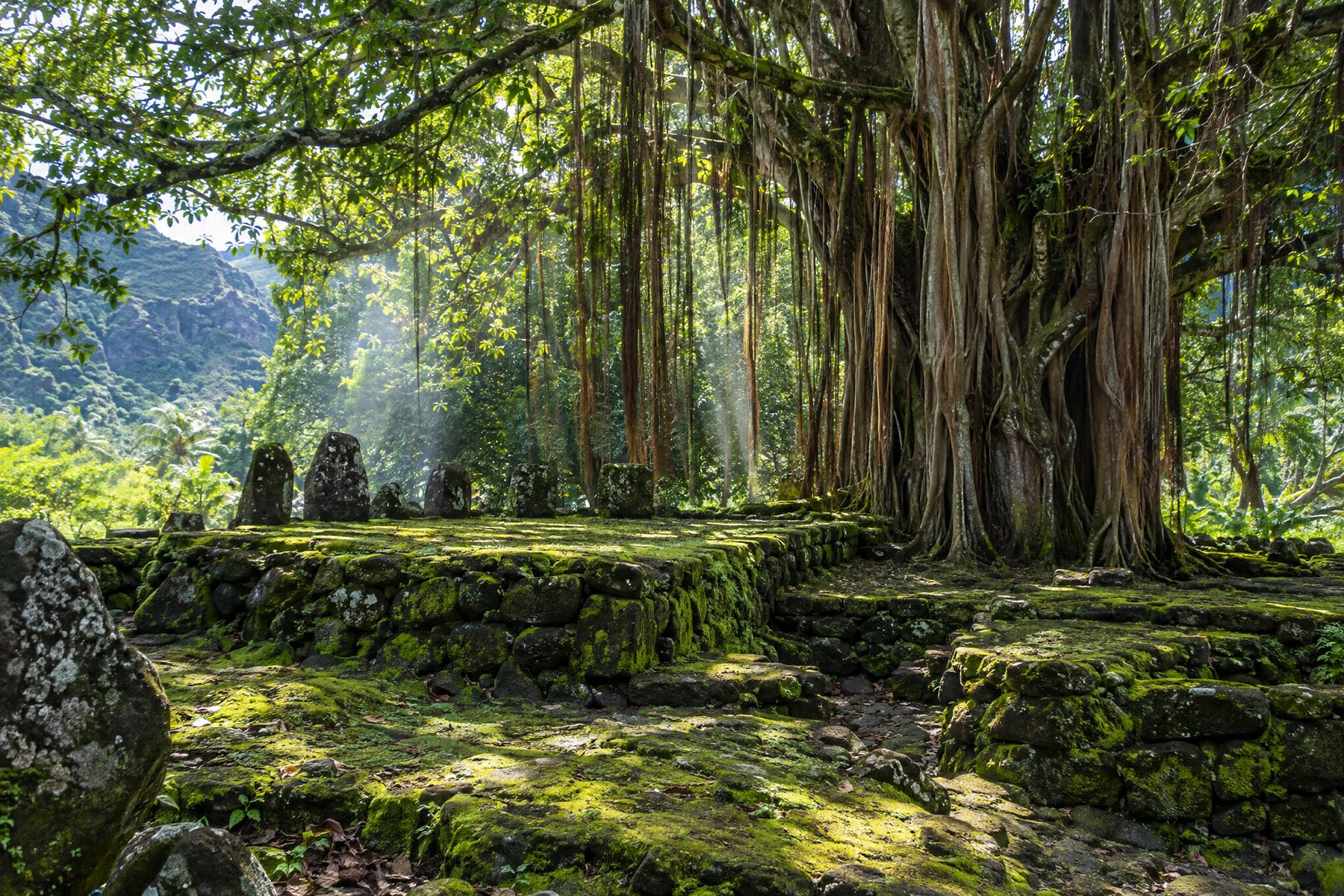
- Me'ae and tohua, with tiki figures, under banyan trees. Different words, the same weight.Kamuihei, Iipona, Upeke
- Restored sites
- Arahurahu on Tahiti, Maeva on Huahine, the Opunohu valley on Moorea, Taputapuātea on Raiatea. Start with these.
03 · Visiting
Four places
to start.
Arahurahu, at PK 22.5 on the mountain side of the road in Paea, is an easy half-day from Papeete and the gentlest introduction: a paved court, offering posts and a stepped platform under tall trees. On Huahine, dozens of marae line the shore of Lake Fauna Nui at Maeva and climb Matairea hill behind, with the Fare Pote'e museum on the water and stone fish traps still worked in the shallows. In Moorea's Opunohu valley, more than five hundred structures were inventoried in 1960 and the main marae restored in 1969, in the forest below the Belvedere road.
In the Marquesas the sites are larger and older-feeling: Kamuihei and Hikokua behind Hatiheu on Nuku Hiva, Iipona at Puamau on Hiva Oa with the tallest ancient tiki in French Polynesia, Upeke in the Taaoa valley with more than a thousand platforms. The rule everywhere is the same: stay on the paths, climb nothing, move nothing, no picnics, no alcohol, and follow local guidance.
Related
Related pages.
Society Islands
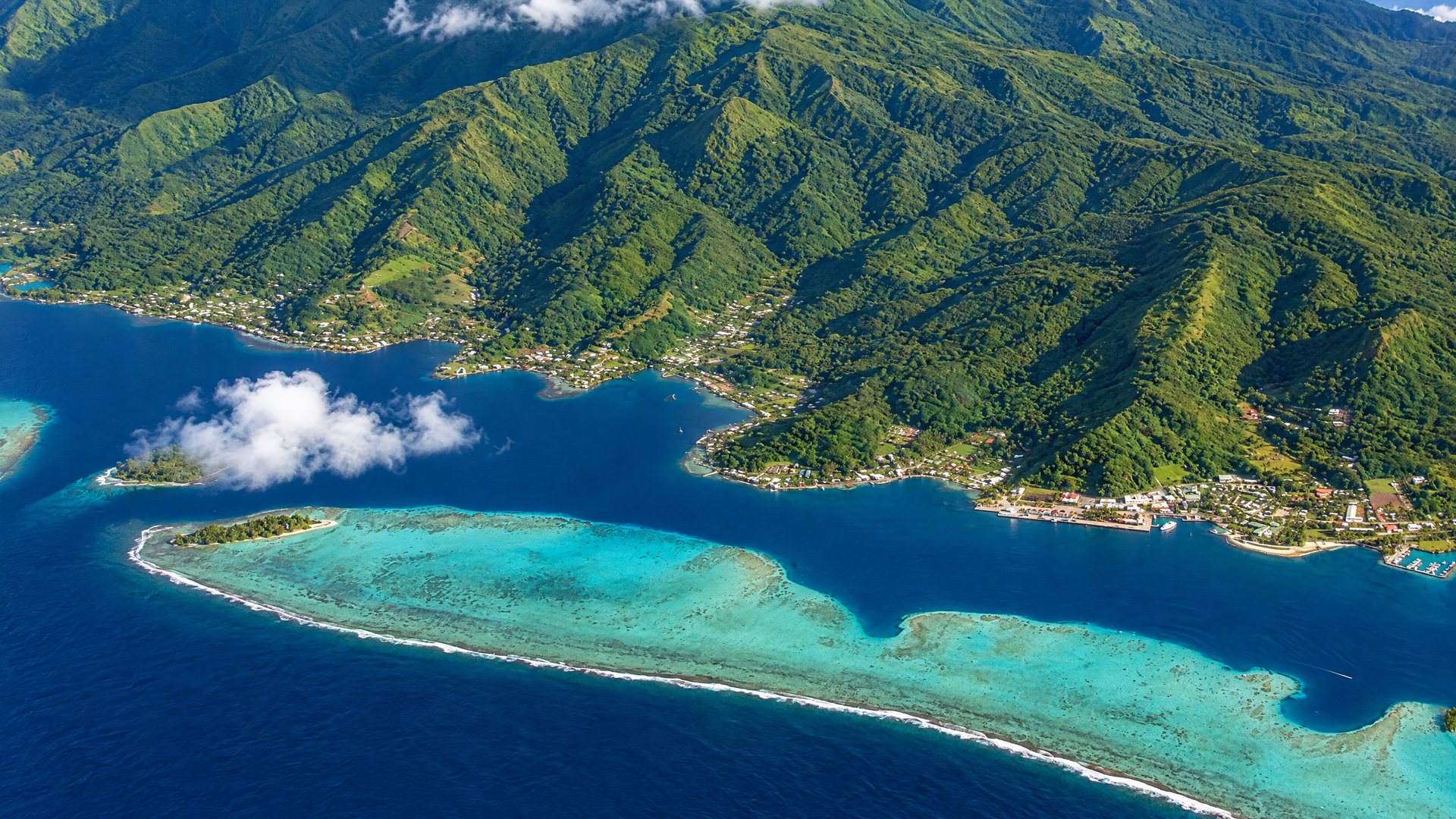
Raiatea
Taputapuātea, the World Heritage marae, and the base for most sailing charters.
Open the island guide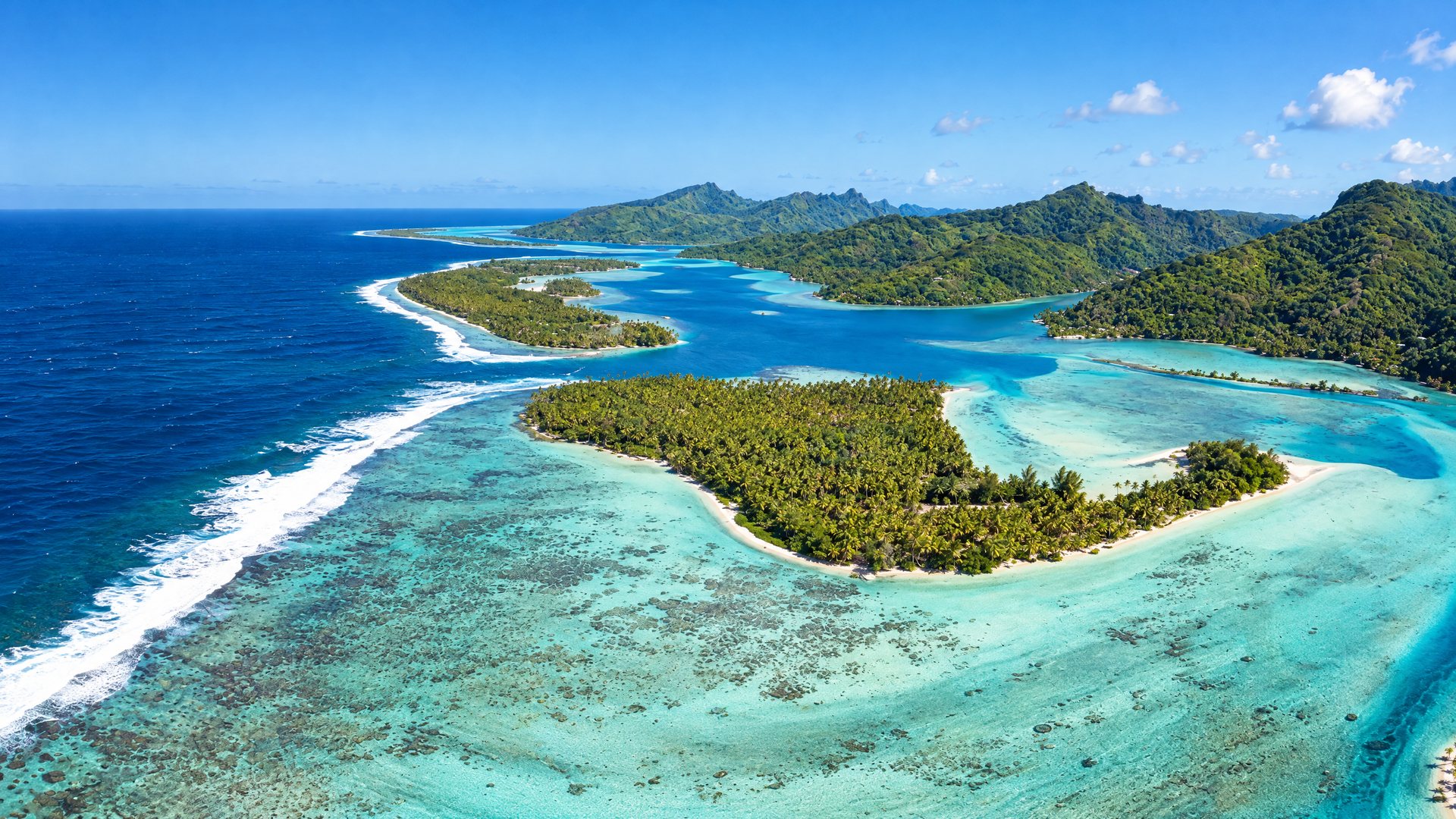
Society Islands
Huahine
Two islands inside one reef, restored marae beside a lake, and family pensions instead of resorts.
Open the island guide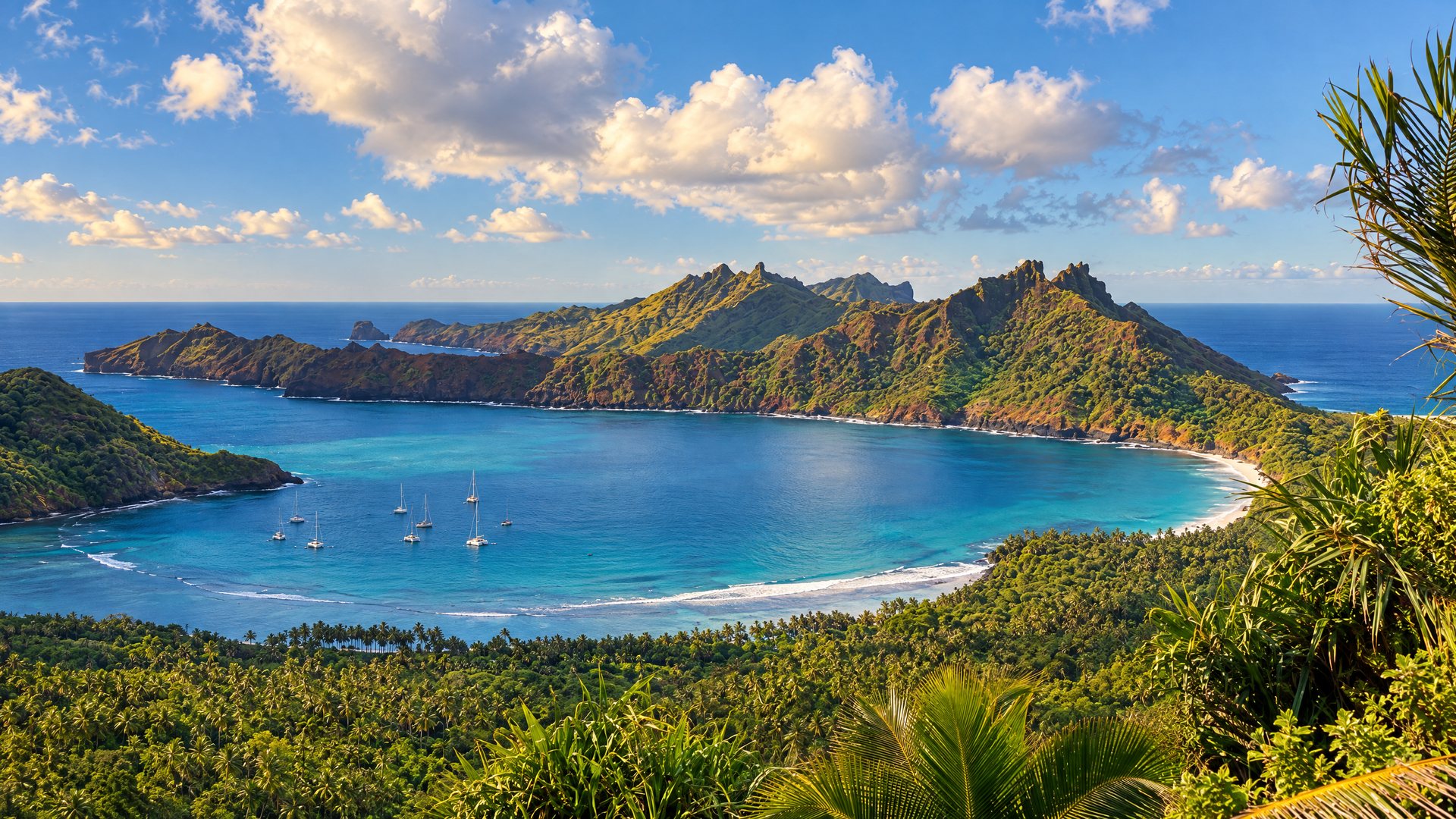
Marquesas
Nuku Hiva
The largest Marquesan island. No reef, no lagoon; valleys reached by boat and a 350-metre waterfall.
Open the island guide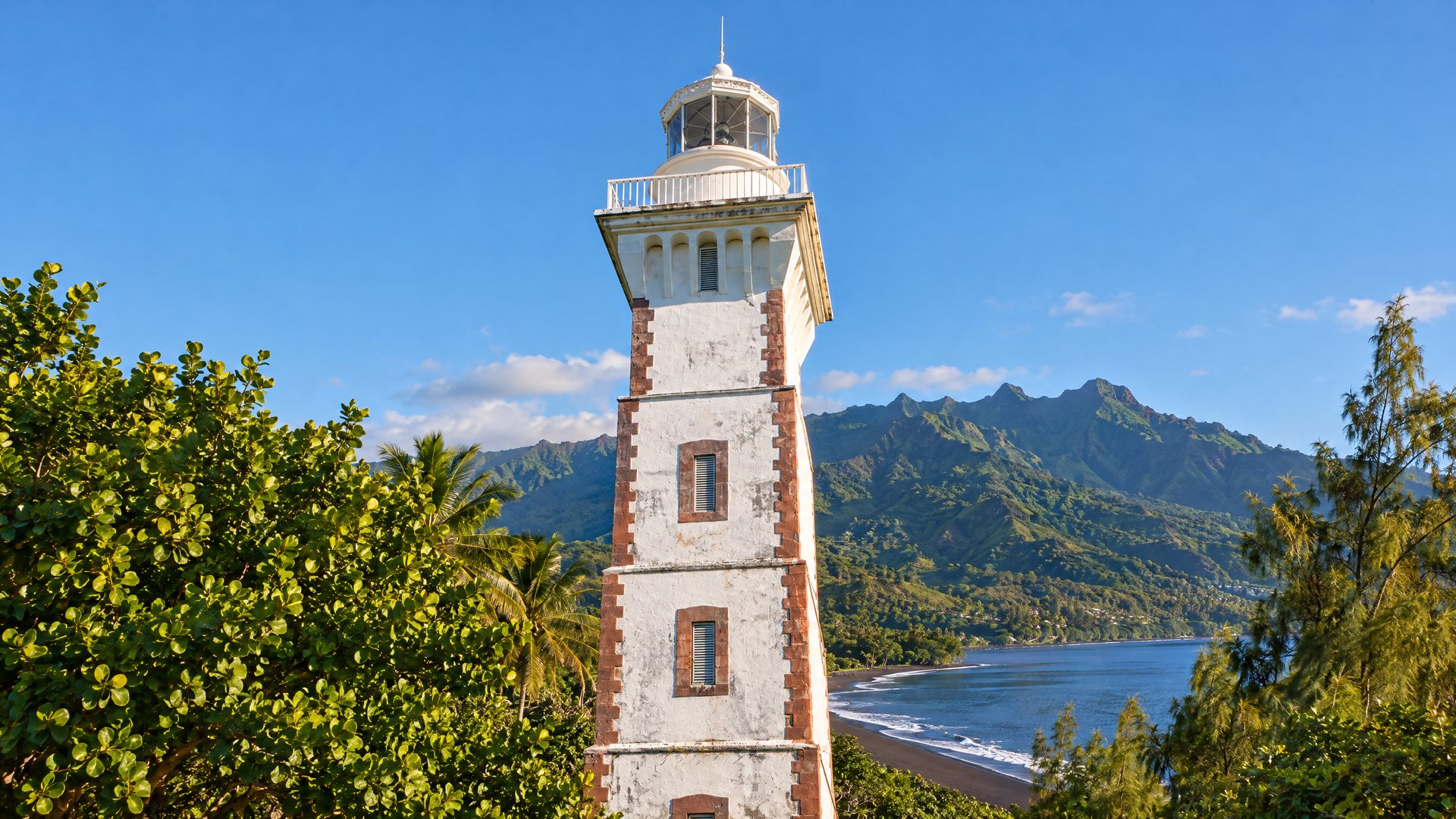
Culture
History
What happened to the marae after 1797.
Read more