Culture · Language
Five vowels
and a glottal stop.
Tahitian, Marquesan, Pa'umotu and their relatives live alongside French. What visitors should know, and the handful of words that matter.
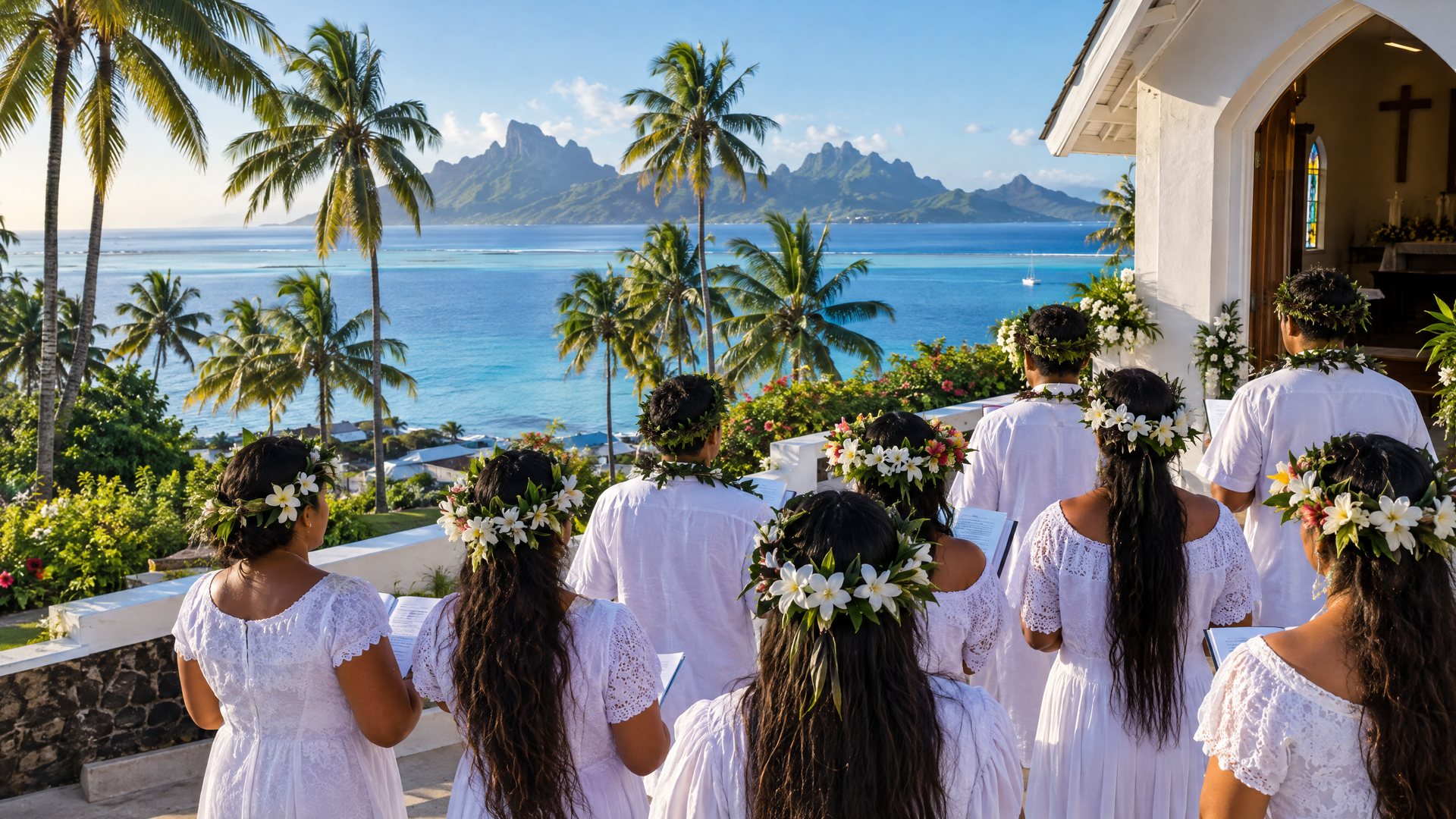
A himene, sung in a village church
French is the official language and everyone in tourism speaks it; English is common in hotels and dive centres. Tahitian is the most widely spoken Polynesian language, but it is one of several: Marquesan in northern and southern forms, Pa'umotu in the Tuamotu, Mangarevan in the Gambier, and the distinct speech of the Austral Islands. All belong to the Austronesian family, which stretches from Madagascar to Rapa Nui.
01 · How it works
Every letter
is pronounced.
Tahitian is written with thirteen letters: five vowels and eight consonants. The 'eta, a glottal stop written like a reversed apostrophe, is a consonant in its own right, the catch in the throat in the middle of Taha'a or Teahupo'o. A macron marks a long vowel. Every vowel is sounded, so Papeete has four syllables, Fa'a'a three, and Punaauia five. Pronounce them all and place names begin to sound like what they describe: Papeete means basket of water, after the spring where the town began.
The Académie tahitienne, the Fare Vana'a, was founded in 1974 and keeps the dictionary, the spelling and the new words. A Marquesan academy has done the same for 'eo 'enana since 2000. Signage increasingly restores the 'eta and macron that colonial-era spelling dropped, which is why you will see the same name written two ways on the same road.
Decades of French-only schooling pushed the languages out of many homes. They are now taught in schools, sung at every Heiva in the massed choral form called himene tarava, and used by broadcasters and the academies. Nobody minds a visitor's accent. A greeting in Tahitian is noticed, and it changes how you are received.
02 · A starter vocabulary
Words to
travel with.
- 'Ia ora na
- Hello. Said to rooms, shops and strangers. Say it first.ee-ah OH-rah nah
- Mauruuru
- Thank you. Add roa for very much.mah-oo-ROO-roo
- Nana
- Goodbye, informal. Parana'e: see you later.
- E aha te huru?
- How are you? The answer is maita'i, well.
- Motu · marae · mana
- Islet, ceremonial site, spiritual power. Three words you will meet every day.Now in English too
- Tama'a maita'i
- Enjoy your meal, said before eating together.Meals are shared
03 · Names
Place names
are descriptions.
Fa'a'a, where the airport is, Punaauia, Taiohae and Rikitea all carry old geographies inside them. Moorea is the yellow lizard; Rangiroa is a vast sky; Fakarava's two passes are Garuae and Tumakohua; Teahupo'o is a name a village keeps whatever the surf press calls the wave. Tahiti Tourisme and the academies publish the spellings; this guide uses the forms the islands themselves use, 'eta included, where it can.
Related
Related pages.
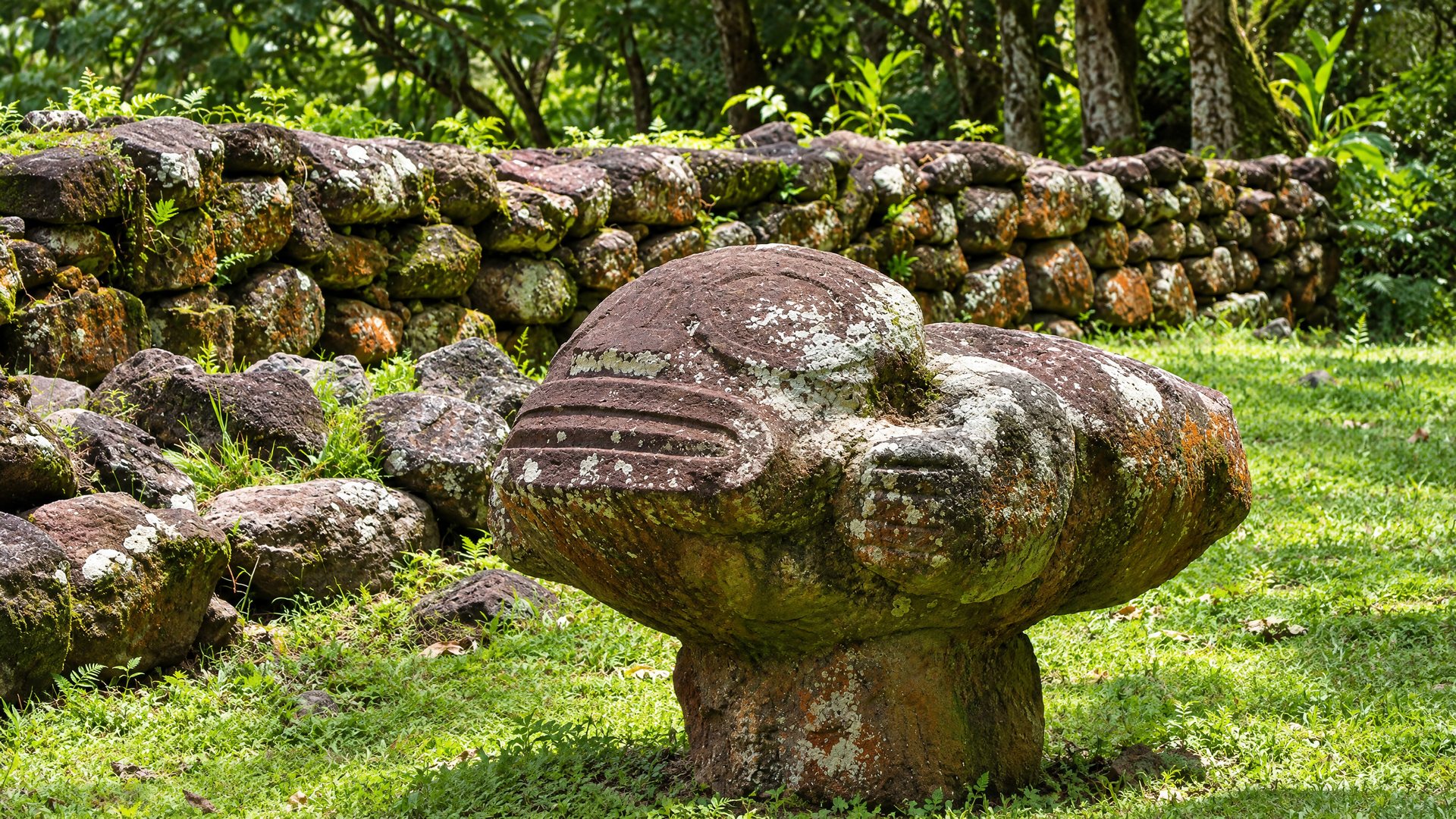
Culture
Arts
Dance, drums and the choral singing the words are sung in.
Read more
Culture
Navigation
The knowledge that was taught by chant.
Read more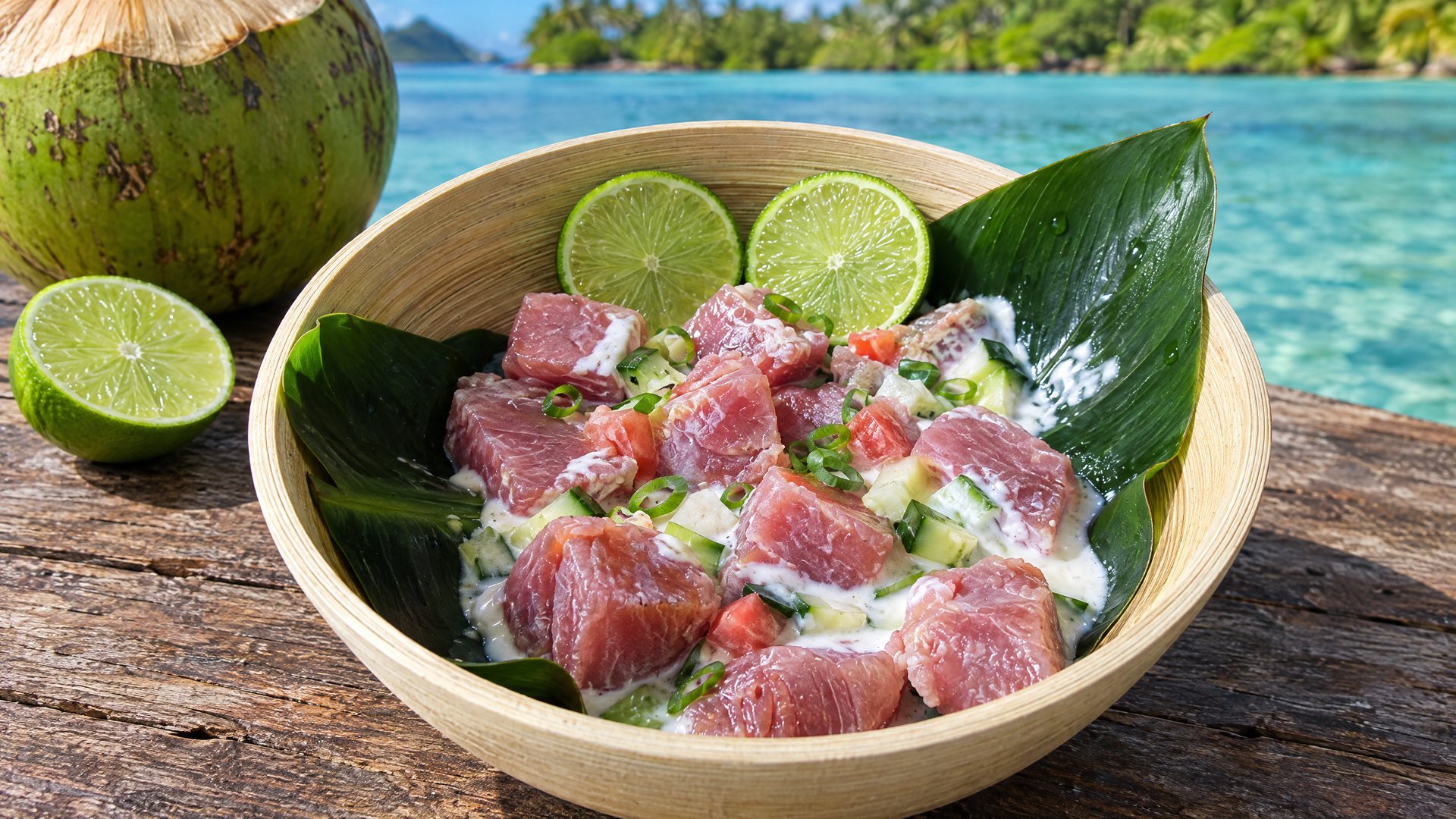
Culture
Food
The words on the menu, decoded.
Read more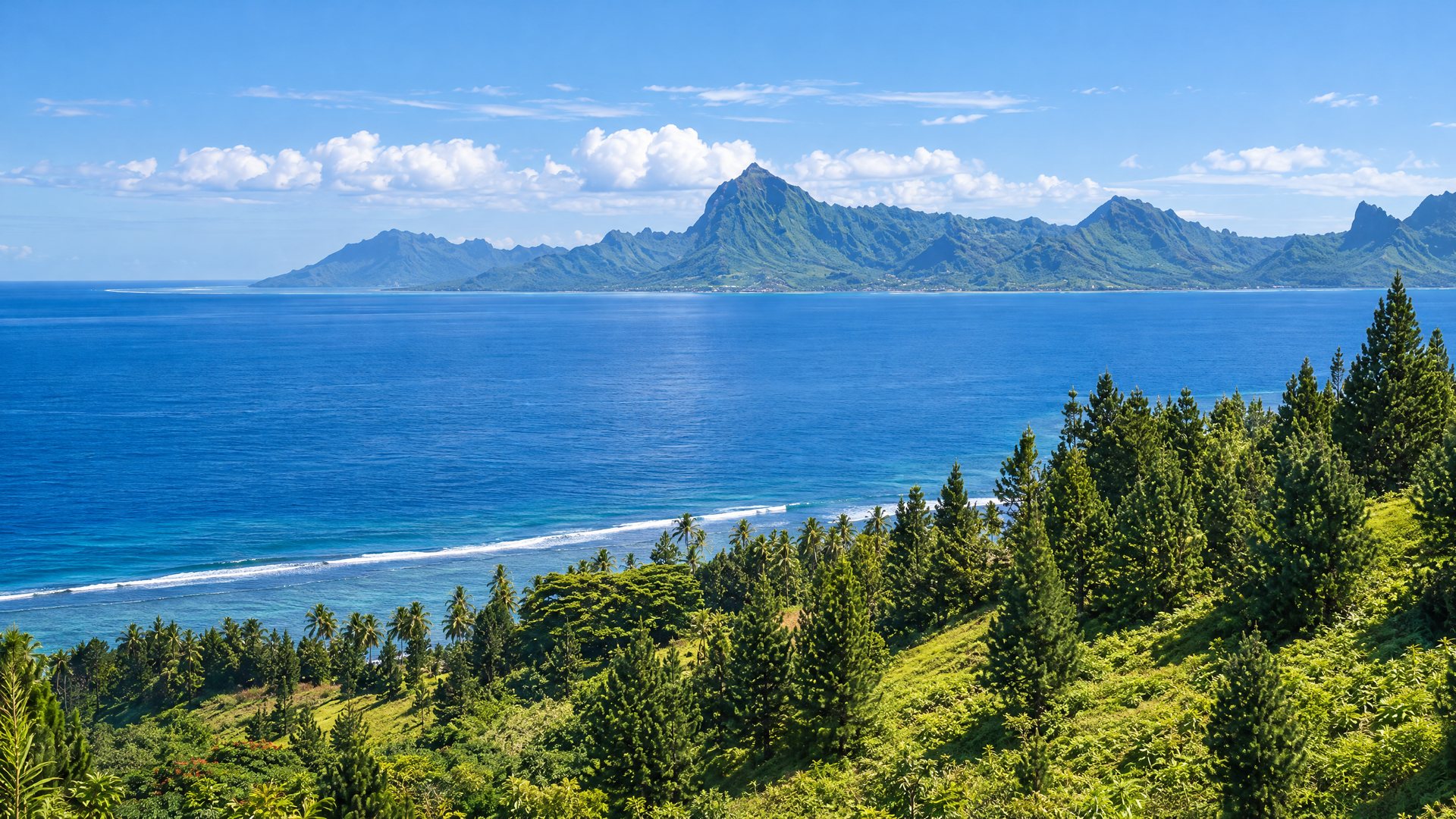
Society Islands
Tahiti
The capital island: Papeete's market, the museum, the interior valleys and Teahupo'o.
Open the island guide