Culture · Food
Lagoon fish,
earth ovens,
baguettes.
From poisson cru to the Sunday ahima'a, from food trucks to Chinese-Tahitian kitchens: how the islands eat, and what to order.
Poisson cru
Prices reflect distance: much is imported and taxed. The food the islands produce themselves, fish, fruit, taro, breadfruit, coconut, is the best and the cheapest, and it is on every table from the roulotte to the resort.
01 · The national dish
Poisson cru.
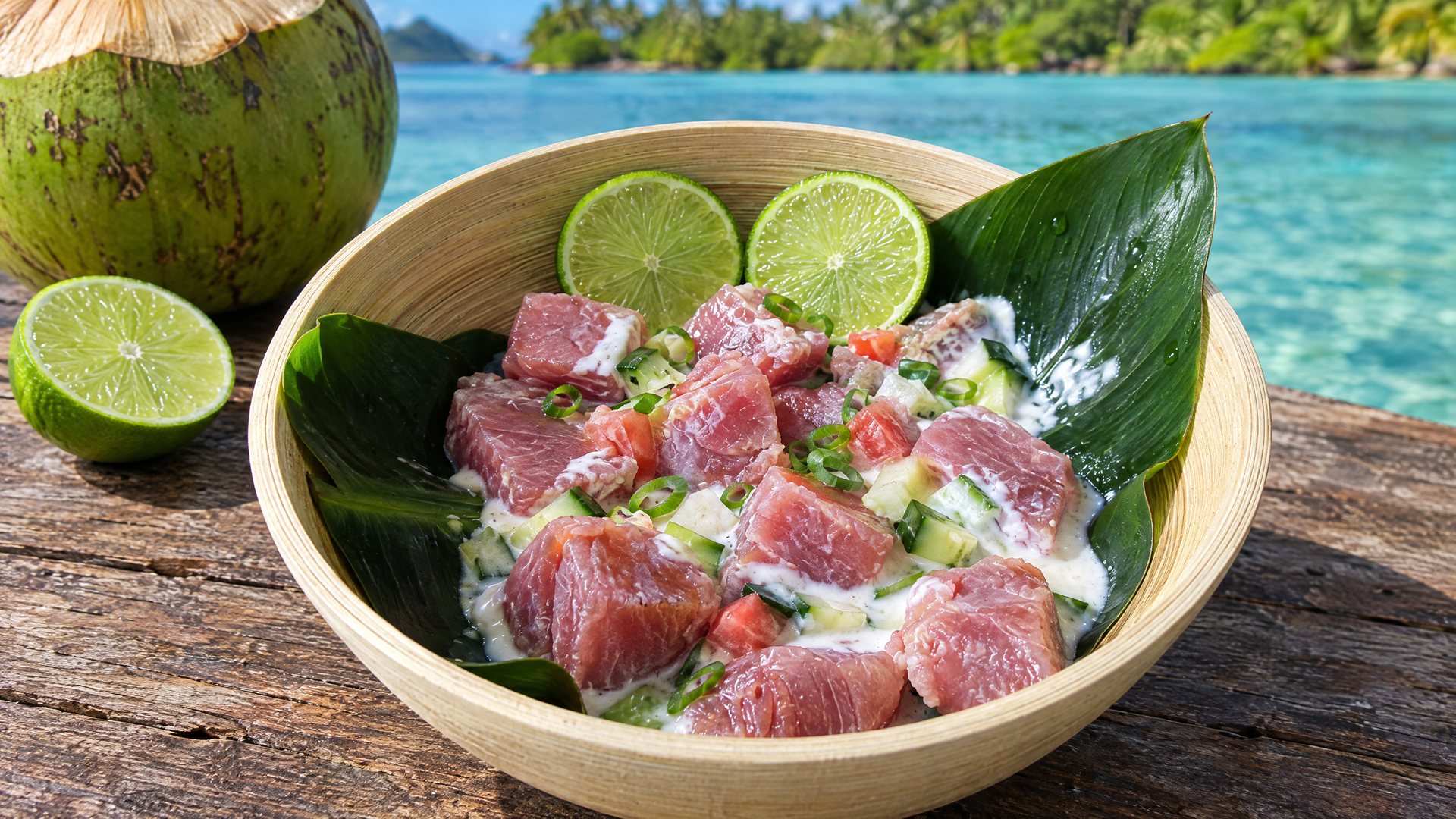
Poisson cru, 'ia ota in Tahitian, is raw tuna marinated briefly in lime and covered in fresh coconut milk with cucumber, tomato and onion. It is served at food trucks, resorts and family tables, and every island makes it slightly differently. Its relatives run from Chinese-influenced sashimi plates to fafaru, fish cured in fermented seawater, which is an acquired taste.
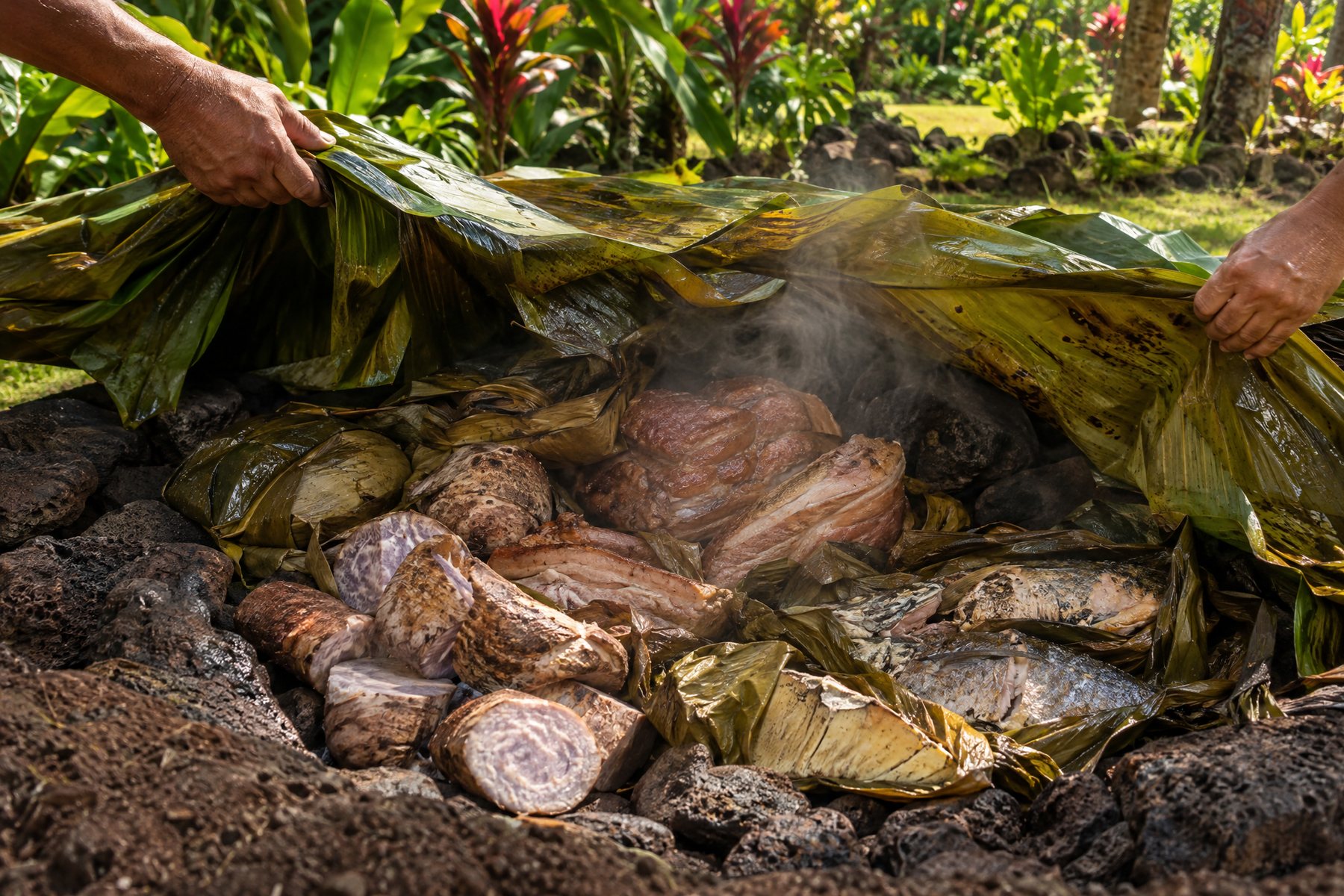
The old kitchen survives in the ahima'a, the earth oven: stones heated in a pit, parcels of pork, chicken, fish, taro, breadfruit and fe'i banana wrapped in leaves, buried and steamed for hours, then shared as ma'a Tahiti, the Sunday meal. Many pensions and cultural days let visitors join one. Dessert is po'e, a fruit pudding of banana, papaya or pumpkin with coconut cream. Ma'a tinito, a pot of pork, red beans and macaroni, is the signature of the Chinese-Tahitian community.
02 · The menu
What to order.
- Poisson cru
- Raw tuna in lime and coconut milk. Compare every island's version.'Ia ota
- Ma'a Tahiti
- The earth-oven Sunday spread: pork, taro, breadfruit, po'e for dessert.Pensions often host one
- Po'e
- Fruit pudding with coconut cream.Banana, papaya, pumpkin
- Ma'a tinito
- Pork, red beans and macaroni. Chinese-Tahitian.
- Firi firi
- Figure-of-eight coconut doughnuts, fried for breakfast.Market mornings
- Roulottes
- Evening food trucks: steak-frites, chow mein, grilled fish, crêpes. 1,500–2,500 XPF a dish.Place Vai'ete, Papeete, from 18:00
03 · Markets and trucks
Shop where
the island shops.
Papeete's central market anchors the food culture: fish downstairs at dawn, fruit and flowers through the morning, vanilla, monoi and hats upstairs. It opens every day and on Sundays from about four in the morning. Every island keeps a smaller version, and the roadside stands selling bananas, pomelos and lychees in season are cheaper than any shop. French habits sit on top: baguettes are everywhere and price-regulated.
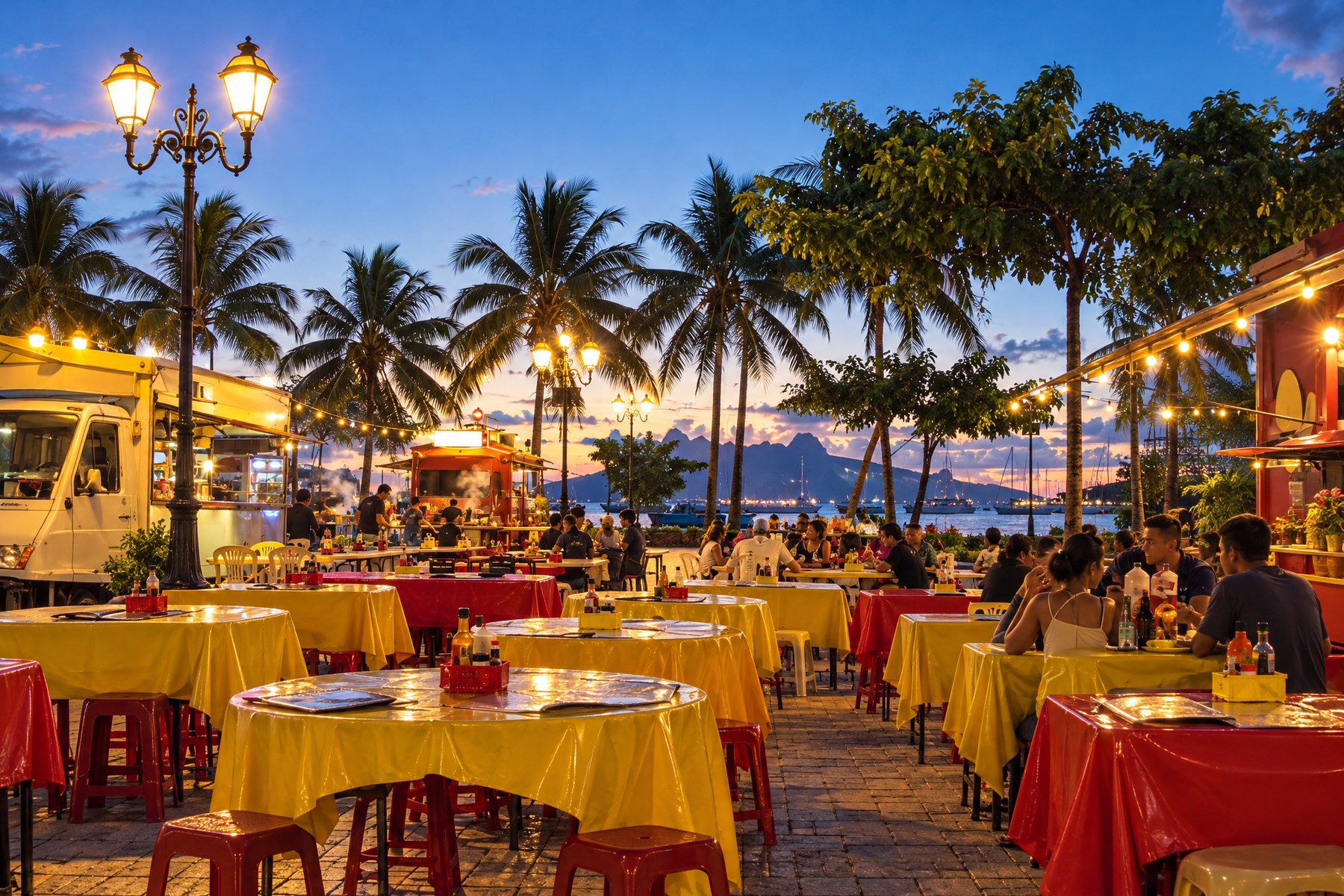
The roulottes set up on Place Vai'ete on the Papeete waterfront every evening from about six until midnight, with more in Pirae, Arue and Paea. They are the cheapest hot meal in the country. On the outer islands most visitors eat at their pension on half board; on the atolls the groceries depend on a supply ship and fresh produce runs out between visits.
04 · Vanilla
The crop that
takes a year.
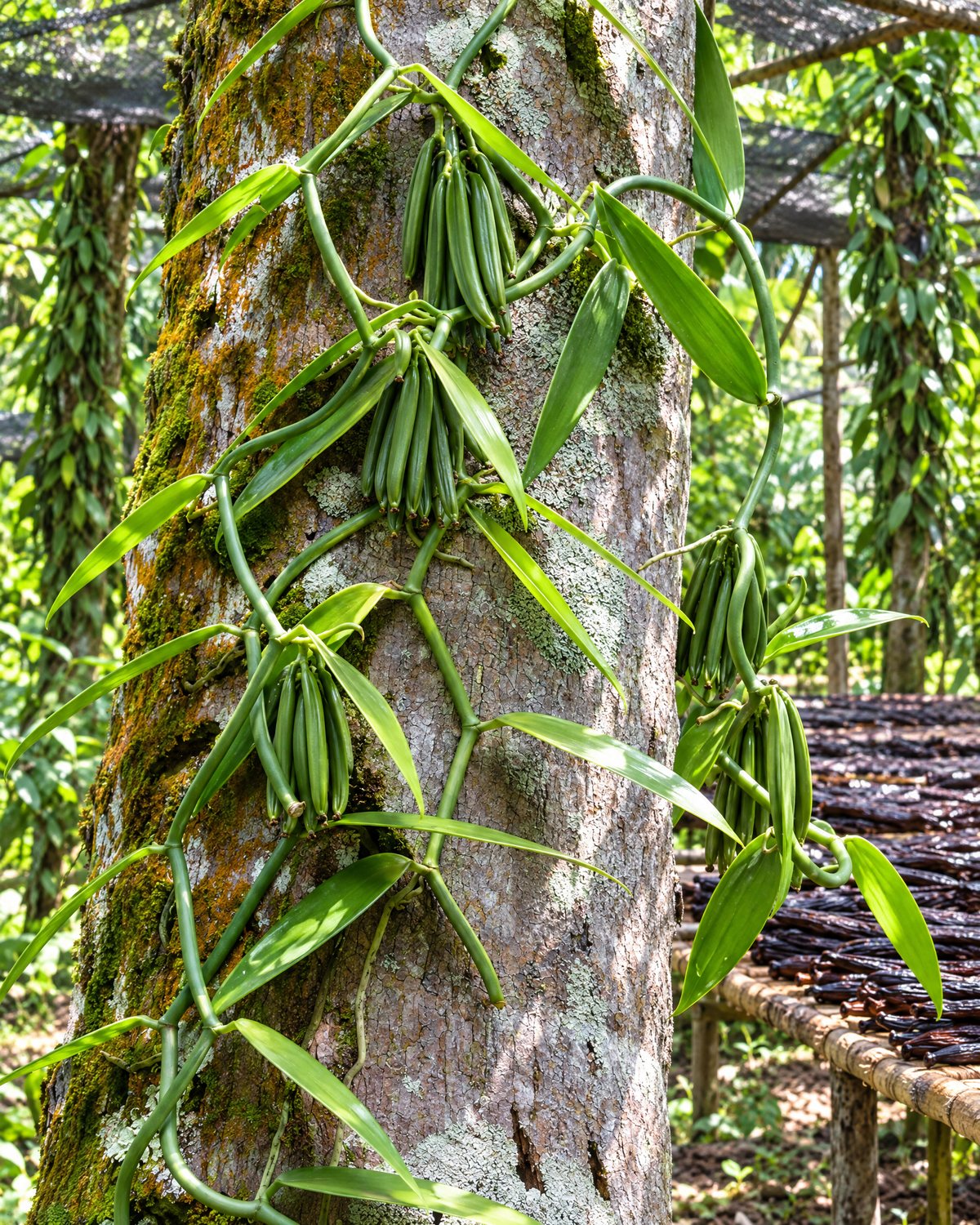
Tahitian vanilla is a distinct species, Vanilla tahitensis. Each flower is pollinated by hand on the one morning it opens, and the beans cure for months in the sun. Most of it grows on Taha'a, with plantations on Huahine and Raiatea. Farms sell beans at the gate and show the process free; the Vallée de la Vanille on Taha'a is open daily. Check your own country's rules before bringing beans home.
Related
Related pages.
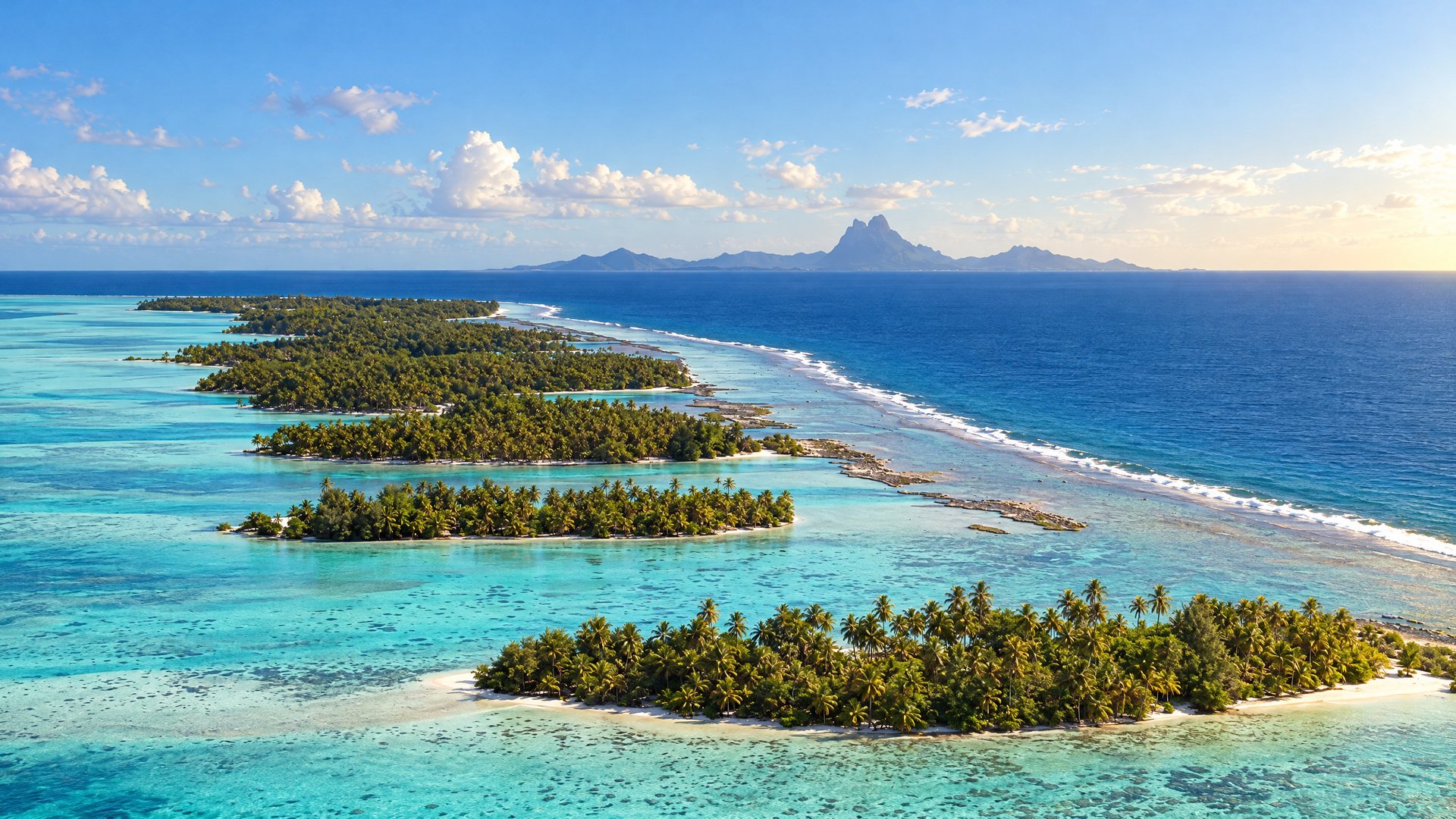
Society Islands
Taha'a
Vanilla plantations, pearl farms, two rum distilleries and motu resorts facing Bora Bora.
Open the island guide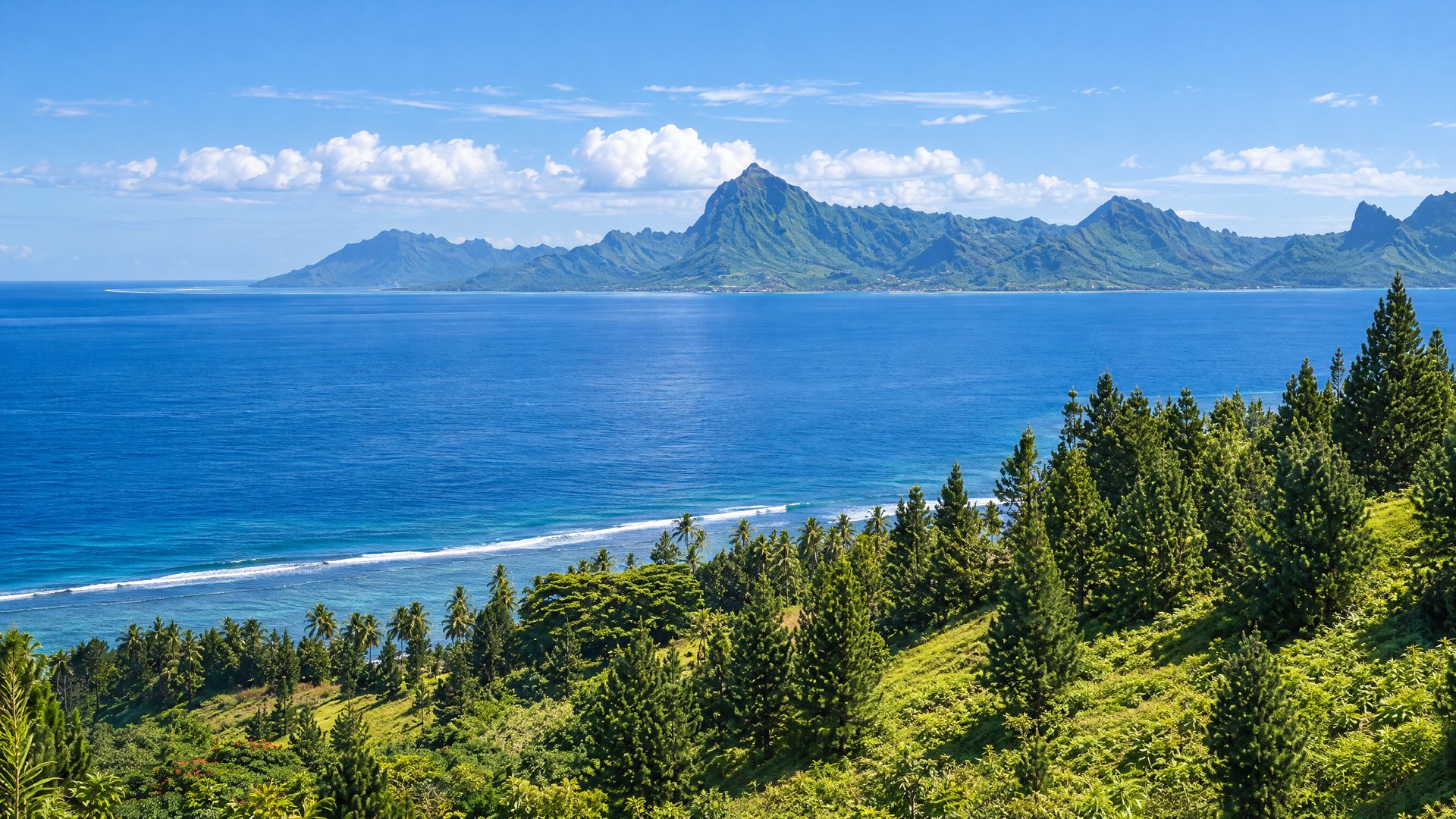
Society Islands
Tahiti
The capital island: Papeete's market, the museum, the interior valleys and Teahupo'o.
Open the island guide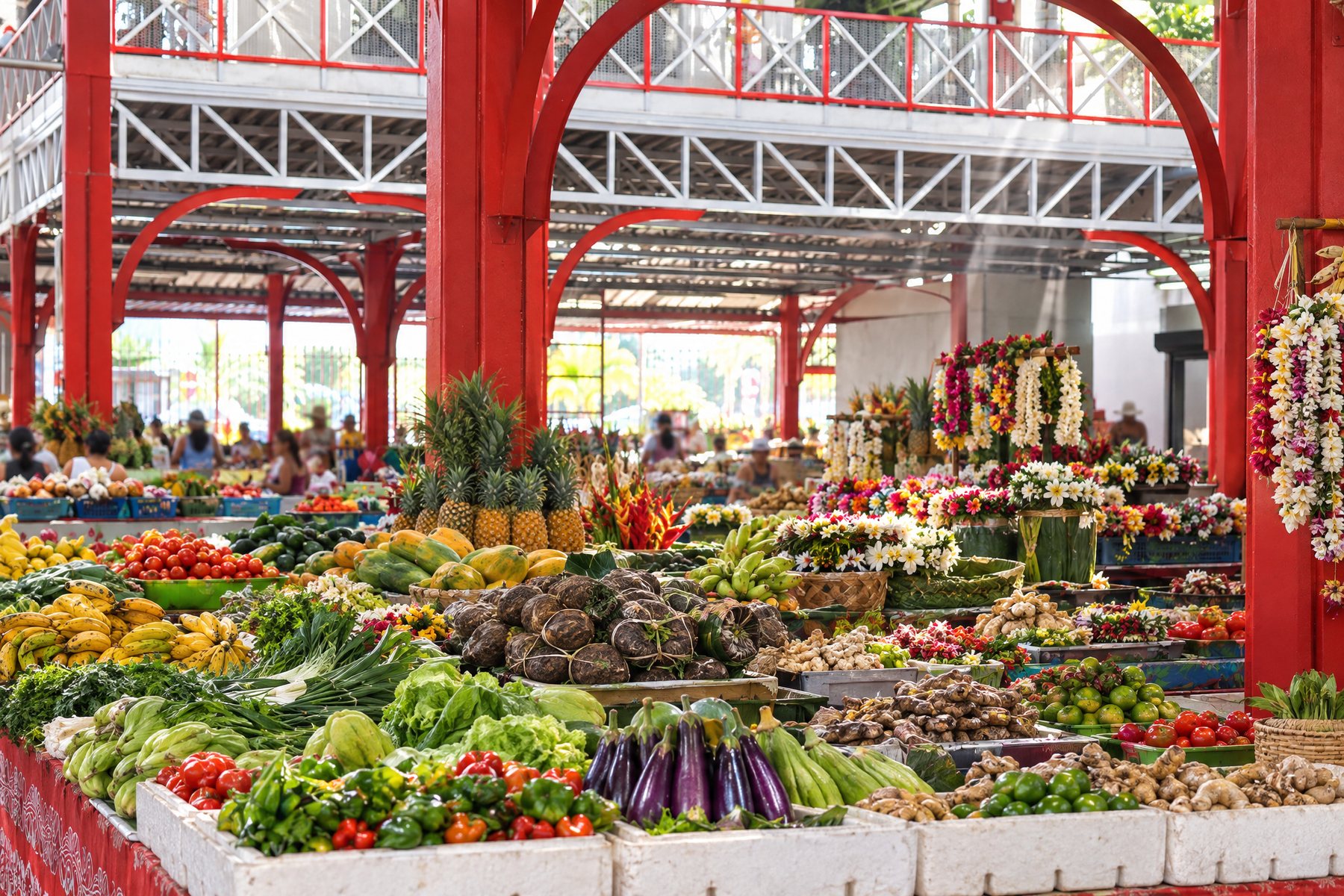
Plan
What it costs
Where the food money goes, and how half board changes it.
Read more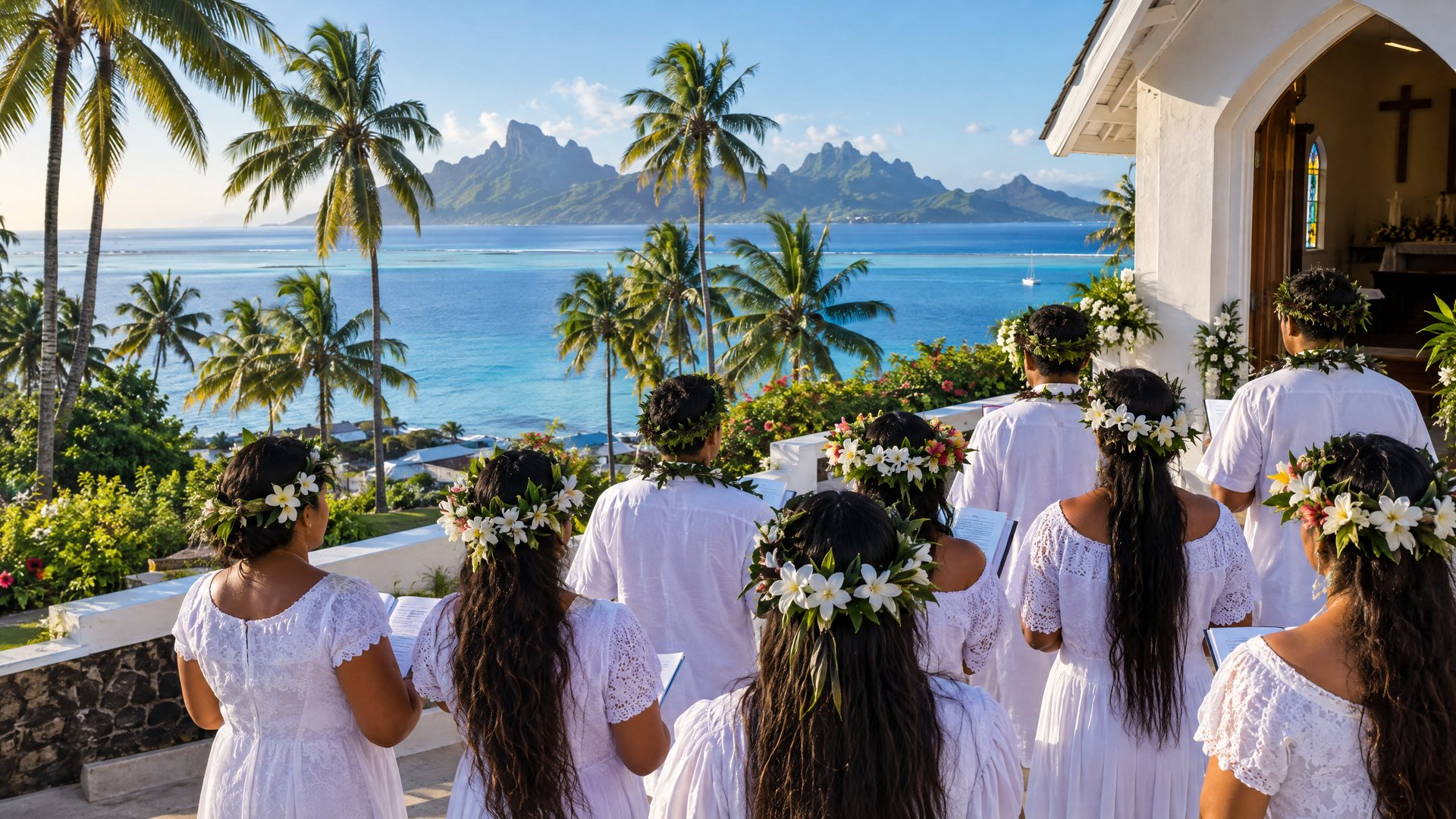
Culture
Language
Tama'a maita'i, and the rest.
Read more