Explained
The blue-eyed eels
of Faie.
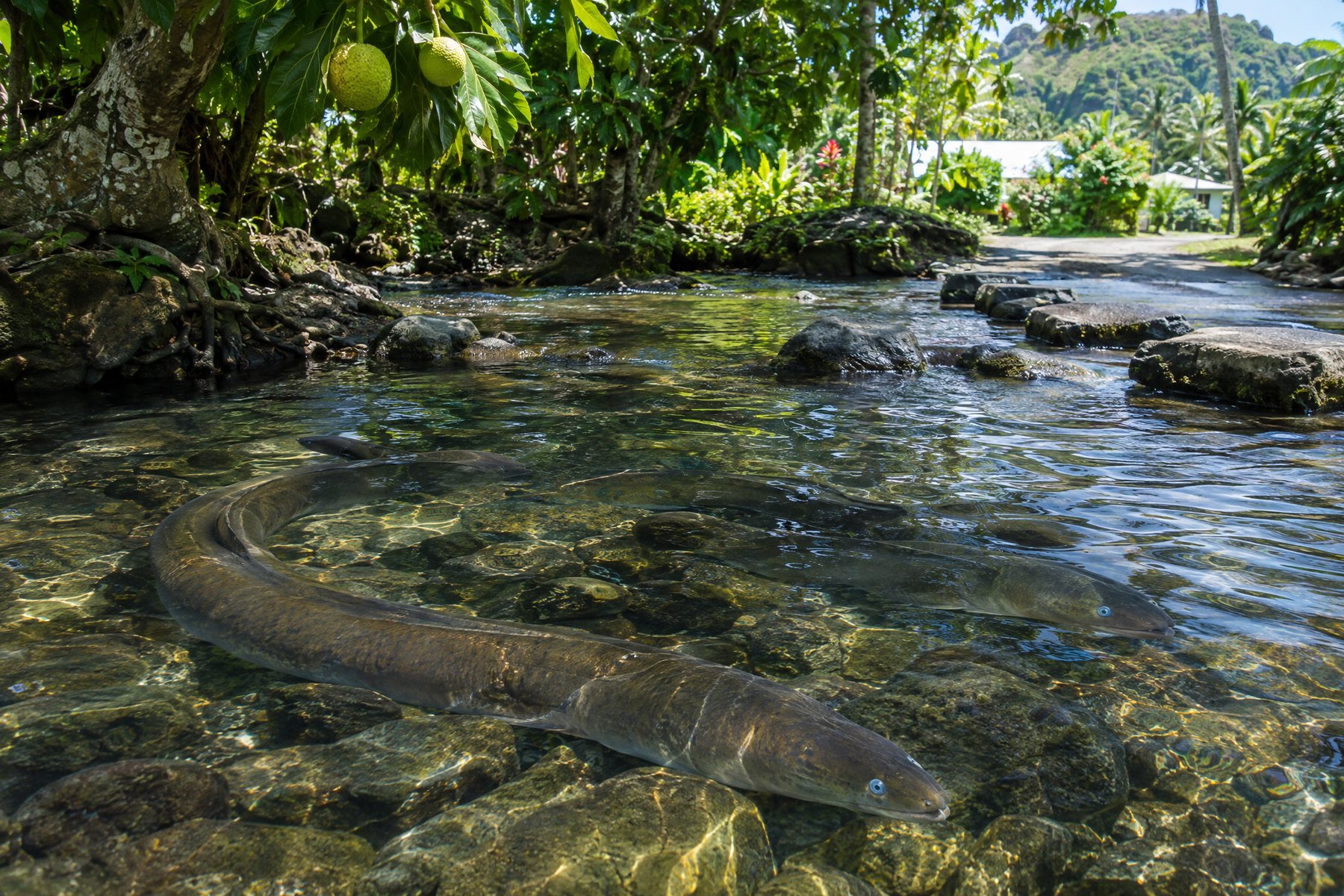
In the village of Faie on Huahine, a stream crosses the road. In it live freshwater eels up to two metres long, with pale blue eyes, that villagers have fed for generations.
The eel stream at Faie, Huahine
The eels are puhi in Tahitian, and at Faie they are considered sacred: in local tradition they carry the spirits of ancestors, and they are not harmed or eaten. They have grown large and tame on the fish that villagers and visitors bring, and they come to the bridge when people arrive.
01 · What they are
Born at sea,
grown in a stream.
The eels of the Pacific islands are catadromous: they spawn in the deep ocean, and the larvae drift for months before entering fresh water as transparent glass eels and swimming upstream, where they live for decades and grow to well over a metre. The Faie eels belong to the large mottled species of the region and reach about two metres. The blue of the eyes is a pale, cloudy ring that gives them their name and their reputation.
They live in the stream that runs under the road through the village on the east side of Huahine, between Maeva and the bridge to Huahine Iti, and most people see them on the way round the island from the marae. Stand on the bank or the stones, look, and do not handle them: they are large, they bite if grabbed, and they belong to the village.
02 · Visiting
How it works.
- Where
- Faie village, east coast of Huahine Nui, on the round-island road.
- Cost
- Free. A villager may sell fish scraps to feed them.
- Time
- Five minutes to half an hour.
- Rules
- Look, don't handle. Keep children's hands out of the water.
Related
Related pages.
Society Islands
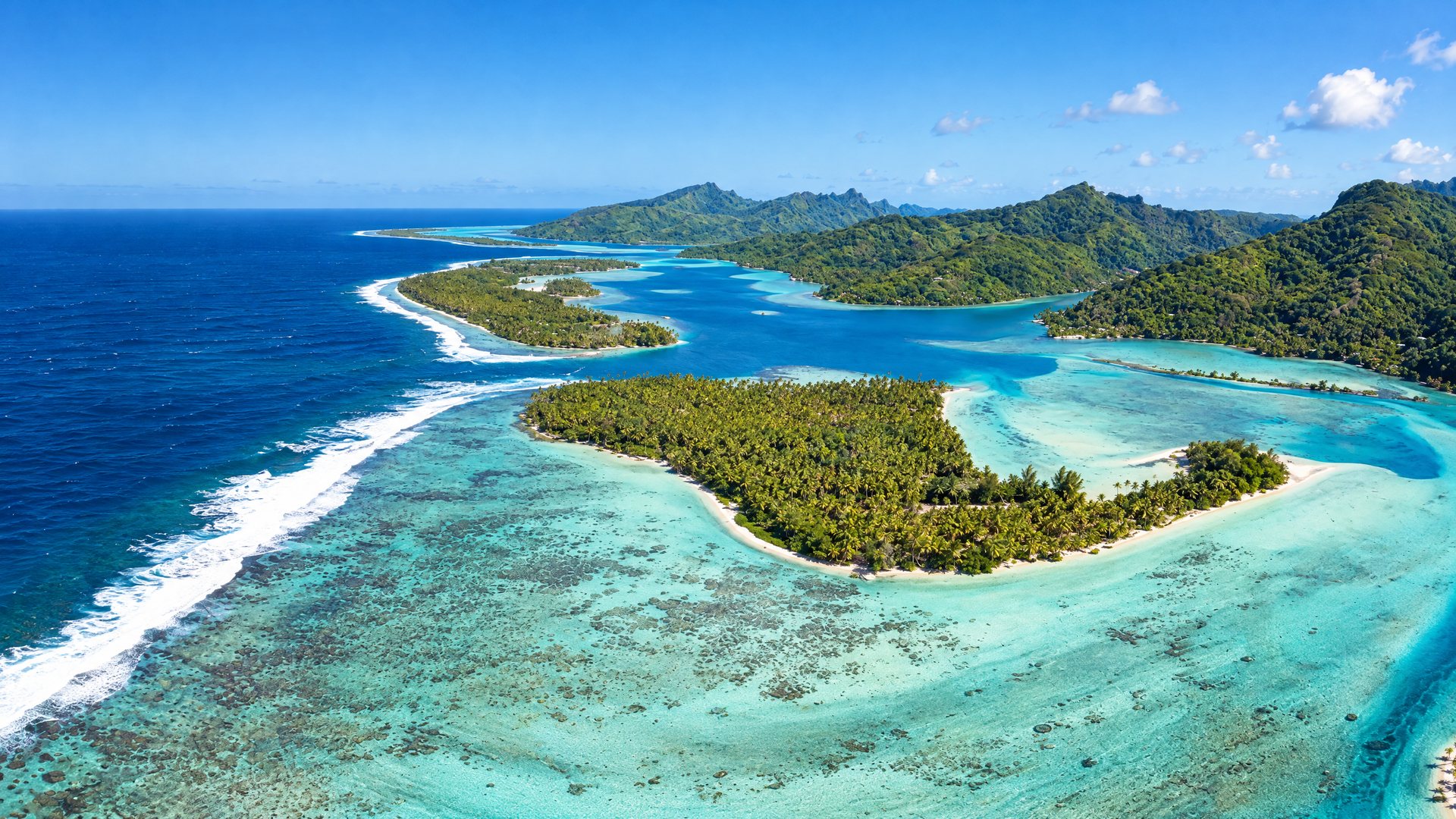
Huahine
Two islands inside one reef, restored marae beside a lake, and family pensions instead of resorts.
Open the island guide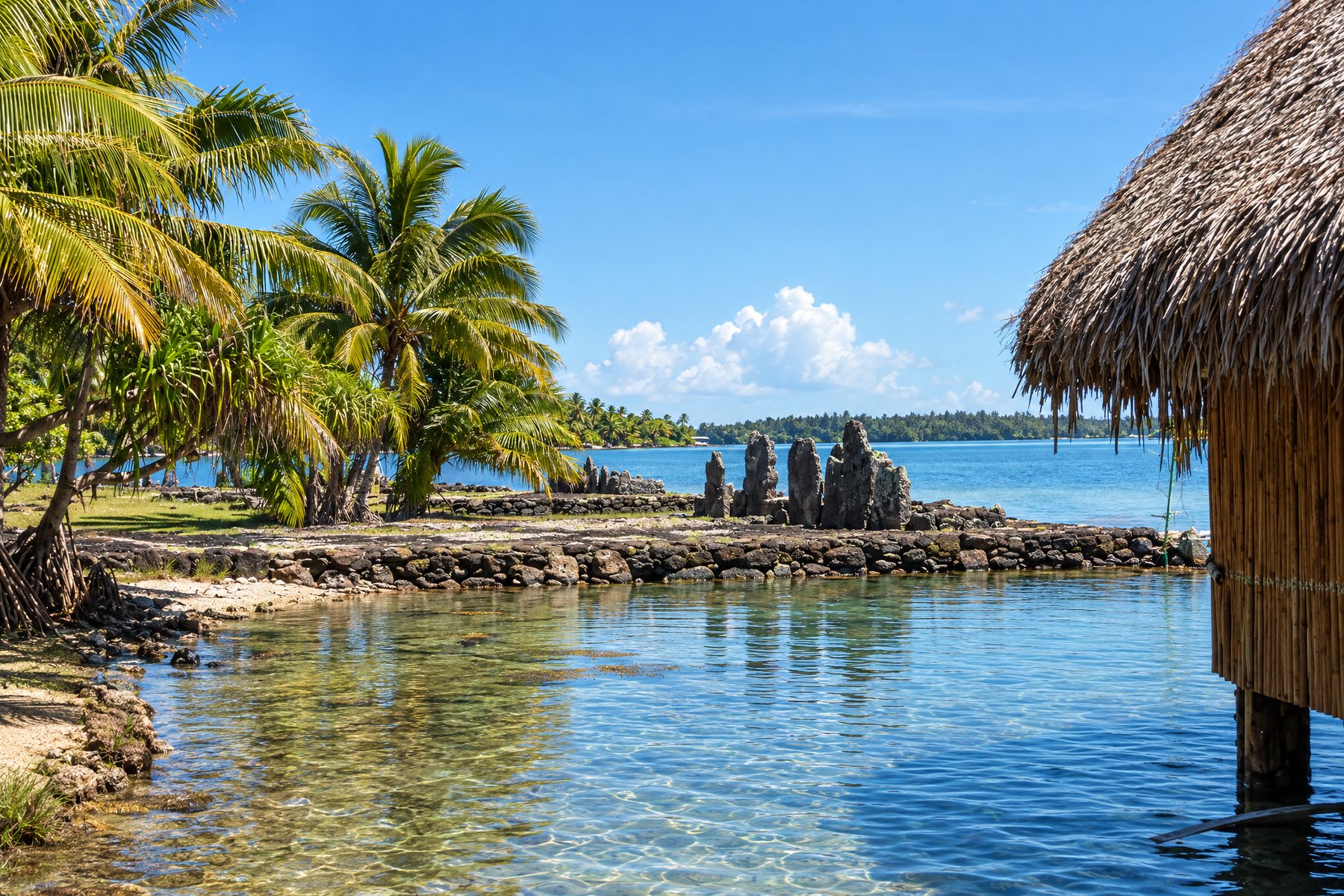
Culture
Marae
Maeva, a few kilometres up the road.
Read more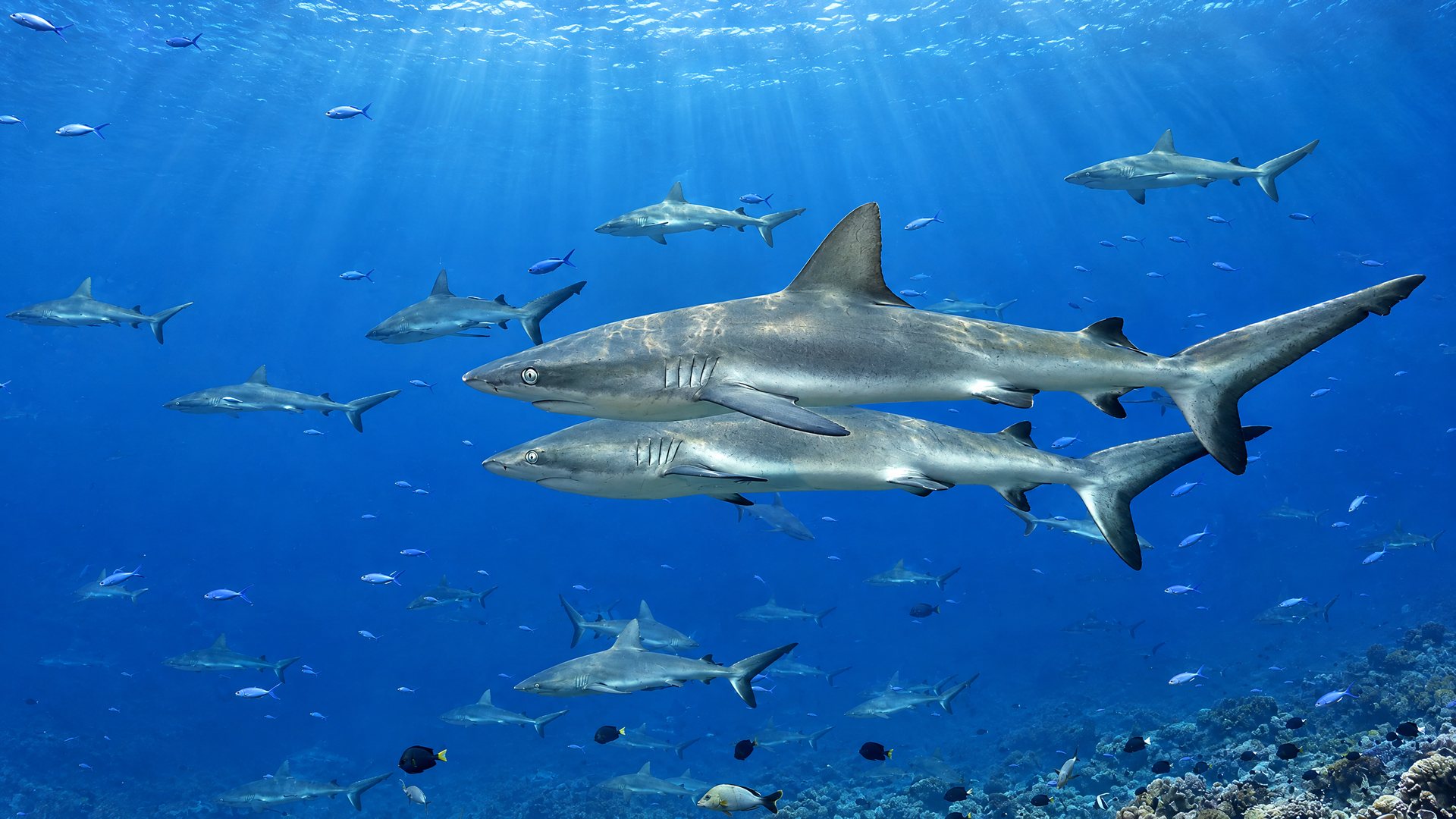
Explained
The wall of sharks
Several hundred grey reef sharks in Fakarava's south pass, and the grouper spawning that feeds them.
Read the article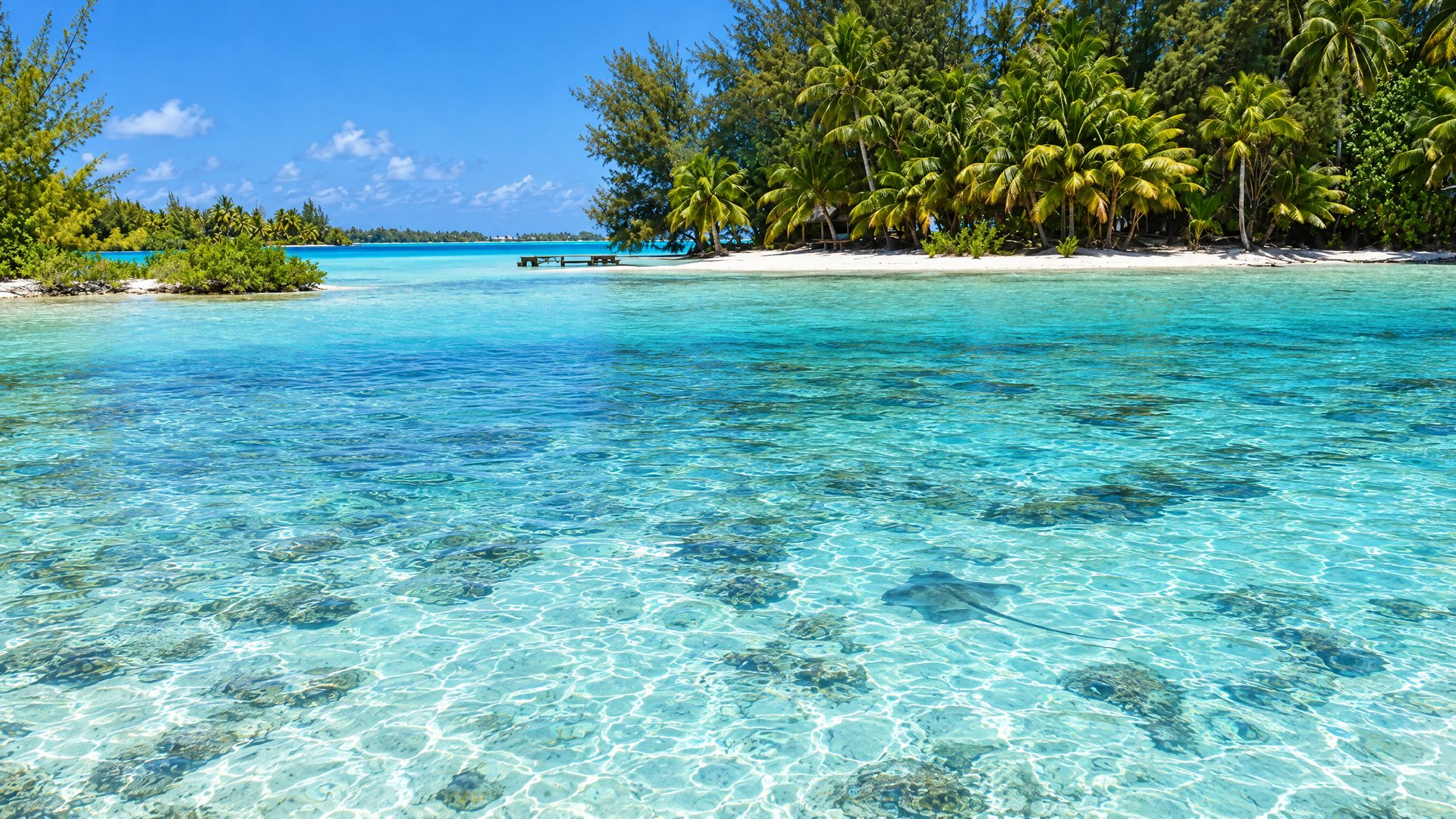
Explained
Why the lagoon is blue
White coral sand, shallow water and the way seawater absorbs red light.
Read the article