Stay · Overwater
Overwater
bungalows.
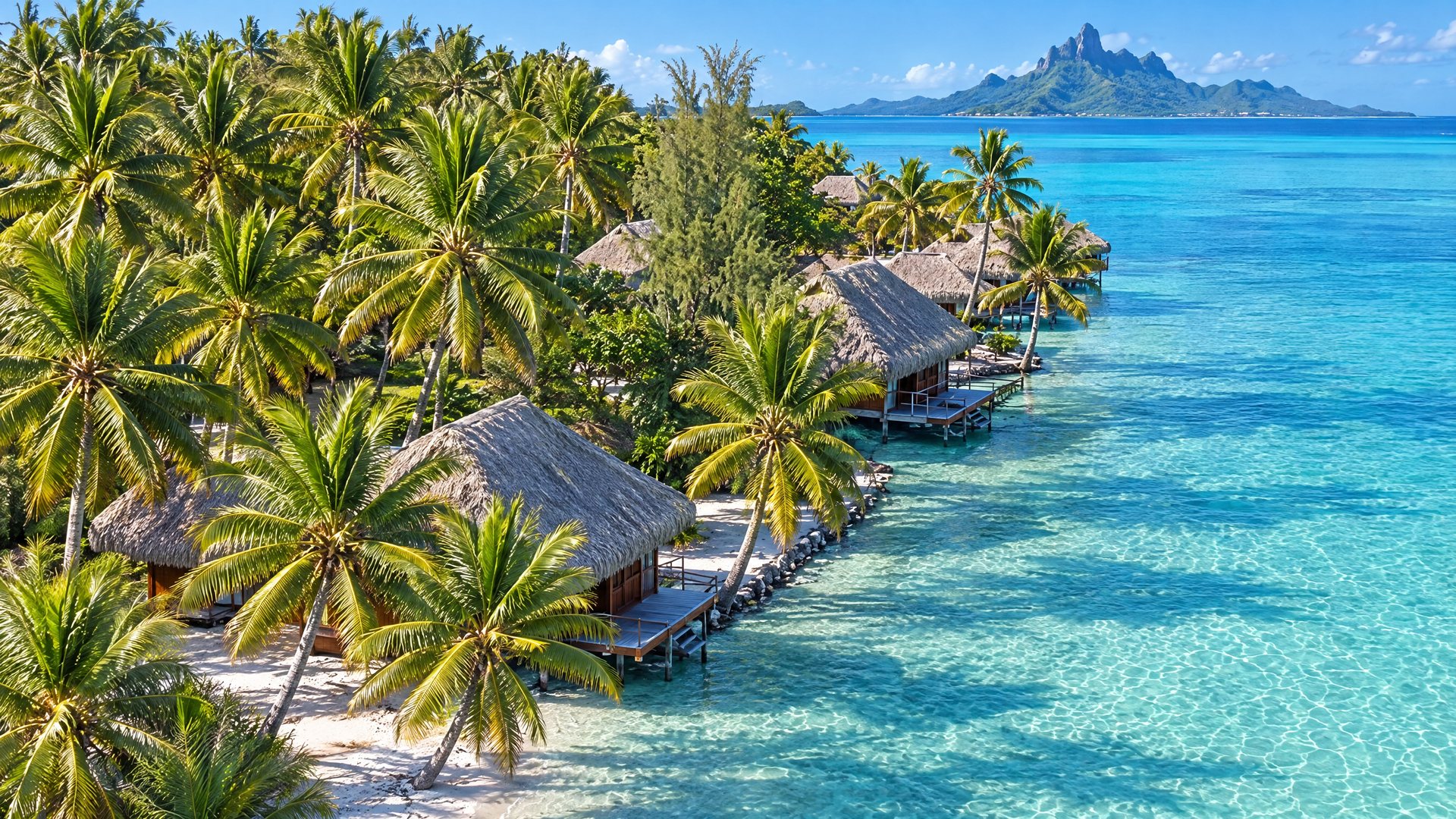
Invented on Raiatea in 1967. The premium buys position, and position varies more within one resort than the brochures admit.
Motu Tautau, Taha'a
The category runs from modest thatch over a reef flat to glass-floored villas with pools. The constant is the water underneath, and that is what to check before booking: depth, clarity, coral, current, and what you see from the deck.
01 · Where it started
Raiatea, 1967.
Three Californians, Hugh Kelley, Jay Carlisle and Donald McCallum, known in the islands as the Bali Hai boys, ran a hotel on Raiatea that had no beach. In 1967 they built rooms on stilts over the lagoon instead. The idea spread to Moorea and Bora Bora and then around the world, and the descendants of those first bungalows now define the top of the market across the Society Islands and the atolls.
02 · The room audit
Ask before
you pay.
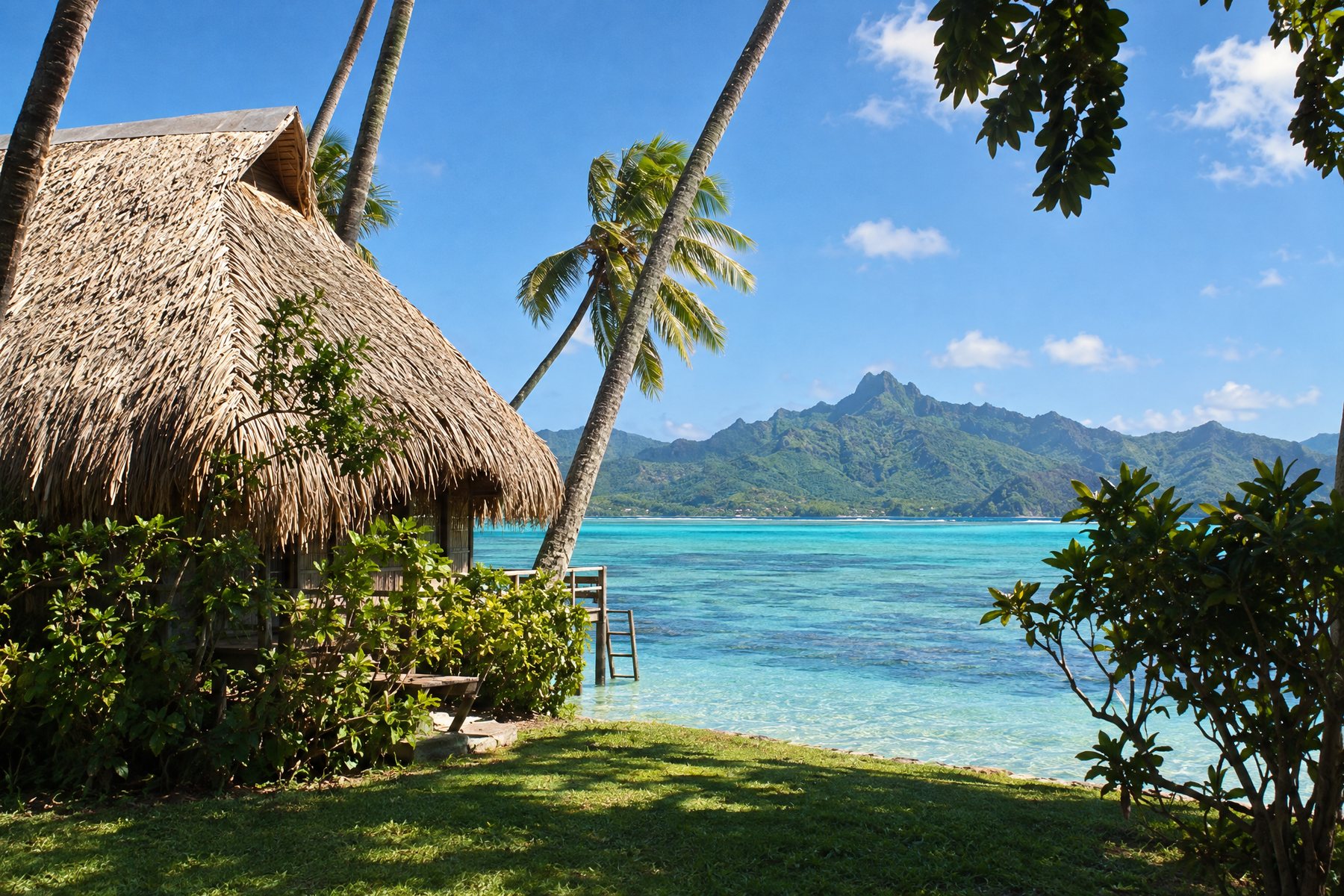
- The water beneath
- Sand shallows, coral heads or deep blue? Swimmability varies room to room and with the tide.
- Orientation
- Mountain view or sunset side; the windward chop or the glassy lee. Otemanu views price highest on Bora Bora.
- Position on the pontoon
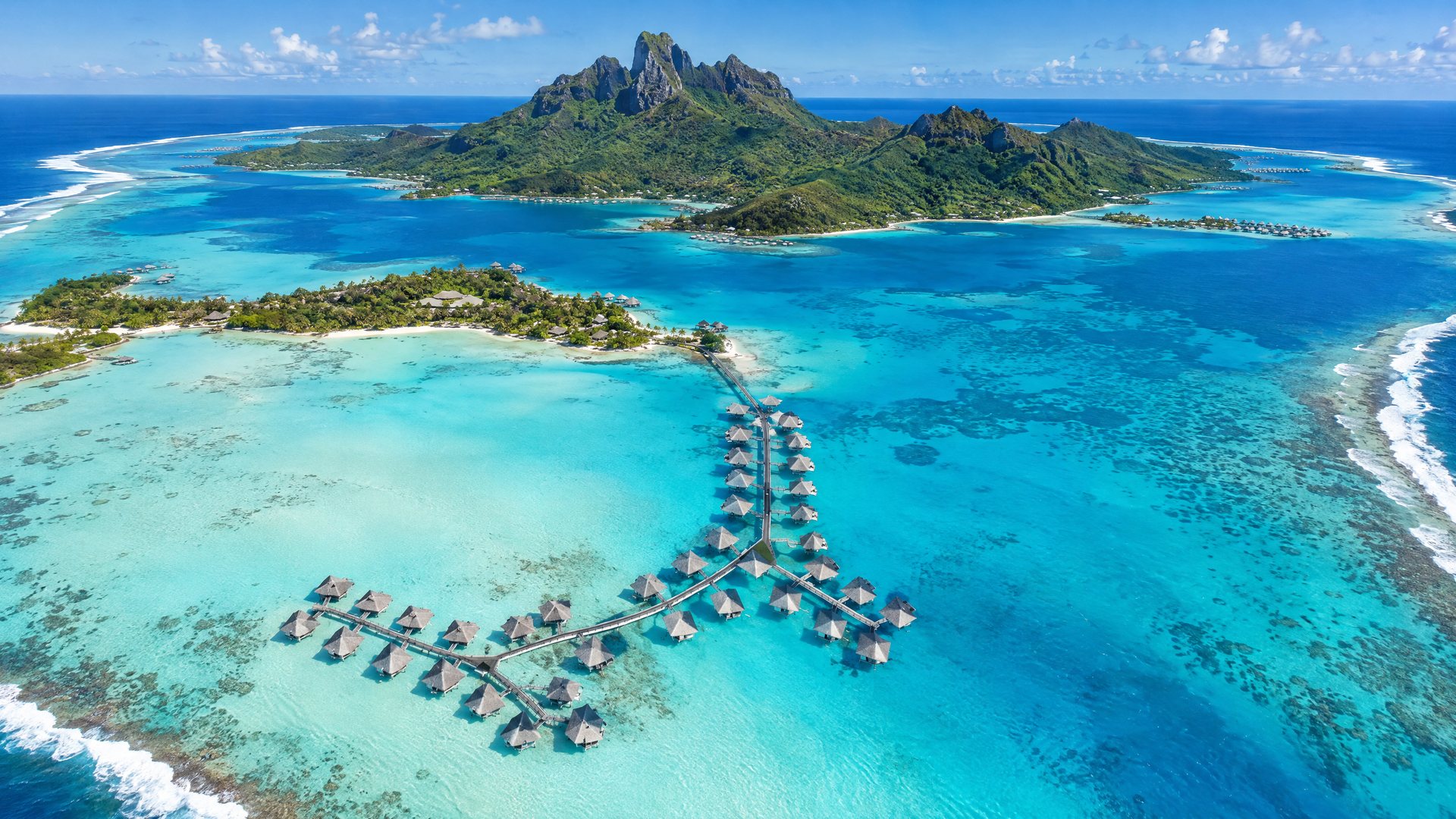
- End units buy silence and privacy; near-shore units buy short walks.Long pontoons mean long walks
- Access and extras
- Ladder into the water, glass panels, breakfast by canoe, kayaks included? Extras vanish in the fine print.
- Transfers
- Boat-only resorts add cost and cut-off times. Check arrival-day timing against your flight.Late flights need planning
- Season
- April to May and September to October soften the premium substantially.
03 · The islands compared
Bora Bora, Moorea,
Taha'a, the atolls.
Bora Bora has the most and the dearest: the Four Seasons, the St. Regis, the Conrad, the Westin and Le Bora Bora by Pearl Resorts on the motu, with bungalows from about 50,000 XPF to well over 200,000 a night, and the mountain view. Moorea has three resorts with overwater rooms, the Hilton, the Sofitel at Temae and the Manava, at under half Bora Bora's average rate and thirty minutes from the airport by ferry. Taha'a has Le Taha'a by Pearl Resorts on Motu Tautau, facing Bora Bora across the water. Tahiti has a few at the InterContinental and the reopened Tahiti Lagoon Resort.
On the atolls the category is simpler and the lagoon is the reason to sleep over it: Le Tikehau by Pearl Resorts has 21 overwater units on a motu; Rangiroa's Kia Ora has them too, but was listed as closing for renovation from November 2026, so confirm before booking. Everywhere, the beach or garden unit at the same resort often delivers most of the experience at half the rate, and a better beach. Three overwater nights inside a longer trip is the usual compromise.
Go deeper.
Related
Related pages.
Explained
The first overwater bungalow
Built on Raiatea in 1967 by three Californians whose hotel had no beach.
Read the article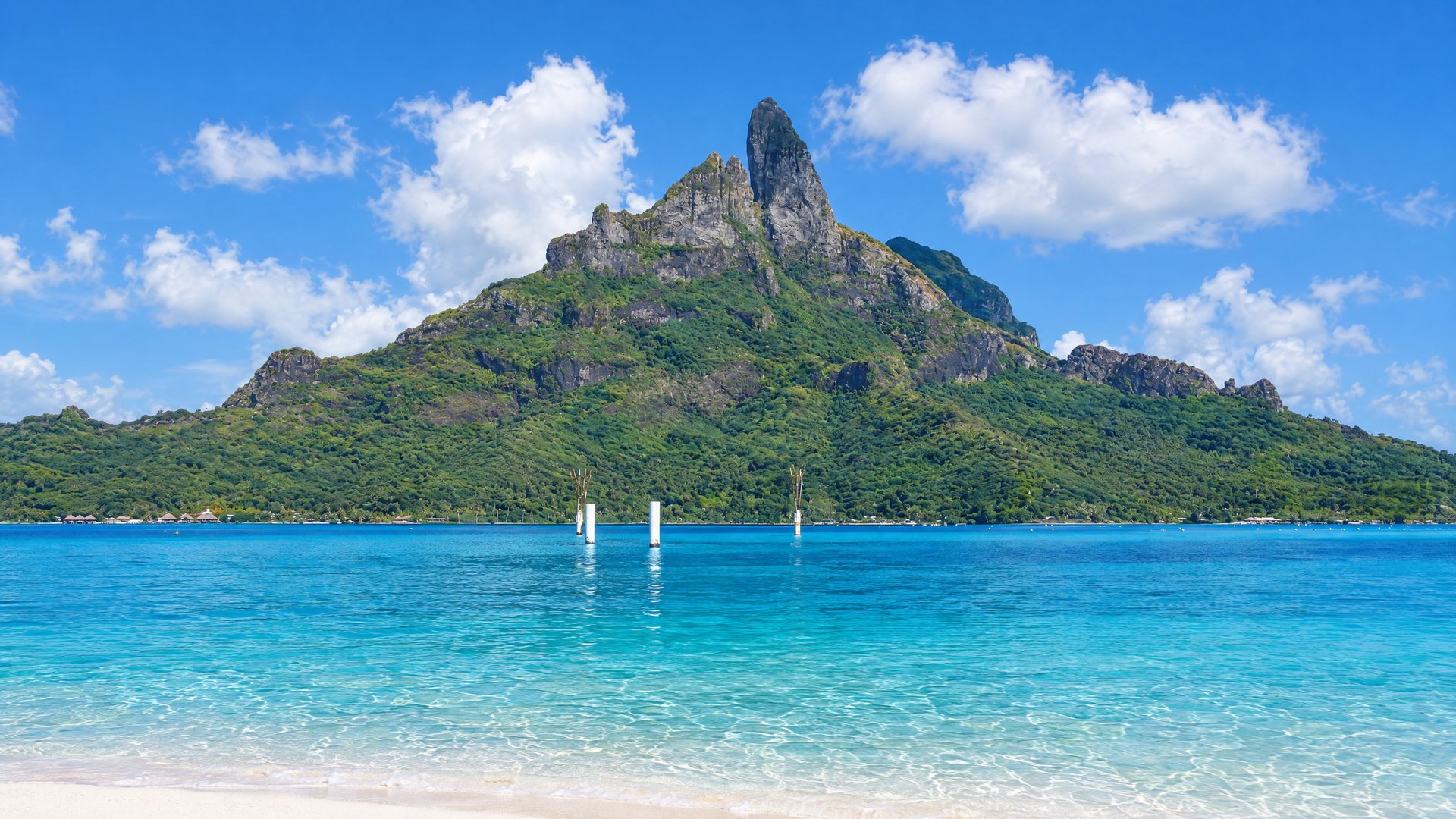
Society Islands
Bora Bora
The widest lagoon in the Society Islands, the overwater resorts, and the highest hotel prices in the country.
Open the island guide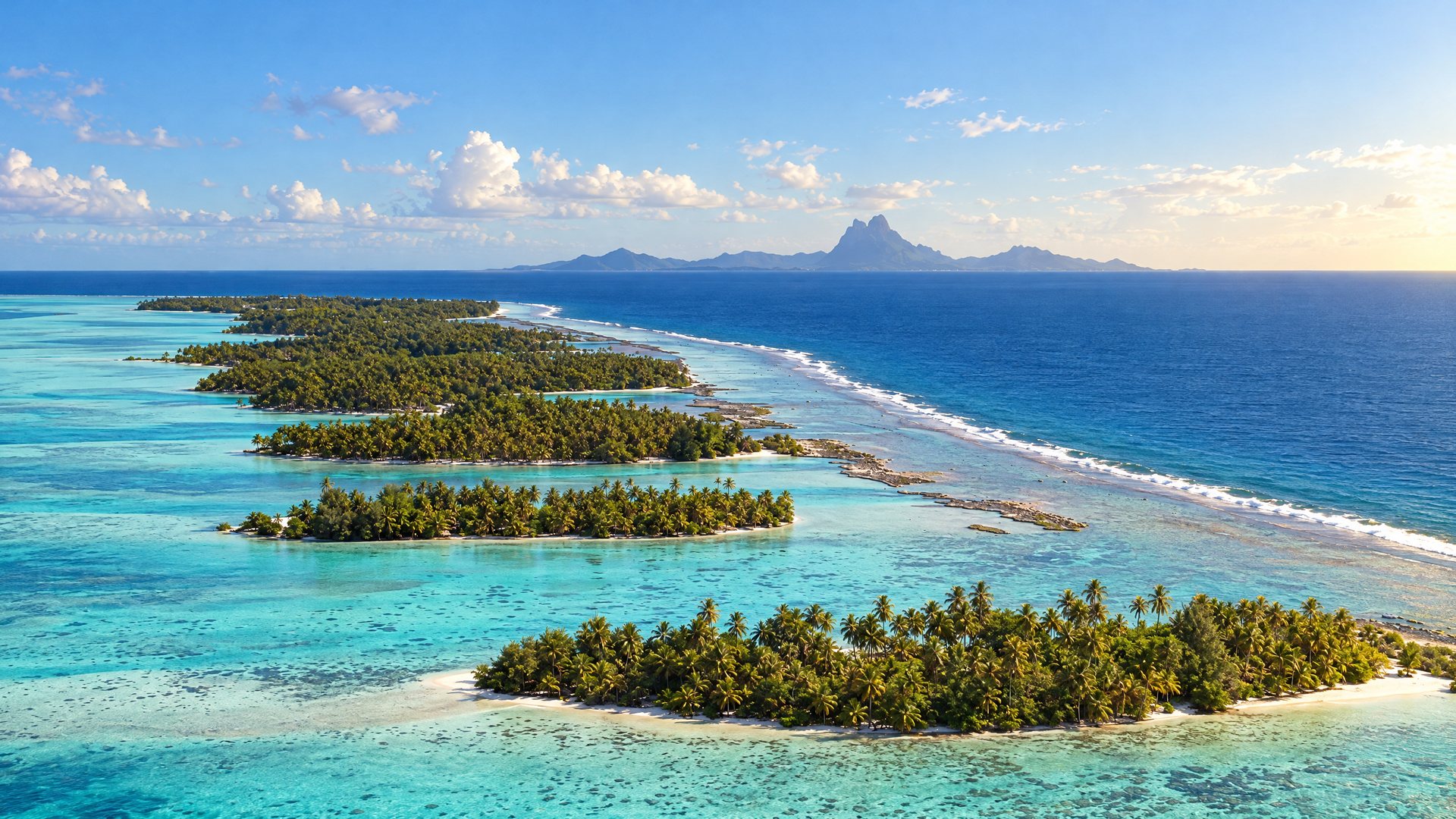
Society Islands
Taha'a
Vanilla plantations, pearl farms, two rum distilleries and motu resorts facing Bora Bora.
Open the island guide
Plan
What it costs
Hotel prices by island, from the statistics institute.
Read more