Plan · Entry requirements
Entry rules for
French Polynesia.
French Polynesia is part of France but sets its own border rules. Most visitors need only a passport; a Schengen visa on its own is not enough. What the High Commission actually asks for.
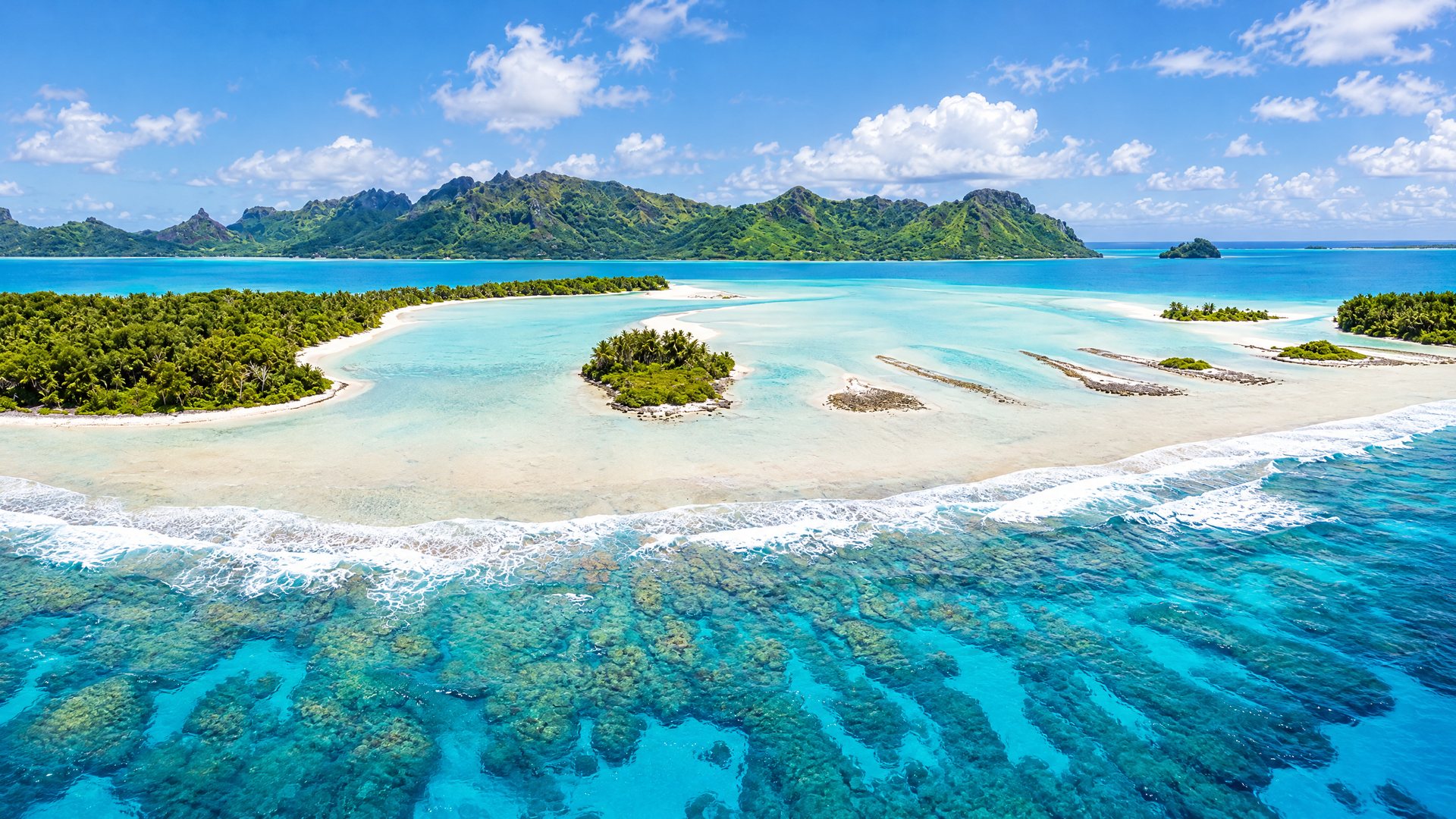
Raivavae, Austral Islands
Plan · Entry requirements
French Polynesia is a French overseas territory, but its entry rules are its own and differ from those of mainland France1. They are set by a ministerial order of 29 December 2011, last consolidated in July 2021, and applied at the border by the police at Faa'a airport21. Visitors from the US, Canada, the UK, Australia, New Zealand, Japan and much of Latin America need no visa for up to three months in any six; EU citizens need none at all23. What follows is drawn from the High Commission's pages and the order itself, read on 19 October 2026. Rules change: check before you fly, and if in doubt ask the High Commission or a French consulate.
01 · The short answer
Most visitors
need only a passport.
If you hold a US, Canadian, British, Australian, New Zealand, Japanese, South Korean, Singaporean, Mexican, Brazilian, Argentine or Chilean passport, you can visit for up to three months in any six-month period without a visa, as long as you don't come to work2. EU citizens need no visa; nationals of Iceland, Liechtenstein, Norway and Switzerland are visa-exempt on the same three-in-six basis34.
What every non-EU visitor needs is a passport valid for at least three months after the day you plan to leave French Polynesia, with at least two blank pages, issued within the last ten years4. The UK government gives the same three-month rule for British citizens5.
Most other nationalities, including Chinese, Indian, Russian, Thai, Indonesian and South African passport holders, need a short-stay visa that names French Polynesia, applied for before travel at a French consulate24. A Schengen visa for mainland France does not do the job on its own6.
02 · By nationality
Who needs
a visa.
- United States
- No visa for up to three months in six2. A visa is required only to work without a work permit2.Also American Samoa and Guam, on a US passport
- Canada
- No visa, any type of passport2.
- United Kingdom
- No visa, any type of passport2; up to 90 days for tourism or business, says the UK government5.
- Australia
- No visa for up to three months in six, except to work without a permit2.Also Norfolk Islanders on an Australian passport
- New Zealand
- No visa, any type of passport2.Also Cook Islanders, Niueans and Tokelauans on a NZ passport
- European Union
- No visa; bring a valid passport3. French citizens can enter on a national ID card7.Salaried work needs a local work permit
- Iceland, Liechtenstein, Norway, Switzerland
- Not EU for these rules, but visa-exempt for 90 days in 18034.
- Japan, South Korea, Singapore
- No visa for up to three months in six, except to work without a permit2.
- Mexico, Brazil
- No visa for up to three months in six, except to work without a permit2.
- Argentina, Chile, Colombia, Peru, Uruguay
- No visa, any type of passport2.
- Israel, Malaysia, United Arab Emirates
- No visa, any type of passport2.
- Hong Kong, Macao, Taiwan
- No visa on Hong Kong or Macao SAR passports, or Taiwanese passports carrying an identity-card number2.
- China (mainland)
- Visa needed, unless your passport already holds a French multiple-entry visa valid six months to five years, or you travel with an approved Chinese agency for up to 14 days28.
- India, Russia, Thailand, Indonesia
- Visa needed for ordinary passports, unless you hold a French multiple-entry visa valid six months to five years2.
03 · At the border
What to have
with you.
- 01
- 02
Proof you can pay your way
The High Commission lists an international bank card or cash as examples of means of subsistence4.
- 03
Proof you can leave
A 'repatriation guarantee' — for example a ticket home or to your country of residence, or a travel insurance certificate4.
- 04
Proof of what you're doing
For a holiday, hotel or cruise bookings that show the purpose and length of the stay4.
- 05
Staying with friends or family
Your host must get an 'attestation d'accueil' from the town hall of the commune where you'll stay, validated by the mairie4.
- 06
04 · Mistakes
Where trips
go wrong.
- 01
A passport that runs out too soon
The rule is three months beyond the day you leave French Polynesia, not beyond the day you arrive4. A passport expiring a month after a two-week trip fails it.
- 02
- 03
Forgetting the US stop
The Paris flights stop in the US, so non-US passengers need an ESTA or a US visa before boarding, even in transit9.
- 04
- 05
- 06
Dual nationals heading home to Britain
The UK government reminds British dual nationals that they need a valid British passport or certificate of entitlement to return to the UK5.
05 · Schengen, EES, ETIAS
Part of France,
not of Schengen.
French Polynesia's entry rules are separate from mainland France's1, and a visa issued for mainland France or the Schengen area does not cover it unless the visa sticker says so: a visa for French Polynesia must carry the words 'valable pour la Polynésie française'6. Nationals who need one apply before travel to the French consulate nearest their home6; the France-Visas site is where the process starts.
There is one shortcut. Holders of a valid residence permit or long-stay visa issued by France or another Schengen state are visa-exempt for stays of up to three months in six24. A US green card does not give the same exemption, except to cruise passengers stopping for under 24 hours4.
The EU's Entry/Exit System became fully operational on 10 April 2026 and records non-EU travellers at the external borders of 29 European countries10. ETIAS, the planned travel authorisation for visa-free visitors to Europe, is not yet in operation11. Both are Schengen-area systems: they matter if your trip also passes through Paris or another Schengen airport, not for French Polynesia's own entry rules, which are set by the 2011 order2.
06 · Transit
Changing planes
on the way.
Every Paris flight stops in Los Angeles or San Francisco, and many trips from Asia and Australia pass through the US too. Anyone who is not a US citizen needs an ESTA or a US visa to change planes there, even without leaving the airport; on the ESTA form, enter 'In Transit' and the final destination9. An ESTA is usually valid for two years or until the passport expires9.
At Faa'a itself, passengers who stay inside the international transit zone between two flights don't need a French Polynesia visa, unless their nationality requires an airport transit visa for France2. Few itineraries do this; most passengers land and enter.
Transit rules in other countries — New Zealand for an Auckland connection, for example — are set by those countries. Check them with your airline.
07 · Longer stays
Over three months,
work and study.
For more than three months, non-EU nationals need a long-stay visa that expressly mentions French Polynesia, applied for at the consulate or prefecture of their place of residence before arrival; the High Commission advises applying at least three months ahead12. Within two months of arriving, or before the visa expires, you then ask the High Commission for a residence permit valid in French Polynesia12.
The application needs evidence matched to the purpose: accommodation, resources, health and hospital insurance and a repatriation guarantee in all cases; a statement that you won't work for a 'visitor' stay; an enrolment certificate for study; a work contract and a work permit from the government of French Polynesia for a job12.
Bring a passport that covers the whole stay. Few countries have a consulate in French Polynesia, and renewing a passport there may mean a trip home or to a country with a consulate that can do it12.
Living in mainland France does not change this: a non-EU spouse of a French citizen, or a holder of a residence card for mainland France, still needs a long-stay visa for a stay of more than 90 days in French Polynesia12.
08 · By sea
Yachts
and cruise ships.
Yachts arriving from abroad must first clear in at a designated port of entry: Papeete or Afareaitu (Moorea); Uturoa, Fare or Vaitape in the Leewards; Taiohae, Hakahau or Atuona in the Marquesas; Mataura, Moerai or Raima in the Australs; Tiputa (Rangiroa) or Rikitea (Mangareva)13. The maritime affairs office asks for passports valid six months beyond departure — stricter than the three months applied at the airport — plus an online yacht declaration, a maritime health declaration at least 48 hours before arrival, and registration on the government's ESCALES service134.
Cruise passengers who stay on board in port need no visa. Those going ashore for a stop of under 24 hours are exempt if they hold a residence permit from an EU or EEA country or Switzerland, or from Andorra, Monaco, San Marino, Canada, Japan or the US, or a French visa for another part of France4. Cruise lines send the passenger list to the border police at least 24 hours ahead2.
09 · Other formalities
Customs, health
and contacts.
- Customs
- Declare anything prohibited or subject to duty, and declare cash and valuables, says the UK government's advice5.
- Yellow fever
- A vaccination certificate is required if you arrive from a country with a risk of yellow fever transmission5.
- UK advice
- The UK's French Polynesia advice was last updated on 10 December 2025 and marked still current on 19 October 20265.
- Questions on entry
- The High Commission's foreigners' section answers by email at etrangers@polynesie-francaise.gouv.fr; the border police at Faa'a airport are on (689) 40 47 03 471.
- Chinese tour groups
- Visa-exempt for up to 14 days when travelling with an agency approved by China's tourism ministry and a licensed local agency8.
10 · Questions
Questions.
- 01
- 02
- 03
Do Australians need a visa for French Polynesia?
No, for up to three months in six, unless you come to work without a work permit2.
- 04
- 05
- 06
- 07
- 08
Do I need a return ticket?
You may be asked for a repatriation guarantee: a ticket home is the usual one; the High Commission also mentions a travel insurance certificate4.
- 09
- 10
Can I get a visa on arrival at Faa'a?
Only exceptionally: the border police can issue a short-stay visa to someone who proves an unforeseeable, pressing reason that prevented them applying in advance, and who meets the other entry conditions2. Don't plan on it.
- 11
Do I need separate permission for Bora Bora or the Marquesas?
No. The entry rules cover the whole territory of French Polynesia2; once admitted at Faa'a you fly on to the other islands as a domestic passenger.
- 12
Can I stay longer than three months as a tourist?
Not by extending a visa-free stay. A stay of more than three months needs a long-stay visa naming French Polynesia, applied for before arrival12.
Sources · last verified 19 October 2026(13)
- Haut-commissariat de la République en Polynésie française: Conditions d'entrée des étrangers en Polynésie française (rules differ from mainland France; contacts DIRAJ and border police) ↗
- Haut-commissariat de la République en Polynésie française: Arrêté du 29 décembre 2011 relatif aux documents et visas exigés pour l'entrée des étrangers sur le territoire de la Polynésie française (consolidated 22 July 2021; Article 1 passport rules, Article 4 airport transit, Annex II visa exemptions) ↗
- Haut-commissariat de la République en Polynésie française: Court séjour : ressortissants d'un pays de l'Union européenne (valid passport, no visa; Iceland, Liechtenstein, Norway, Switzerland treated as non-EU) ↗
- Haut-commissariat de la République en Polynésie française: Court séjour (3 mois au plus) : ressortissants de pays hors Union européenne — passeport, moyens de subsistance, garanties de rapatriement, exemptions de visa ↗
- UK Foreign, Commonwealth & Development Office (GOV.UK): French Polynesia travel advice — entry requirements (passport validity, 90 days visa-free, customs, yellow fever; updated 10 Dec 2025) ↗
- Agence de développement économique (service-public.pf): Investisseur étranger : séjour et conditions de travail (short-stay visa must read 'valable pour la Polynésie française'; apply at the nearest consulate; 31 Mar 2025) ↗
- Tahiti Tourisme: Visa & Passport Entries (French ID card accepted for French nationals; passport for other EU nationals) ↗
- Haut-commissariat de la République en Polynésie française: Séjour en Polynésie française pour les touristes chinois (visa exemption up to 14 days via approved agencies) ↗
- U.S. Customs and Border Protection: Frequently Asked Questions about the Visa Waiver Program (VWP) and ESTA (transit travellers; two-year validity) ↗
- European Commission, Migration and Home Affairs: Entry/Exit System (EES): progressive start 12 October 2025, fully operational 10 April 2026, 29 European countries ↗
- European Commission, Migration and Home Affairs: Smart Borders (ETIAS 'currently not in operation'; EES fully operational 10 April 2026) ↗
- Haut-commissariat de la République en Polynésie française: Long séjour (plus de 3 mois) : ressortissants de pays hors Union européenne — visa de long séjour, titre de séjour, justificatifs ↗
- Direction polynésienne des affaires maritimes: Je souhaite organiser mon arrivée par voie maritime en Polynésie française (ports of entry, passport six months, declarations; 28 May 2026) ↗